On June 23, the Dak Lak Provincial Center for Disease Control (CDC) informed that from the beginning of 2025, Buon Ma Thuot city will be the locality with the highest number of cases with 77 cases. Next were Cu M'gar district with 72 cases and Buon Don district with 40 cases. The remaining localities recorded scattered cases ranging from 3 to more than 20 cases.
The number of cases has decreased slightly compared to the same period in 2024 (334 cases), equivalent to 9.8%. However, the widespread spread rate shows that the disease is still developing worryingly, especially when the rainy season has begun.
Up to now, the whole province has detected 11 dengue fever outbreaks in Buon Don, Krong Pac, Ea Sup, Cu M'gar districts and Buon Ma Thuot city. The total number of patients in the outbreaks is 27 cases.
Faced with the risk of the epidemic spreading in the community, the Dak Lak health sector has implemented many activities to control and prevent the epidemic. Outbreak monitoring, investigation and handling work is carried out regularly in districts, towns and cities.
CDC Dak Lak has coordinated with the Central Highlands Institute of Hygiene and Epidemiology to organize periodic monitoring of disease-carrying vectors. In particular, special attention is paid to Aedes aegypti mosquitoes - the main cause of dengue fever transmission.
In March, April and May 2025, stick insect monitoring sessions were deployed in many key localities. In addition, the health sector also organizes activities in response to ASEAN Diabetes Day in 2025.
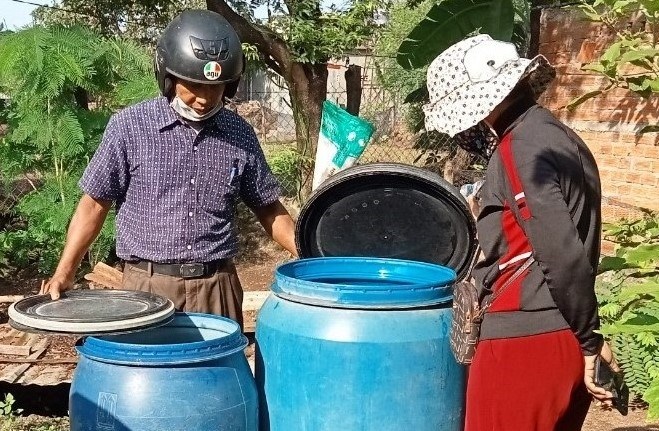
Speaking to Lao Dong Newspaper, Mr. Hoang Hai Phuc - Director of CDC Dak Lak said: "Given the complicated developments of the epidemic and favorable weather conditions for mosquitoes to grow during the rainy season, the health sector recommends that people proactively take disease prevention measures at home".
According to Mr. Phuc, authorities at all levels have strengthened propaganda and mobilization work to raise people's awareness of preventing and fighting dengue fever. At the same time, closely coordinate with local health forces in monitoring, detecting and handling outbreaks if they arise.