
Informing reporters, Specialist Doctor II Mr. Huy Thanh, Director of Can Tho City Children's Hospital, said that in the first 3 months of 2026, the hospital recorded a high increase in the number of cases of hand, foot and mouth disease and dengue fever compared to the same period.
Can Tho City Children's Hospital is a specialized pediatric hospital at the final level in the Mekong Delta region (Mekong Delta).
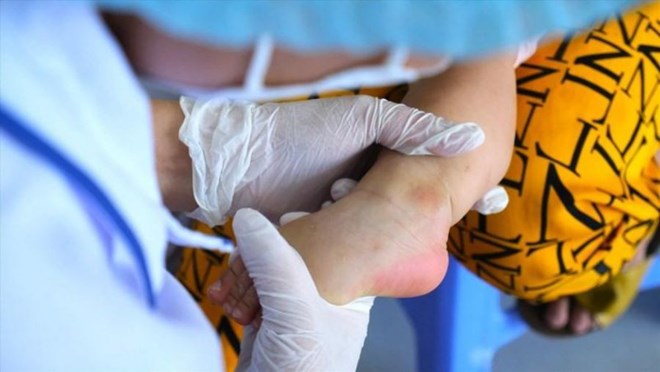
For hand, foot and mouth disease, in March alone, the unit received 919 outpatient cases and 155 inpatient cases. In the first quarter of 2026, the number of outpatient cases was 2,473 cases, and inpatients were 524 cases. Statistics of outpatient and inpatient cases all show a double increase compared to the same period in 2025.
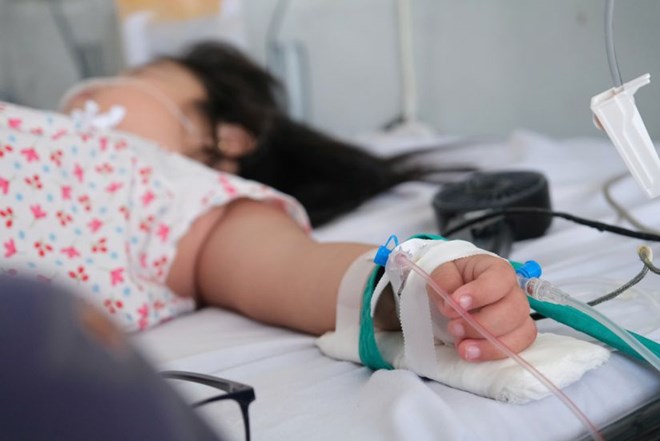
Regarding dengue fever, in March, the hospital received 156 outpatients and 238 inpatients. Summarizing data from the beginning of the year to date, the unit received 503 outpatients (an increase of 85% compared to the same period in 2025), 737 outpatients (an increase of 334% compared to the same period in 2025).
Notably, severe cases of dengue fever have reached 78 cases, while in 2025 there were only 11 cases.
Specialist Doctor II Huynh Hung Dung - Head of the Department of Infectious Diseases, Can Tho City Children's Hospital - informed that in the disease season, from 2022 and before, hand, foot and mouth disease had clear seasonal manifestations. Accordingly, the disease appears a lot in the sunny season (from March to May) and from the beginning of school to the end of the year, the disease will increase sharply. However, in recent years, hand, foot and mouth disease is no longer clearly seasonal.
Doctors recommend that parents when they detect water blisters on their children's hands, feet, throat or children with abnormal signs should be taken to a medical facility for doctors to diagnose and treat the disease.
Doctor CKII Nguyen Huynh Nhat Truong - Head of Dengue Fever Department, Children's Hospital of Can Tho City - said that in reality, treatment has cases where parents are subjective when taking care of children at home, leading to serious illness, and by the time they are taken to the hospital, it is already late, and the child has gone into shock. At this time, treatment is very difficult and complicated.
When the child has new strange symptoms, the family should admit them to the hospital, because here the child is examined and monitored regularly, and when the child has abnormal signs, they are treated immediately.


