
The 55-year-old male patient, from Hai Phong, came to Phuong Dong General Hospital for examination after about a week of bloody stools. Examination results revealed a rectal cancer, many polyps scattered in the colon and a tumor in the upper lobe of the right lung.
Through endoscopy, doctors recorded a mass of ulcers in the upper rectal, at the junction between the rectal and sigmoid colon, about 18 cm from the edge of the anus. Notably, 39 polyps measuring 3-6 mm were found scattered in the colon. Biopsy results determined moderate differentiated adrenal carcinoma.
Continuing to check for a chest-abdominal CT scan, and at the same time discovering an irregular border solid mass, about 25 x 29 mm in size at the upper lobe of the right lung.
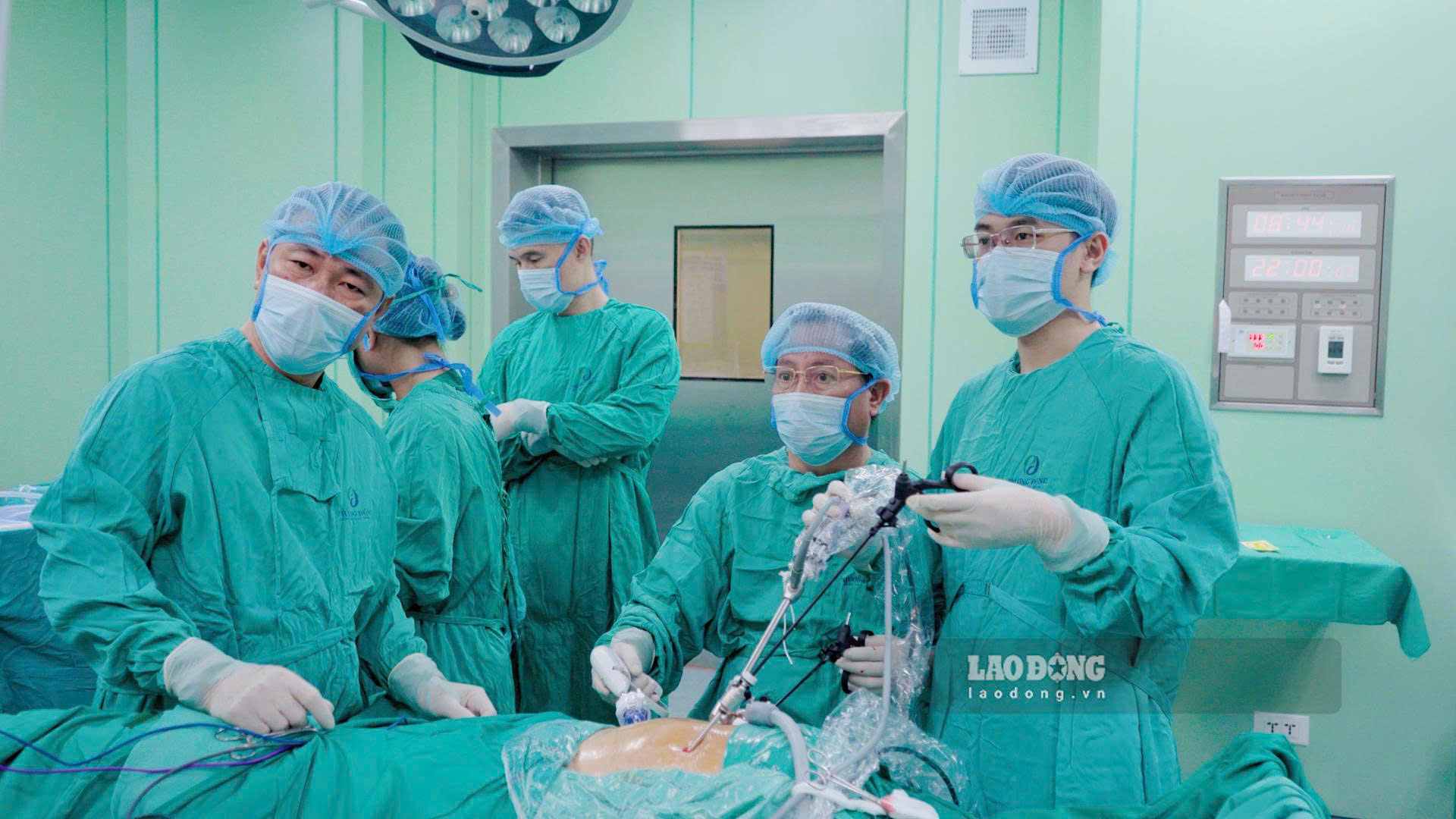
“When I received the results, I was very confused because both rectal cancer and lung cancer were detected at the same time. The doctor explained that the lung injury was not caused by metastatic rectal cancer but was a primary cancer. After surgery to remove the rectal tumor and polyps, about a month later when my health recovered, I continued to undergo endoscopic surgery to remove the lesion in my right lung and remove lymph nodes. Currently, my health is more stable and I continue to have chemotherapy,” the patient shared.
According to Assoc. Prof. Dr. Nguyen Anh Tuan, Director of Surgery Department, Head of Gastrointestinal Surgery Department, Phuong Dong General Hospital, this is a case of progressive colorectal cancer on a background of multiple polyps, and also primary lung cancer, posing challenges in diagnosis and treatment strategy selection.
After assessing the location, nature of the tumor, the ability to control polyps by endoscopy and the requirement to preserve the patient's quality of life, I decided to perform surgery to remove the tumor in the anterior rectum, and perform lymph node dissection according to cancer principles. The remaining colon is preserved to continue monitoring and management by endoscopy periodically," Assoc. Prof. Dr. Nguyen Anh Tuan said.
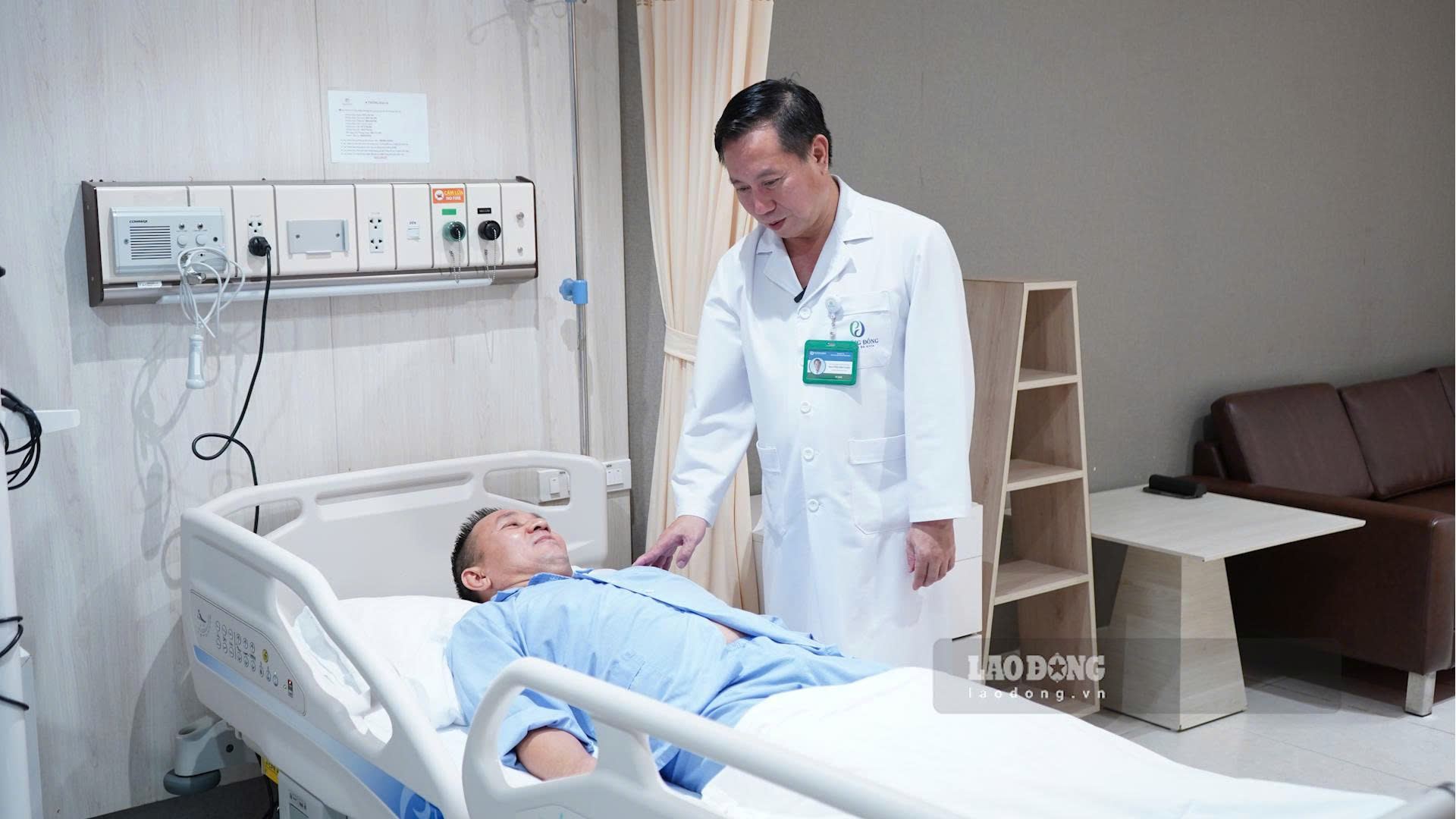
The postoperative pathology results showed moderate differentiated adrenal carcinoma, the tumor had penetrated the larynx. A total of 18 lymph nodes were dissected and sent for testing, of which 4 lymph nodes had metastatic cancer cells.
According to Dr. Tuan, preserving the undescended colon instead of completely removing it shows the principle of modern surgery: cancer treatment must ensure radicalization but at the same time limit trauma, preserve function and create favorable conditions for subsequent treatment and monitoring steps.
Doctors recommend that colorectal polyps may be precancerous lesions. People aged 45 should proactively screen for colorectal cancer or perform it earlier if they have a family history of the disease or have abnormal signs such as bloody stools, changes in bowel habits, anemia, abdominal pain or unexplained weight loss.
Detecting and removing polyps early can contribute to preventing colorectal cancer. When the disease is detected at a stage where surgery is still possible, patients have more opportunities for radical treatment, preserving function and improving prognosis.


