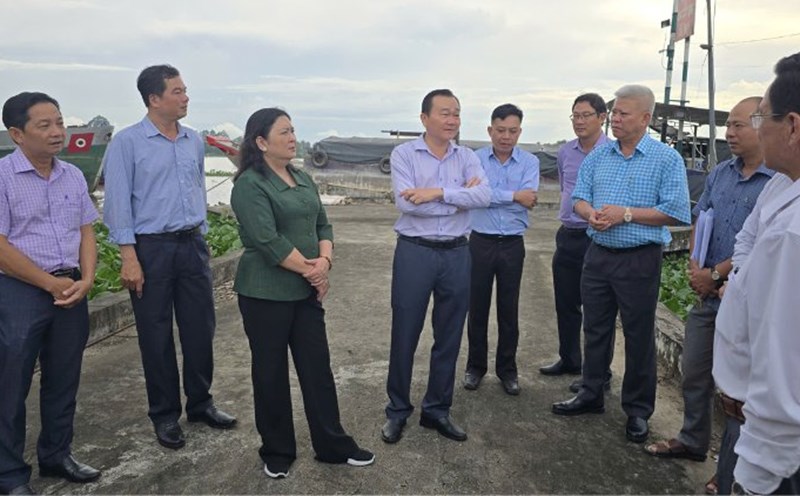
Formed in 1959, the Thai Nguyen Iron and Steel Complex marked an important turning point for Vietnam's metallurgy industry.
Over decades, this place still bears the mark of a glorious period of the heavy industry.
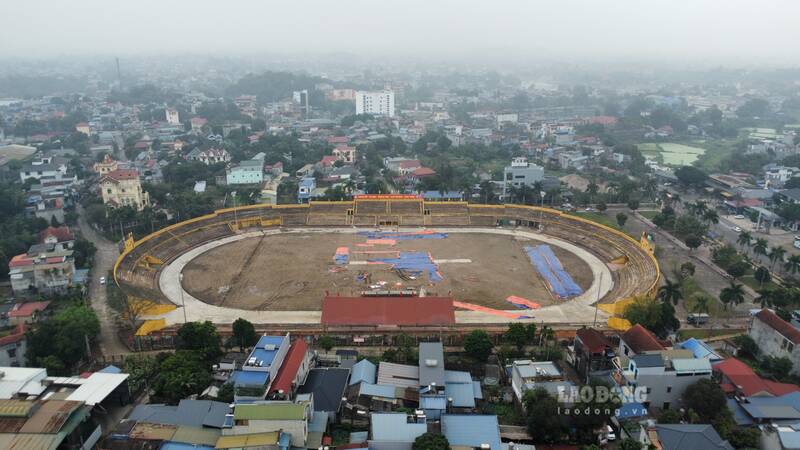
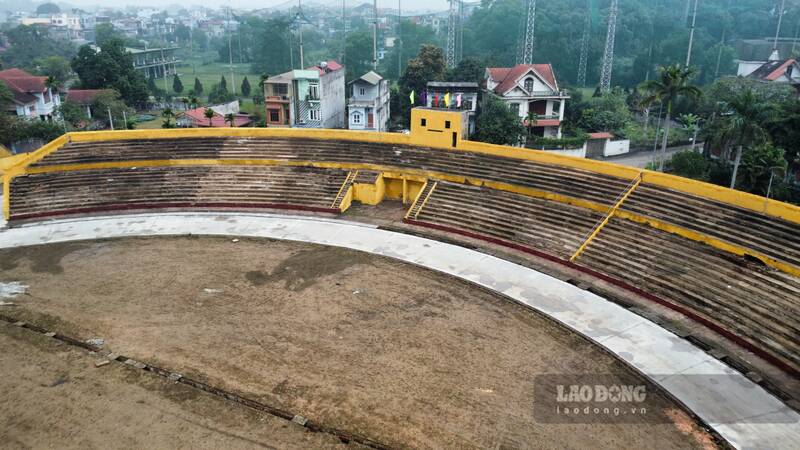
During the formation and development period, the Thai Nguyen Iron and Steel complex was born with many cultural institutions serving workers' lives. To date, although many works are only ruins left, the memories are still imprinted in the minds of many people in the tea region.
16,000-seat stadium
Located in the center of the Gang Thep area, Thai Nguyen Steel Stadium was built in 1978. The project has a capacity of 16,000 seats.
This was once considered one of the most large-scale and modern sports facilities in the midlands and mountainous areas of the North at that time.
The stadium was once associated with the memories of many generations of workers with exciting matches, cultural and sports activities with stands always packed with spectators.
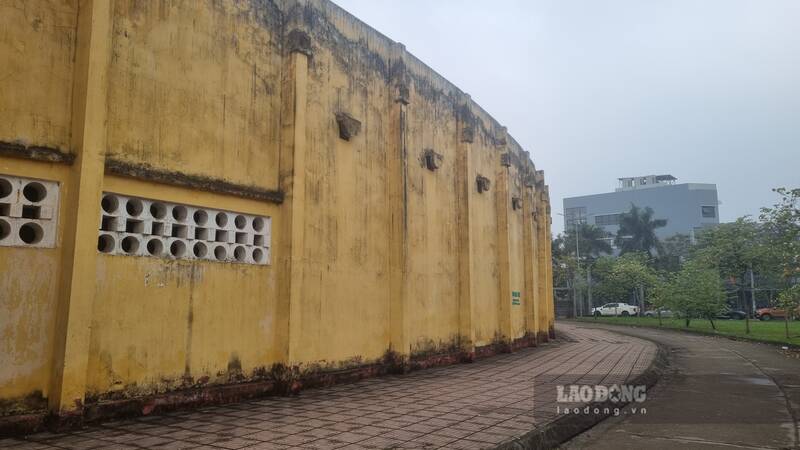
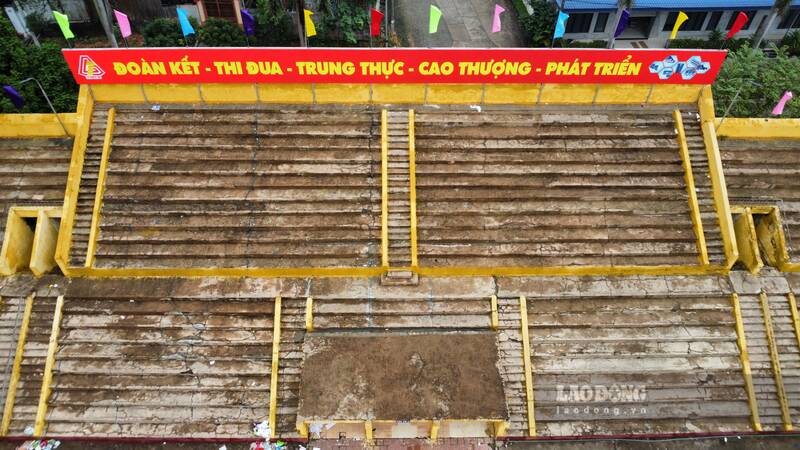
After nearly 50 years, the stadium is no longer used regularly. Some items are degraded and covered with moss.
Currently, the project is used to carry out a number of cultural and entertainment activities of the company and locality.
Workers' Cultural House
A few hundred meters from the stadium, the Gang Thep Workers' Cultural House was built in 1989. The project was completed and put into use in 1992.
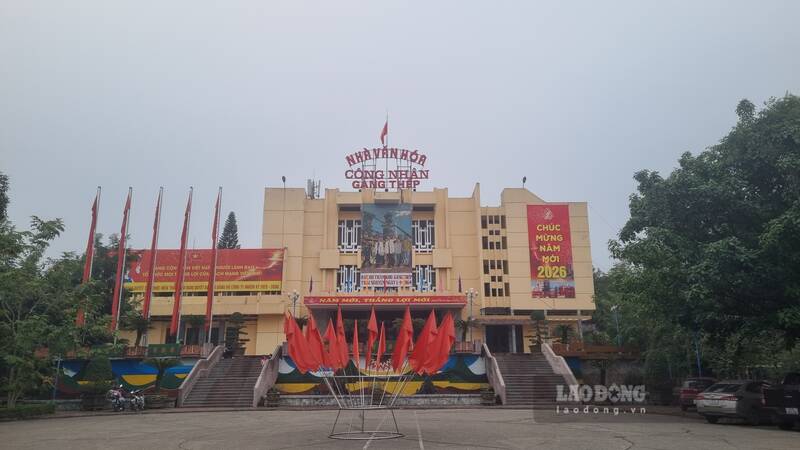
The cultural house has a 700-seat performance room, costume rooms, stages and many auxiliary items. In particular, the cultural house also has a traditional museum room with valuable artifacts and documents.
Over nearly 35 years, the Culture House of Steel Workers to this day is like a treasure trove, a witness to heroic history.
The province's first cinema
Also a cultural institution associated with Thai Nguyen workers for a time, Phuc Loi Cinema was built in the 1970s. The project is located in the southern center of Thai Nguyen province.
At that time, cinemas were born as an important cultural institution serving workers' lives.
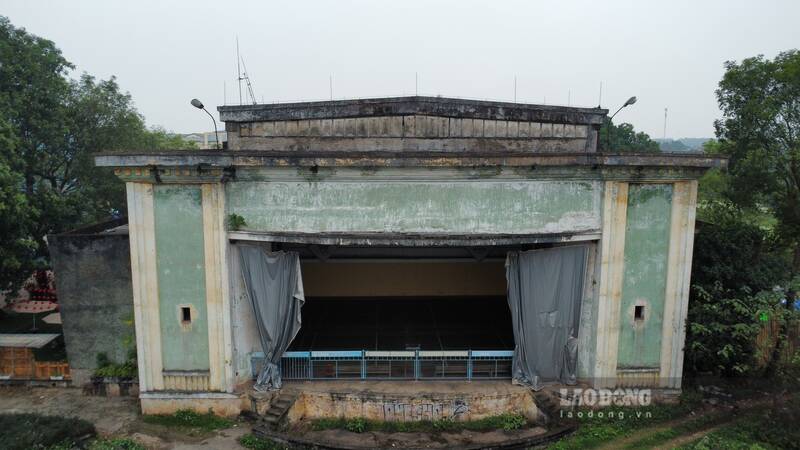
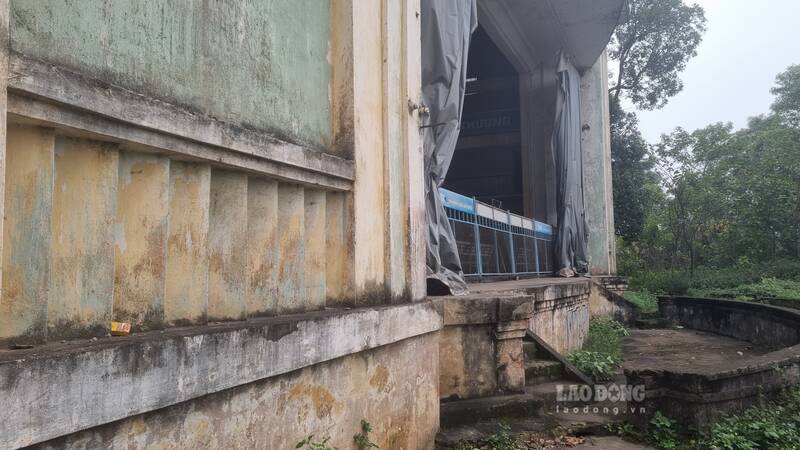
The cinema is built according to an outdoor model, with a large screen erected in front, below are stacked concrete steps.
From the 1990s, when new types of entertainment gradually became popular, the number of audiences coming to the cinema was sparse. The project was no longer invested in or repaired regularly, so it deteriorated over time.
Currently, the cinema area is covered with weeds and green moss clinging to the rows of stands. The old screens are no longer there, many items are damaged, leaving only the foundation and seats in the middle of the vacant land.
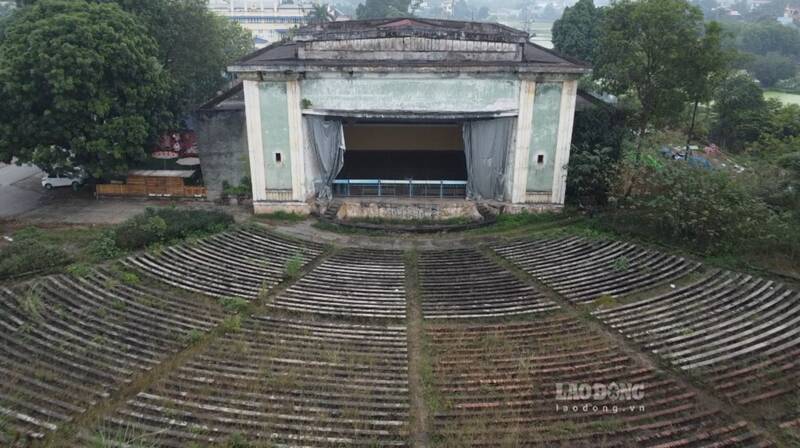
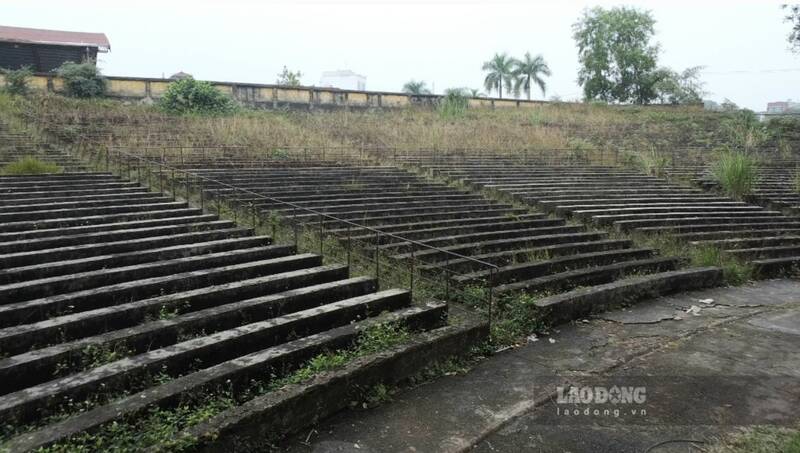
The area inside the screen is used as a place for people to play sports. Amidst the bustling flow of the streets, the cinema still quietly exists as a witness to time.
In addition to the cultural institutions mentioned above, some works are also associated with the memories of Thai Nguyen workers of a time such as: Iron and Steel Workers Monument, worker dormitory area...
Although decades have passed, many works have only left ruins, but the heroic memories of a time of Gang Thep workers are still intact.