
Reader P.K. A (Hung Yen) wondered: "How are the principles of land inheritance when there is no will implemented? Can distant relatives (aunt, uncle, uncle) inherit houses and land? ".
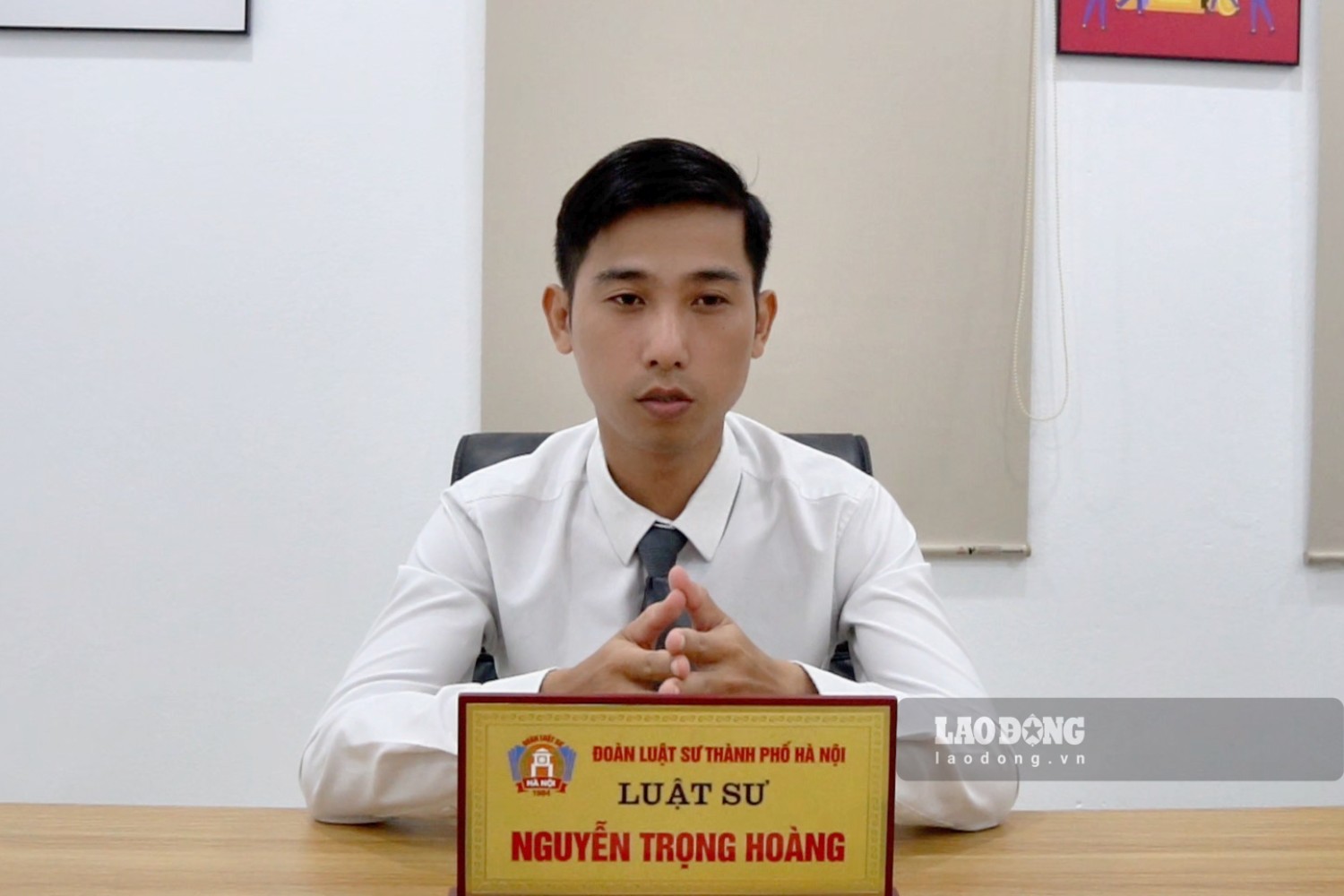
Answering this question, lawyer Nguyen Trong Hoang - Law Firm LawKey Co., Ltd. said that in case the deceased does not leave a will or the will is illegal, the inheritance, including land use rights, will be divided according to the law according to the provisions of the 2015 Civil Code.
Based on point a, clause 1, Article 650 of the 2015 Civil Code, legal succession is applied when the deceased does not leave a will. The division of inheritance will be carried out according to the line of succession specified in Article 651 of the 2015 Civil Code.
Accordingly, the first line of inheritance includes: wife or husband, biological father, biological mother, adoptive father, adoptive mother, biological child, adopted child of the deceased. People in the same line of inheritance are entitled to equal shares of inheritance. Only when no one is left in the first line of inheritance or all people in this line do not have the right to inherit, are deprived of the right to inherit or refuse to receive inheritance, the inheritance is divided among the second line of inheritance, followed by the third line of inheritance.
In addition, according to Article 660 of the 2015 Civil Code, the division of inheritance is carried out according to the principle that co-heirs have the right to agree on how to divide the inheritance. In case no agreement can be reached, they can request the Court to resolve it.
Regarding land use rights, if it is not possible to divide in kind, the co-heirs can agree on valuation so that one or more people receive land use rights and pay the corresponding value to the remaining people, or sell land use rights to divide money according to the percentage enjoyed.
Can distant relatives (aunt, uncle, uncle) inherit houses and land?
According to lawyer Nguyen Trong Hoang, in case parents die without leaving a will, the inheritance will be divided according to the law according to the provisions of point a, clause 1, Article 650 of the 2015 Civil Code.
According to Article 651 of the 2015 Civil Code, the aunt, uncle, uncle of the deceased belongs to the third line of inheritance. Meanwhile, people belonging to the first line of inheritance (wife, husband, parents, children) and the second line of inheritance (grandparents, siblings, nephews in some cases) are prioritized to enjoy inheritance first.
Therefore, aunts, uncles, and uncles are only entitled to inheritance when no one is left in the first and second rows of inheritance or these people have died, do not have the right to inherit, are deprived of the right to inheritance or refuse to receive inheritance. If there are still people in the first or second row of inheritance who are eligible to inherit inheritance, aunts, uncles, and uncles are not allowed to divide inheritance of houses and land.


