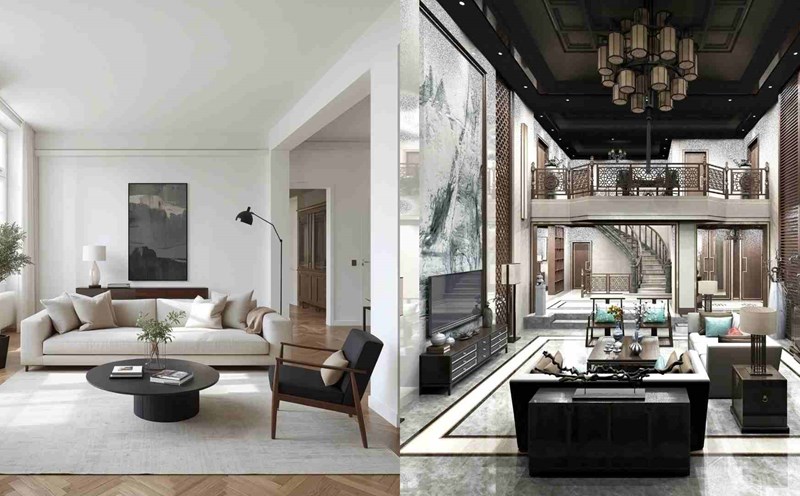
The Mediterranean style stands out with its natural, gentle and approachable beauty. In design, this style often uses soft colors, inspired by nature such as sea colors, sand and sunlight. The space is arranged neatly, maximizing the area, harmoniously combining decoration and functionality, avoiding a messy feeling. The overall style brings elegance, rusticity but still exudes luxury and sophistication.
1. Characteristic architecture
This style often uses details such as round arches, semi-circular arches, horseshoe-shaped doors and windows. Walls are often painted white or light light colors, with simple design lines. Wooden furniture has rounded edges that create a soft feeling. Arches and corridors are often connected together, making the space wider and more airy. In the house, many walls can be designed into windows or wall recesses to increase aesthetics and ventilation.
2. Classic interior
Mediterranean-style furniture is often surfaced in a "fake antique" style, creating a feeling that it has been used for a long time. This helps the space to be rustic, reminiscent of coastal houses with traces of wind and sunshine.
3. Natural colors
Colors in this style are usually light, natural and not too bright. Popular tones include white, blue, light green, earthy or sandy.
4. Open, airy space
A highlight of the Mediterranean style is the open space design, taking advantage of natural light and creating a spacious and comfortable feeling.
5. Characteristic decoration
This style often uses decorative details such as mosaic mosaics or brick mosaics. Decorative materials can be gravel, bricks, shells, glass shards or glass beads assembled into unique patterns.
In the house, items such as curtains, tablecloths, sofa covers or lampshades are often made of cotton fabric with light colors, small floral patterns or simple plaid. In addition, iron furniture and green trees, especially climbing plants or small ornamental plants - are also often used to create accents for the space.