
At Van Thanh canal - a canal that has been polluted for many years in the central area of Ho Chi Minh City - many households said they are willing to leave if they receive enough support to stabilize their lives in the new place of residence.
Sitting washing dishes by the dark, smelly and garbage-filled stream, Ms. Mai Thi Lan (60 years old) said that her family's house is about 50m2 wide, but nearly half of the area encroaches on the canal bed. Ms. Lan moved to live here before 1990, when the canal water was still quite clear.
“Before, the water was still clean, but later on it became more polluted because of garbage and wastewater discharged directly into the canal. I heard that clearing to clean the canal has been going on for more than ten years, but it keeps going on, and the family has to live temporarily forever,” Ms. Lan said.
When hearing the information that the city plans to increase the support level, she said that her family is ready to relocate so that the State can implement the environmental improvement project.
I just hope to receive enough money to buy a cheap apartment in the suburbs to stabilize my life" - Ms. Lan shared.
The Van Thanh canal renovation project has a total investment of more than 8,555 billion VND. It is expected that there will be 1,077 cases of land acquisition for project implementation, of which 749 households must be completely relocated.
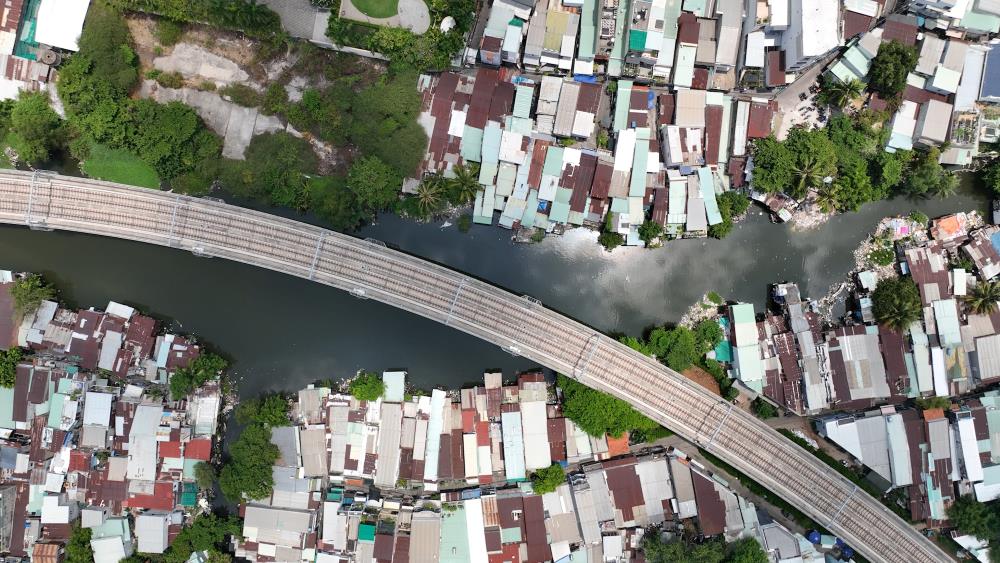
Previously, according to the old Land Law and Decision 28 of the Ho Chi Minh City People's Committee, houses located on or along canals and ditches were identified as encroaching, so the support level was quite low.
Cases of land use before October 15, 1993 are supported 40% of the residential land unit price; from October 15, 1993 to before July 1, 2004 are supported 30%; and after July 1, 2004, they are not supported. If the house is built on a drainage canal or only partially relocated, the support level is even lower.
However, according to Decision 11/2026/QD-UBND dated March 6, 2026 of the Ho Chi Minh City People's Committee, land areas originating from rivers, streams, canals, ditches, streams or specialized water surfaces that have been encroached upon and self-changed for other purposes (including the leveled area and the area that has not been leveled but has houses, works or architectural structures) will be supported at a higher level.
Specifically, non-agricultural land used before October 15, 1993 is supported 70% of the land price; used from October 15, 1993 to before July 1, 2004 is supported 56%; and from July 1, 2004 to before July 1, 2014 is supported 42%.
For agricultural land, the support level is equal to 70% of the agricultural land price approved by competent authorities.
In addition, Ho Chi Minh City also supports 60% of the house value for the actual used area located in the road boundary or corridor protecting rivers, streams, and canals.
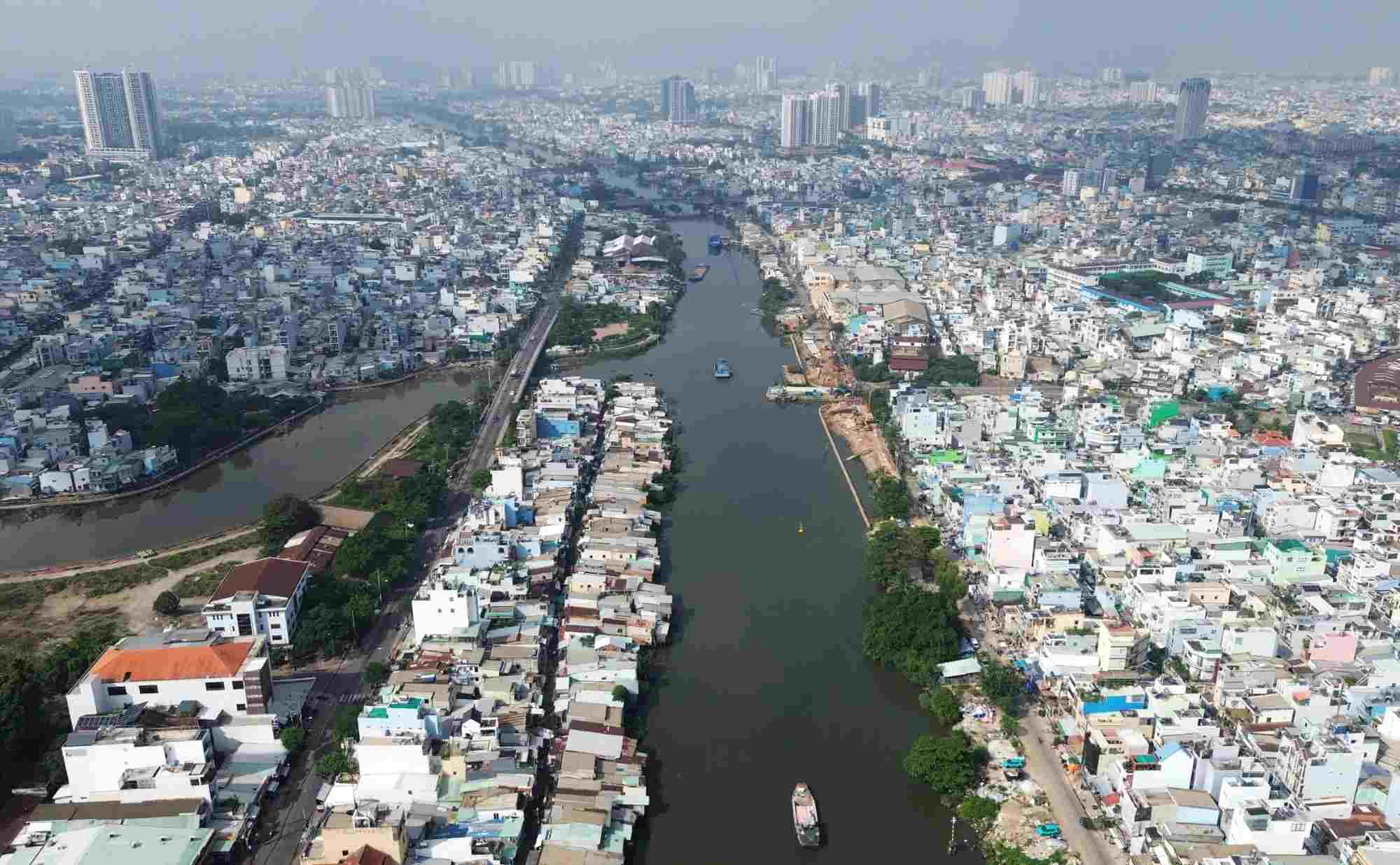
An important new point in the policy is ensuring a minimum resettlement rate for people who have to relocate.
According to regulations, if households are eligible for land compensation but the compensation amount is lower than the value of a minimum resettlement quota, the State will support the difference so that people have sufficient conditions to receive resettlement.
The minimum resettlement quota can be arranged with residential land, houses or money at the option of the people. If arranging apartments, the minimum area is 30m2.
In fact, many canal and ditch renovation projects in the past faced difficulties in site clearance due to obstacles in determining the minimum resettlement quota, typically the Xuyen Tam canal renovation project.
The city also applies a bonus mechanism for cases of land handover before the deadline. Households and individuals can receive a maximum bonus of 50 million VND if the entire land is recovered and a maximum of 25 million VND if only a part of the area is recovered. For organizations, the maximum bonus is 100 million VND.
According to a survey by the Ho Chi Minh City Institute for Development Studies, the whole city currently has more than 34,700 houses located on and along canals and ditches. However, only about 1/4 of these have valid construction permits, while more than 73% are built without permits.
Ho Chi Minh City sets a target to complete the relocation of 50% of houses on and along canals by the end of 2030, equivalent to about 20,000 houses.


