In the two knockout rounds before the quarter-finals, there were 3 European teams eliminated by non-UEFA representatives. The remaining teams from the old continent that could not advance were all eliminated by opponents in the same region.
Besides very big names like France, England or Spain, European football is having more interesting surprises like Norway. It is also not possible to underestimate Belgium or Switzerland when they have overcome countless thorny challenges to reach the round of 8 strongest teams.
For the first time in World Cup history, the 3 teams that won the most gold cups, Brazil (5), Germany and Italy (4), did not have any representatives participating in the quarter-finals. For the first time, the World Cup raised the format to 48 teams, helping many African representatives have opportunities such as Cape Verde or Congo. 9/10 teams from the black continent have passed the group stage, but only Morocco has reached the quarter-finals. Their immediate opponent is also the strongest team currently - France. Perhaps after this round, African representatives will be completely eliminated.
With Asian football, at this time, the hope is placed entirely on Japan. They have become much stronger since 1998 but have not been able to win any knockout matches at the World Cup. Meanwhile, the AFC member is Australia, although coming to the World Cup as a "representative of Asia", Australia is a member joining from Oceania. Therefore, they are not considered a pure Asian team. Reality also shows that Australia may occupy a World Cup spot every year, but the possibility of going far is almost impossible.
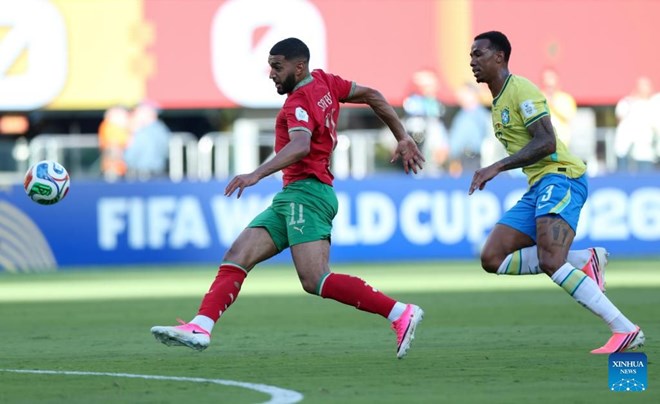
Teams going deep at the World Cup all have a common formula: either a pure European team, or in a squad with many European features. For Morocco, up to 18/26 players in the registered squad for this year's tournament are born in Europe. In the opening match against Brazil, all 11 names starting for the African representative were born in the old continent.
A typical example is midfielder Brahim Diaz (Real Madrid). He failed to find a way to join the Spanish national team, so he chose Morocco as a place to develop his international career. There are many Moroccan players with dual citizenship and they have more European features than an African.
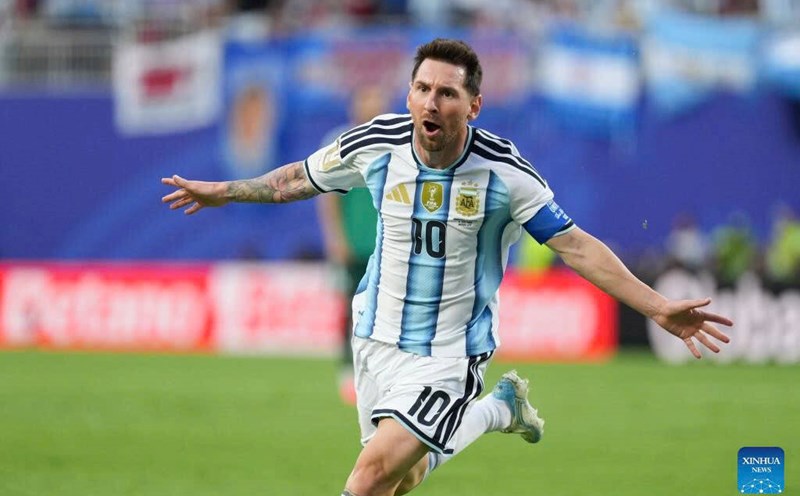
With the reigning champion Argentina, in their squad there are countless players playing in Europe (20/26). Stars such as Julian Alvarez (Atletico Madrid), Enzo Fernandez (Chelsea), Emiliano Martinez (Aston Villa), Alexis Mac Allister (Liverpool), Lisandro Martinez (Manchester United),... show how clearly the "Europeanization" is in the Albiceleste squad. They may be living thanks to the moments of superstar Lionel Messi (Inter Miami) and saying that they are not players playing in Europe. But all of Messi's most brilliant glory in his previous career is condensed in Barcelona, one of the strongest teams in UEFA.
Teams participating in the World Cup, more or less, must still have "European quality" in their squads. Although there are not enough 8 members in the quarter-finals, the old continent's football is still proud because the remaining 2 teams, Morocco and Argentina, still have a very clear European nature. Many teams are looking at that as a lesson, wanting to go to the World Cup and go far in this playground, they need to have such "European quality" in their squads.
At the 1994 World Cup in the US, only 1/8 of the teams entering the quarter-finals came from outside the European territory. However, the last team to win the championship was that only representative (Brazil). 32 years later, the World Cup returned to the land of stars and stripes with Argentina and Morocco being names outside UEFA reaching the top 8 strongest teams. No one can confirm whether Morocco or Argentina will win the championship, but even though the team that won the championship was not Europe, this continent can still be proud of being the place with the strongest football in the world, both in terms of expertise in general and influence.