
Under the Turf Moor lights, Manchester United returned to a four-defender system and witnessed a winger who had grown up from the academy almost create a decisive moment in a spectacular way.
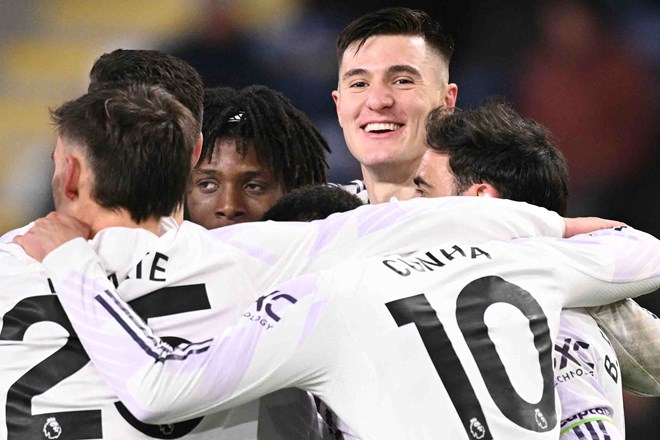
Looking closer, both players and Man United fans began to find joy again - even though in the stands, Jason Wilcox and Omar Berrada still maintained a cold look. Kobbie Mainoo and Mason Mount appeared as central midfielders. With a total of 30 shots, those numbers and images made the atmosphere "seemingly" changing direction.
But all those nostalgic signs should not become a reason for Man United's decision-makers to return to the past for a long time. No matter how difficult the post-Rubin Amorim period is, and no matter how painful the recent mistake is, Man United still needs to look to the future.
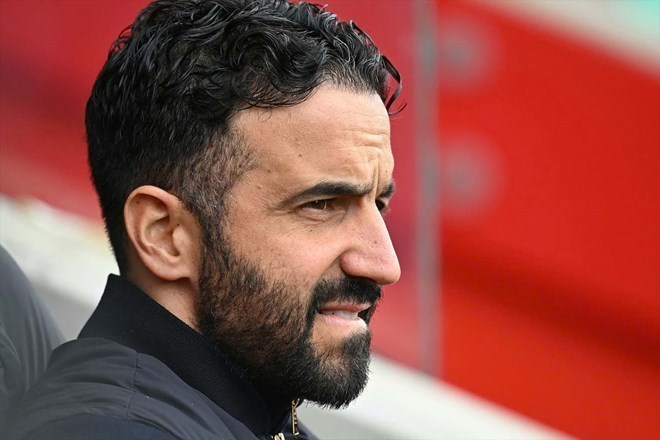
Missing is a strong emotion when you once won everything. However, Man United once again fell into a deadlock - a club that seemed more comfortable looking back at the past years than daring to create a new future.
Now, every match - and every discussion revolving around that match - turns into a " referendum" on the path to bringing Man United back to glory. And at the latest turning point, many people seem tired of modernization efforts by imitating. They want to do it their own way.
From commentary programs to the views of former players, that atmosphere became even clearer. Some people called for playing Man United style again. Some even proposed pulling Roy Keane back. Then other names were mentioned as part of the identity.
The worship of Sir Alex Ferguson may look like respect for a legend over 80 years old. But on the surface, it is the memory that is still shaping what happens next. Man United is still looking for that formula of success.
Ferguson's former students finding their teacher to ask for advice was a natural reaction. But the challenge lies in the fact that "copying Ferguson" is not like applying a La Masia or De Toekomst style of ball control principle. Ferguson was flexible, his ideas changed according to the requirements of the match.
And this is the truth. Clearly, there is no "Ferguson school" with a curriculum, system, or a stream of thought passed down to the next generation. The rest is mainly the intuition of a great coach - who has proven in his long career that he can adapt continuously.
What would Ferguson do in the current situation? No one knows. The core misunderstanding is the notion that Sir Matt Busby and Sir Alex Ferguson are the natural embodiment of Man United, as if they were "born from tradition" at The Cliff. In fact, they are both outsiders: both are Scottish, Busby used to play for Man City and Liverpool.
Liverpool also experienced a similar psychology, when persuading Kenny Dalglish to return in a period of decline and feeling the title "very close". But then the appearance of someone without a local connection was the factor that brought them to the finish line.
Mentioning Jurgen Klopp, people also remember a paradox. Dortmund once talked about the need for "the Dortmund boys", but the person who led them to the most recent championship was Klopp - someone who was not in that "system".
Even so, the attractiveness of the old player is still very high, especially for clubs trying to regain what they have lost. If not, it is difficult to explain why people consider a coach who was sacked by Middlesbrough, or someone who used to lead Besiktas, and then was sacked by Man United in 2021.
This situation is not unfamiliar to Man United. Carrick and Solskjaer were once trusted to create stability. Ryan Giggs did it before. Ruud van Nistelrooy did it later. And now Fletcher joins that list when Man United is trying to find light again.
But it's stagnation, not progress. It can't be seen as a great renaissance plan. It's essentially the absence of an idea, rather than the return to an idea - a club weighed down by history to the point of delaying future design.


