
To specify the provisions in Resolution 71-NQ/TW, which clearly states the minimum vocational preferential allowance of 70% for teachers, 30% for employees and 100% for teachers working in particularly difficult areas, border areas, islands and ethnic minority areas, the Ministry of Education and Training is developing a Decree on preferential allowances according to occupations for civil servants and employees in public educational institutions.
School staff - those who take on equipment, libraries, health care, clerical, treasurer... - have long been considered "silent" in the educational environment. They work full-time in schools but their income and benefits are much lower than teachers. Therefore, information about the new allowance level expected to be applied from 2026 is creating a lot of hope for this force.
New hope for school staff
After nearly 17 years of working as a equipment staff at Chieng Xuan Primary and Secondary School (Chieng Son Commune, Son La) - a school in a border commune - Ms. Bui Thi Huyen Thanh said that her family's life depends largely on extra work outside.
For her, although her work at school is regular, her income is not enough to cover her living expenses.
"Income at school cannot be guaranteed, because I still raise two children to study. My parents are old, without pensions, and both are farmers, so I have to take care of that part. Therefore, I take advantage of working extra at noon and afternoon after finishing work at school, and all day on weekends, some days lasting until 8pm" - Ms. Thanh said.
Therefore, when she heard about the proposal to increase allowances for school staff from 2026, she felt excited and hoped for a more stable life. "If there is an additional stable allowance, my family life will certainly be less stressed" - Ms. Thanh expressed.
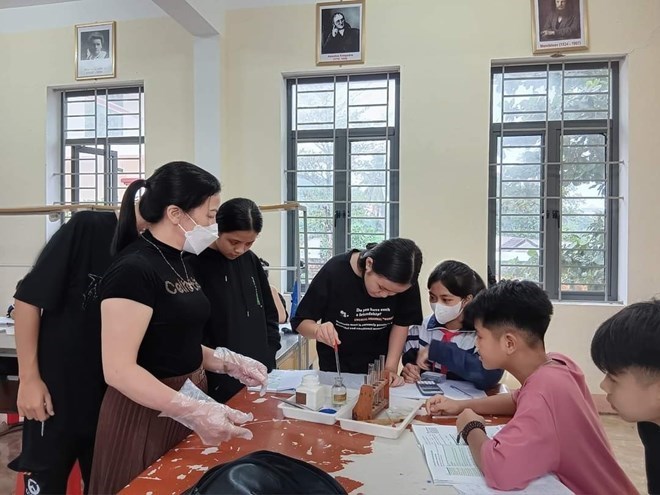
Sharing the same concern, Ms. Nguyen Thi Nhan - a clerical staff at Mai Lam Secondary School (Dong Anh Commune, Hanoi) - said that although her job is quiet, it is not much pressure, while her monthly income is only over 6 million VND.
She said that to ensure her family's expenses, she has to do extra seasonal work. There are days when she starts overtime at 5am, then returns to school, and after work, she continues to work until late at night.
"Sometimes I am very tired, but I still have to try because the cost of living is increasing and my income is limited" - she shared.
The proposal to add more preferential allowances for the profession has brought great joy to Ms. Nhan. She considers this a practical policy, helping to reduce the financial burden and add motivation to continue working at the school for a long time. "I hope the allowance increase roadmap will be implemented soon" - she said.
Expectations for new allowances to reduce financial pressure
Also a long-time employee in the education sector, Ms. Nguyen Xuyen - a treasurer at a secondary school in Hanoi - said that she has been doing this job for more than 20 years. Her income has improved over time thanks to salary adjustments, but compared to the increasing standard of living in urban areas, that income is still quite modest.
"The cost of living in the city is still a burden to the current income of school staff" - Ms. Xuyen said.
The cashier job requires meticulousness and high responsibility, every day associated with documents, books and school's revenues and expenditures. Although she always tries to do her job well, what she hopes for most is still a more stable source of income so as not to struggle when prices increase.
"We are also a part of the school, attached to the educational environment every day, so we hope to receive more attention" - she shared more.
According to her, if the new allowance policy is implemented from 2026, it will be a great encouragement. "Not only does it help reduce financial pressure, this level of support also creates more motivation for administrative staff serving in schools to feel secure in sticking with the profession for a long time" - Ms. Xuyen expressed.


