
From 2026, the salary and allowance policies for teachers will be adjusted according to specific mechanisms and policies just approved by the National Assembly. Accordingly, professional preferential allowances for public preschool and general education teachers will be increased to a minimum of 70%, and for employees a minimum of 30%...
In addition, the Law on Teachers stipulates that teachers' salaries are ranked at the highest position in the administrative and public salary scale system, creating a basis for improving income and enhancing the professional position of teachers.
Having been attached to the profession for more than 14 years, Ms. Nguyen Thi Lanh - a teacher at Dakrong Kindergarten No. 1 (Quang Tri) - said that the current salary level, if there are dependents, it is very difficult to balance spending.
According to her, the characteristics of preschool teachers are completely different from other levels of education, when teachers have to pick up children from early morning, take care of and teach children all day, from meals to bedtime.
We do not have time for mid-session or lunch breaks like other levels of education. Meanwhile, many teachers at border school points have to go very far to get to class. They only come home late at night, and do not have time to go to extra work to increase income or increase production," she expressed.
According to Ms. Lanh, the salary adjustment from 2026 will not only help improve life but also be a source of encouragement for teachers to continue to stick with the profession. "I hope that the new policy will be truly practical so that preschool teachers can live by their profession and wholeheartedly for their students" - she said.
Ms. Lanh said that for many teachers in the highlands, the new salary level is not only an additional income, but also an affirmation that their efforts are being recognized as worthy - a motivation to continue to stand firm in the high mountains.
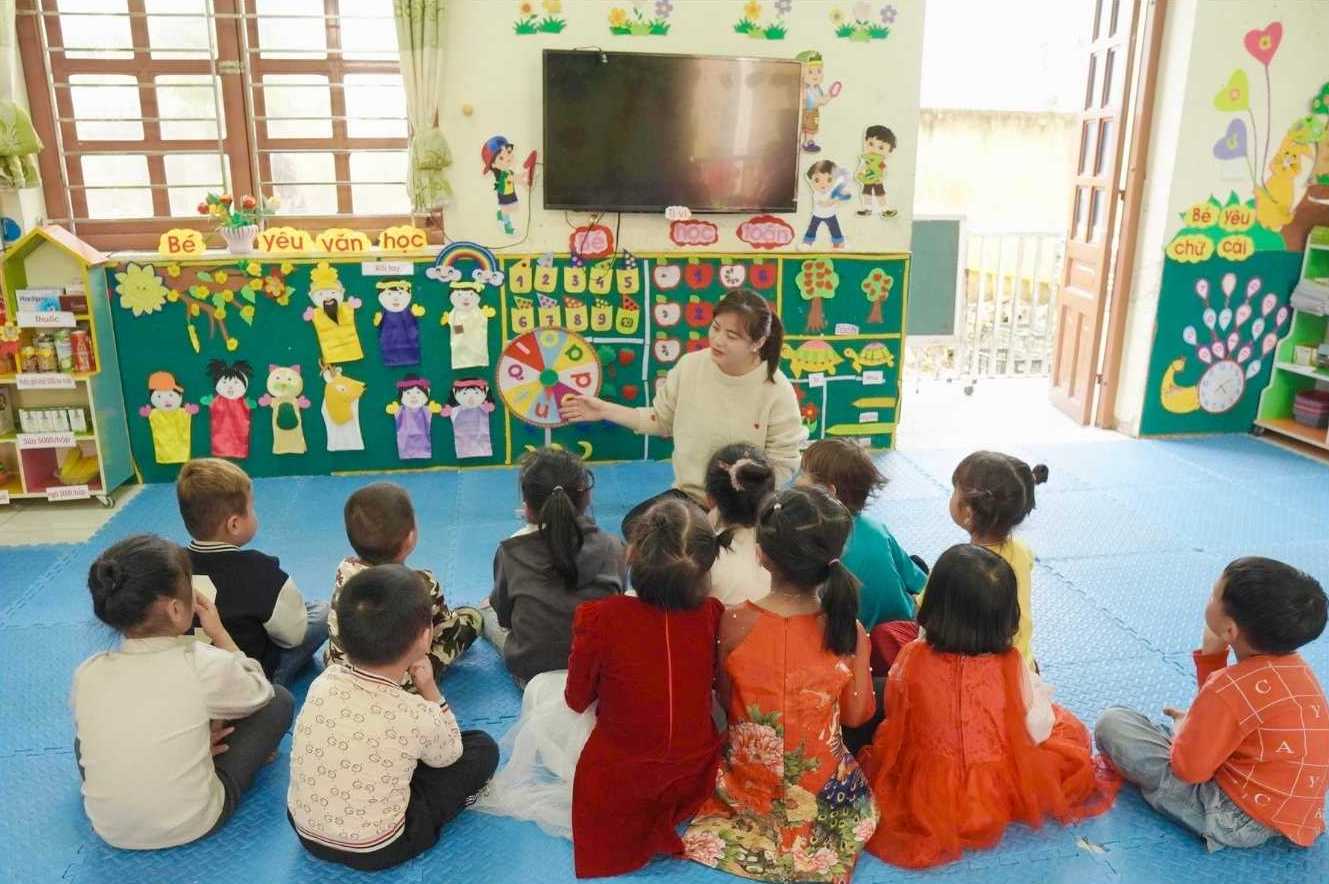
Also stemming from love for young children, Ms. Vu Thi Hai Binh - a teacher at Trung Chai Kindergarten (Pa Tan commune, Lai Chau) - decided to stick with the teaching profession, even knowing that this path still has many difficulties.
She shared that for more than 14 years attached to the profession, especially at highland school sites, she has experienced many difficulties and challenges, both in life and teaching work.
The first day I took office, I had to cross a bridge and follow a trail on the hillside, slippery and dangerous, it took many hours to get to the school point. That arduous journey was the first challenge on the journey to sow letters in the highlands" - she recalled.
Not only are the slopes and roads difficult to travel, she also has to face language barriers. Many students do not understand the common language, so teaching in class faces many difficulties.
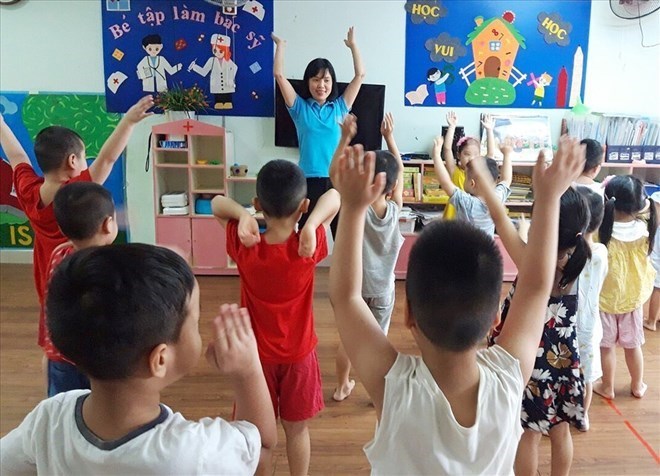
Sharing more about the new salary policy expected to be applied from 2026, Ms. Hai Binh said that for teachers working in mountainous areas, this is information of great significance.
According to Ms. Binh, the new salary not only helps improve monthly income but also creates long-term peace of mind for preschool teachers when choosing to stick with difficult school locations.
For highland teachers like us, increased income means being able to better cover living expenses, travel and take care of the family, especially in the context of increasing prices" - she said.
Ms. Binh also expressed her expectation that ranking teachers' salaries at the highest position in the administrative and career salary scale system will contribute to enhancing the professional position of preschool teachers. "This is not only economically significant but also a recognition of the efforts, responsibilities and silent sacrifices of teachers working in particularly difficult areas" - she shared.
According to Ms. Binh, when life is improved, teachers will have more motivation to feel secure in sticking to school and class, thereby improving the quality of care and education for children in areas that are still disadvantaged.


