
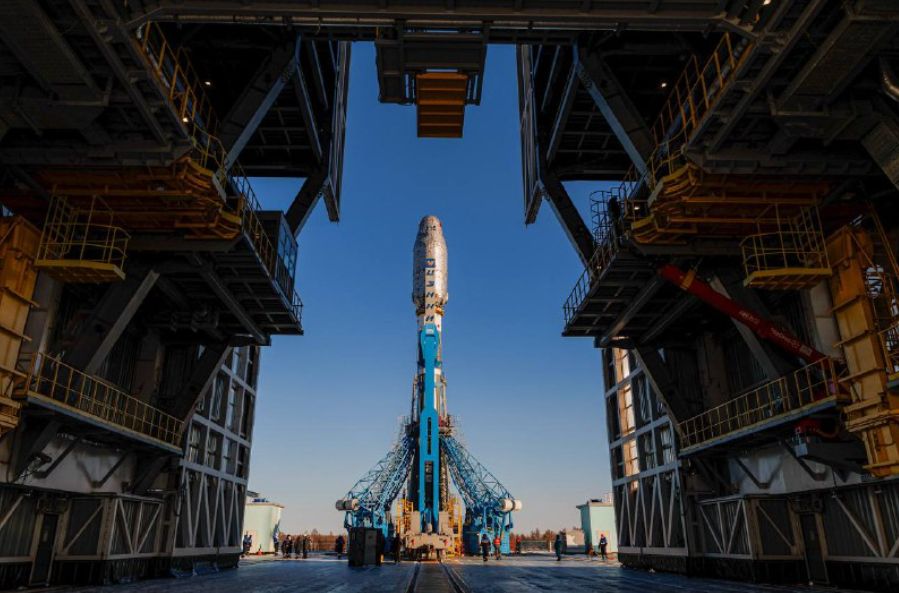
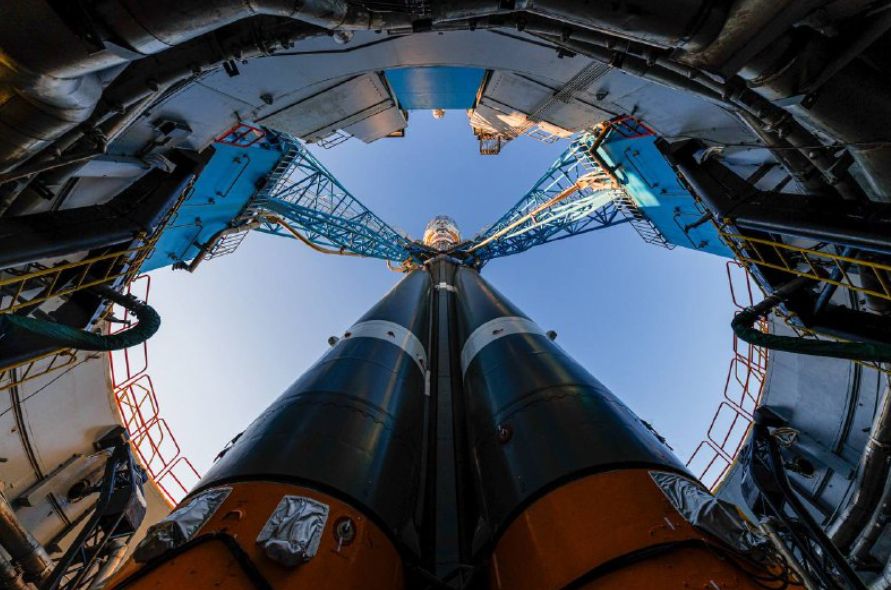
On December 28, the Russian Space Agency Roscosmos said that the Soyuz-2.1b rocket was successfully launched, carrying a total of 52 satellites into Earth orbit.
The launch took place from the Vostochny Cosmodrome, in the Russian Far East, and was broadcast live.
According to Roscosmos, the Soyuz-2.1b 3-stage rocket, in addition to carrying 2 Russian Aist-2T satellites, also carries 3 Iranian low-orbit telescopes, along with dozens of other small satellites.
After layer separation and completion of technical operations, the entire load has been put into orbit as planned.
Speaking to IRNA news agency, Mr. Vahid Yazdanian - Director of the Iranian Space Research Institute - said that Tehran's 3 satellites are tasked with observing the Earth, collecting images to serve civilian areas.
Data from these satellites can be used in agriculture, water resource management and environmental protection," Yazdanian emphasized.
The successful launch of Iranian satellites with Russian missiles is considered an important step forward in the space cooperation program between Moscow and Tehran.
In the context that both countries are under pressure from Western sanctions, cooperation in the field of science and technology, especially space, is emerging as a new pillar in bilateral relations.
Sources from Russia said that low-orbit remote sensing satellites have a great advantage in providing high-resolution images, short observation cycles, suitable for seasonal monitoring, climate change and environmental conditions. This is especially important for Iran - a country that regularly faces drought, water shortages and desertification.
The launch also shows Russia's ability to deploy complex space missions, when it can put dozens of satellites of many different types into orbit in just one launch.
Previously, Russia had repeatedly launched "shuttle satellites", but the combination of Russian satellites and satellites of foreign partners still attracted special attention.
Russia-Iran cooperation in the space sector is not a new story, but has been clearly promoted in recent years.
In early 2025, Moscow and Tehran signed a comprehensive strategic partnership agreement with a term of 20 years. This agreement covers many fields, from space, peaceful energy to science and technology and innovation.
Within the framework of the agreement, the two sides committed to strengthening research cooperation, sharing experiences and mutual support in space projects with peaceful purposes.


