
On the morning of July 27, the Vietnam General Confederation of Labor organized the second training class on environmental protection and occupational safety and health for trade union officials at the Hai Duong Trade Union Guesthouse, located in the western area of the city.
Previously, the first training class was organized in the Do Son area, serving units in the East of the city.
The training class focused on disseminating legal regulations on environmental protection and occupational safety and health; analyzing the impact of environmental pollution on workers' health; and clarifying the rights and responsibilities of grassroots trade unions and the role of the safety and hygiene network in enterprises.
These are all practical contents, associated with production activities and labor protection work.
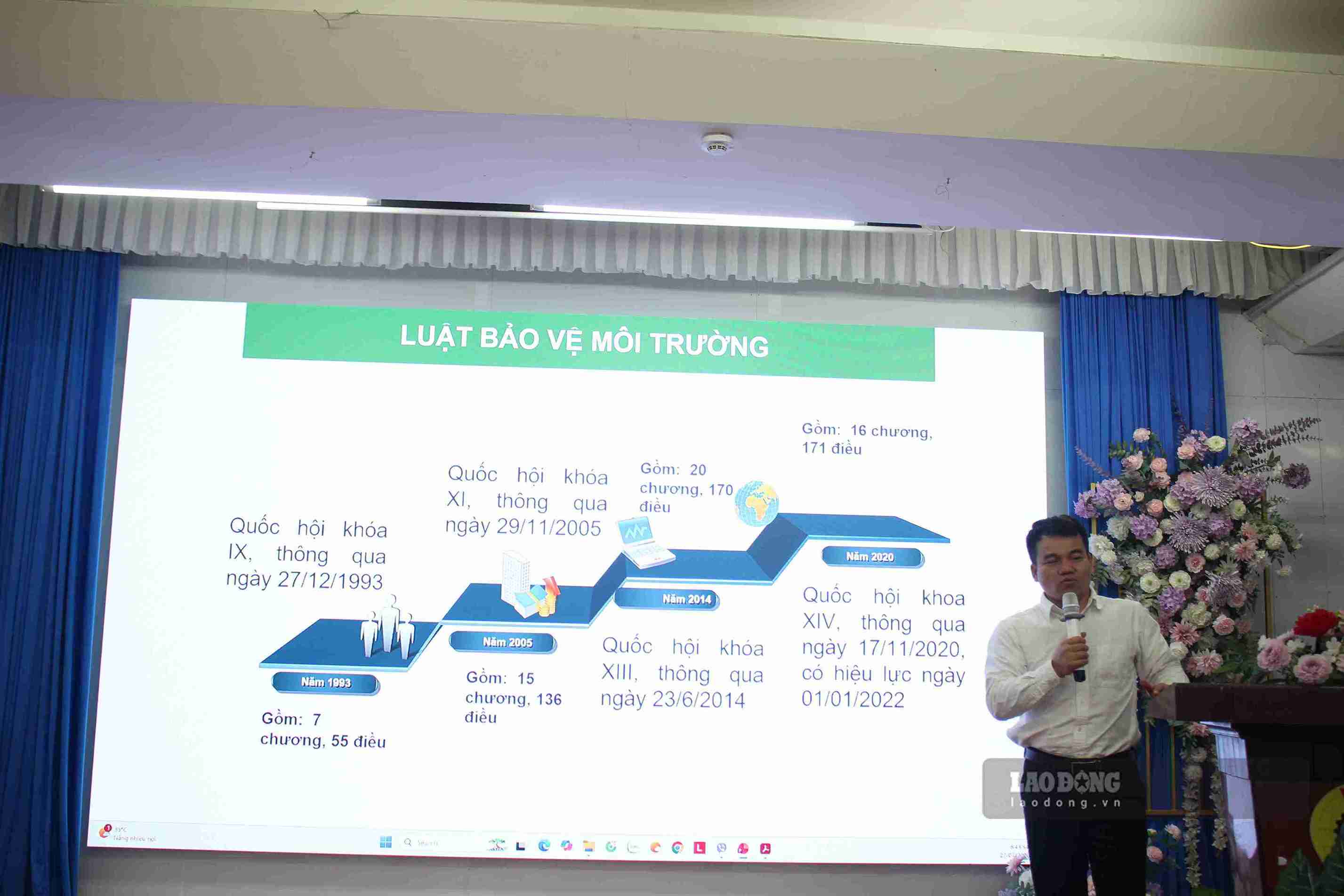
Speaking at the training class, Mr. Nguyen Van Quyet - Standing Vice Chairman of Hai Phong City Labor Federation - said that organizing classes in both the East and West regions helps create favorable conditions for students to participate, and at the same time contributes to unifying awareness, methods and requirements for implementing environmental protection, safety, and occupational hygiene work throughout the city after the merger.
According to Mr. Nguyen Van Quyet, Hai Phong is a large industrial area, concentrating a large number of workers and many high-risk industries. The larger the production scale, the stricter the requirements for risk control, environmental protection and workers' health must be implemented.
In 2024, in general, Hai Phong and Hai Duong before merging, there were 339 labor accidents, killing 36 people and seriously injuring 70 people. In 2025, the whole city recorded 319 cases, killing 34 people and seriously injuring 72 people.
From that reality, leaders of the Hai Phong City Labor Federation emphasized that labor safety and hygiene work must be implemented proactively, not formally, without coping.
In addition to the responsibility of employers, grassroots trade unions need to fully promote their rights and responsibilities according to the 2015 Law on Occupational Safety and Health, actively supervise, propagate, and propose remedies for unsafe risks, contributing to building a safe and sustainable working environment.


