
Identifying risks from before disputes arise
Instead of only appearing when conflicts have arisen, the Da Nang Trade Union is focusing on early detection of issues that directly affect workers' rights to work with businesses to find ways to resolve them.
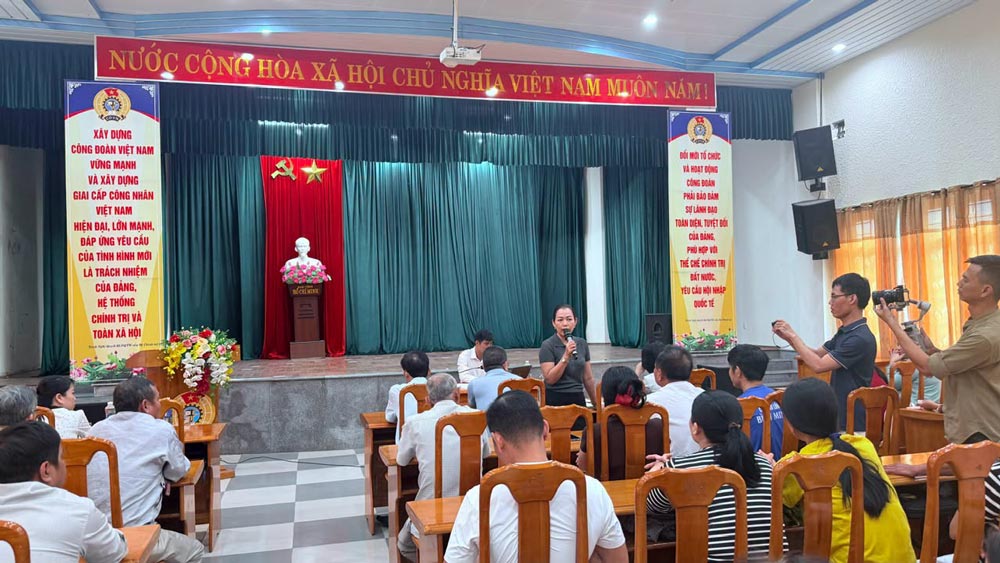
Currently, the Da Nang City Labor Federation manages 2,067 grassroots trade unions and trade unions with 236,024 members. Industrial parks alone have 284 grassroots trade unions with 90,335 members.
With this scale, grasping the employment situation, salaries, bonuses, social insurance, working conditions and the thoughts of workers becomes one of the important tasks of trade unions at all levels.
The reality over the past time shows that when rights are violated for a long time, the Trade Union must use legal measures to protect workers.
This is necessary, but behind each case that must be resolved through mediation, complaints or lawsuits to the court are time, costs and direct impacts on the lives of workers as well as the operations of businesses.
Therefore, a better way to protect is to try not to let small obstacles accumulate into major conflicts.
Ms. Phan Thi Thuy Linh - Chairwoman of the Da Nang City Labor Federation said that the Trade Union must truly be a fulcrum for workers when their rights are affected, and at the same time, it is necessary to strongly shift from "handling disputes" to "preventing disputes".
According to Ms. Linh, to do that, trade unions at all levels must regularly grasp the business situation, jobs, salaries, bonuses, social insurance, working conditions and the thoughts of workers. Through this, signs that may lead to conflicts need to be identified and resolved right from the grassroots level.
Dialogue to solve problems early
One of the important tools to prevent disputes is to create substantive dialogue channels between employees and employers.
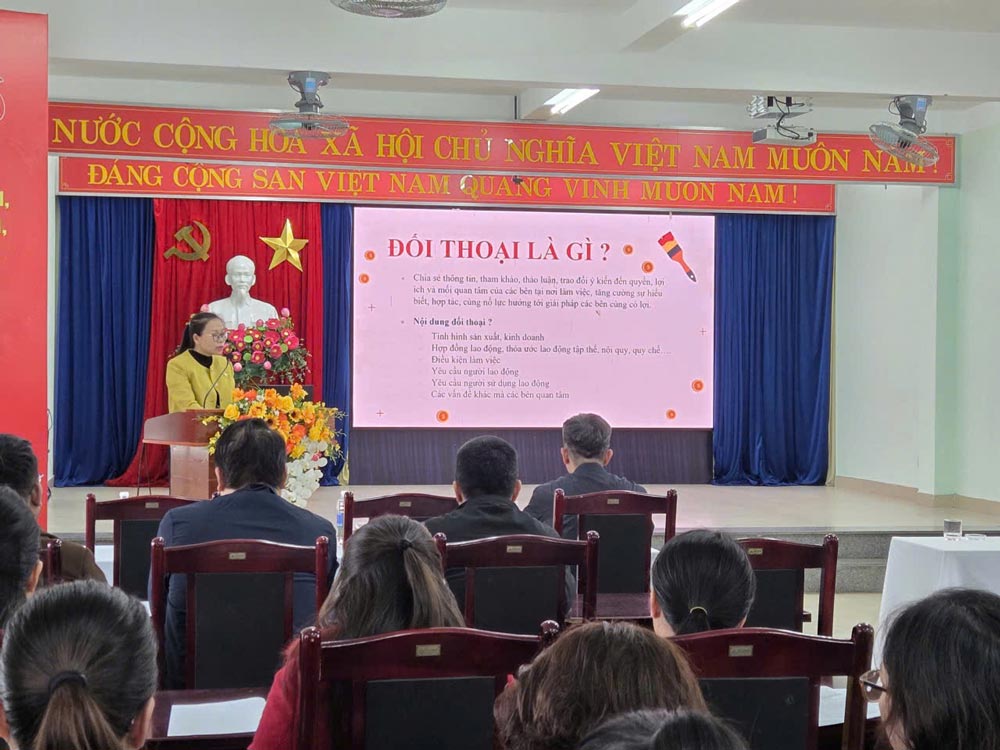
Currently, 100% of non-business units under the guidance scope have organized conferences of officials, civil servants, and employees; the rate of enterprises organizing employee conferences reached 78%, and dialogues at the workplace reached 64%.
Through these channels, workers have the opportunity to express their thoughts and recommendations on employment, income, environment and working conditions. More importantly, arising issues can be identified and resolved before becoming disputes.
Along with dialogue, collective bargaining is being identified as a preventive solution from the root.
To date, 86.9% of units and enterprises under the statistical scope have signed collective labor agreements; of which 56% of agreements are scored and ranked B or higher. Many agreements have specific clauses on salaries, bonuses, benefits, meals, leave, visits, and support for workers.
According to Ms. Phan Thi Thuy Linh, in the coming time, it is not only necessary to pay attention to the rate of enterprises signing collective labor agreements, but more importantly, the quality and substance of each clause.
Contents close to workers such as salaries, bonuses, meals, working hours, rest hours, health care, welfare, housing and working conditions need to be included in negotiations suitable to the conditions of each business.
When the rights and interests of the two sides are discussed in advance, differences have more opportunities to be resolved through negotiation instead of confrontation.
Prevention of disputes therefore does not mean avoiding conflicts. It is to proactively identify differences in benefits, create a mechanism for employees to speak out and work with businesses to find solutions before the issue becomes tense.
That is also a way for the Trade Union to play a bridging role, not only protecting workers when disputes have occurred but also contributing to building harmonious, stable and sustainable labor relations right from the grassroots level.


