
The rented room is as hot as a "hot pan
Recorded at Bac Thang Long Industrial Park, where tens of thousands of workers are working, around the industrial park are rows of boarding houses growing close together in small alleys. Many boarding houses were built more than ten years ago, the walls have become moldy and degraded over time. On peak hot days, small rooms become suffocating, hot air rises from corrugated iron roofs and the heat-absorbing walls last from morning until late at night.
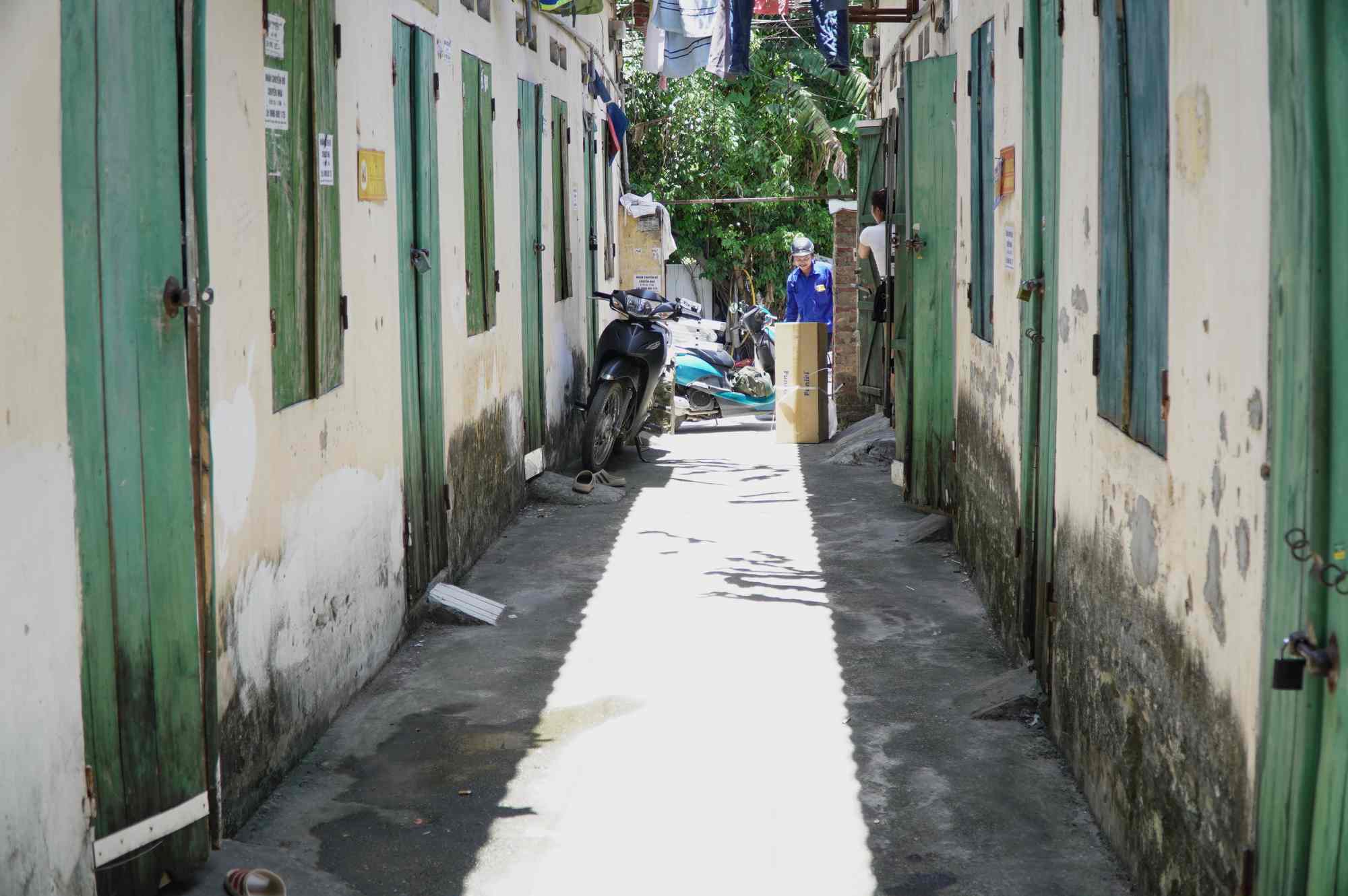
Sitting in a rented room of about 10m2 in area 2/7, Vinh Thanh commune, Lo Van Cong (born 2008, from Thanh Hoa) said that although he had opened all the doors and turned on the fan at full capacity, he still could not sleep.
The room is too hot, so I can't sleep all the time. The meager salary, if you buy an extra air conditioner, will cost the initial investment, not to mention the monthly electricity bill. So I have to endure the heat," Cong shared.
Leaving his hometown of Thanh Hoa to go to Hanoi to earn a living, Cong is currently a delivery staff for a company distributing confectionery and milk. His daily job is to roam by motorbike on the streets to deliver goods to customers. In the days when Hanoi is scorching hot, each trip becomes a challenge for health.
It's hot, so driving on the street is very exhausting, I have to drink water continuously. Some days I'm almost exhausted from heatstroke. But the most haunting thing is when I return to my rented room. All day on the street is already tiring, and in the evening I can't sleep because the room is as hot as a furnace. Every night I sleep intermittently," Cong confided.
In the same situation, Cam Vinh Chuyen (18 years old, from Thanh Hoa) also left his hometown to go to Hanoi to work as a worker. Chuyen rented a room for about 700,000 VND per month, excluding electricity and water bills.
At noon, when I come home from work, I almost can't sleep because it's too hot. Even in the evening, I often sit and surf my phone to get through time, and only wake up when I'm too tired," Chuyen said.
Prolonged sleep deprivation makes both almost no longer have the mood or energy to participate in physical activities and sports after work.
For most of their free time, Cong and Chuyen only stayed in their rented room, surfing the phone or playing games for entertainment. Eating was also quite simple.
We are boys, so we are not good at going to the market or cooking. When we are hungry, we drive around the industrial park, and when we see a restaurant with reasonable prices, we stop by to eat. Many times we only know how to eat because it is convenient and cheap, but we really don't know what the food safety and hygiene conditions at the restaurant are like," Chuyen shared.
Home ownership is a distant dream
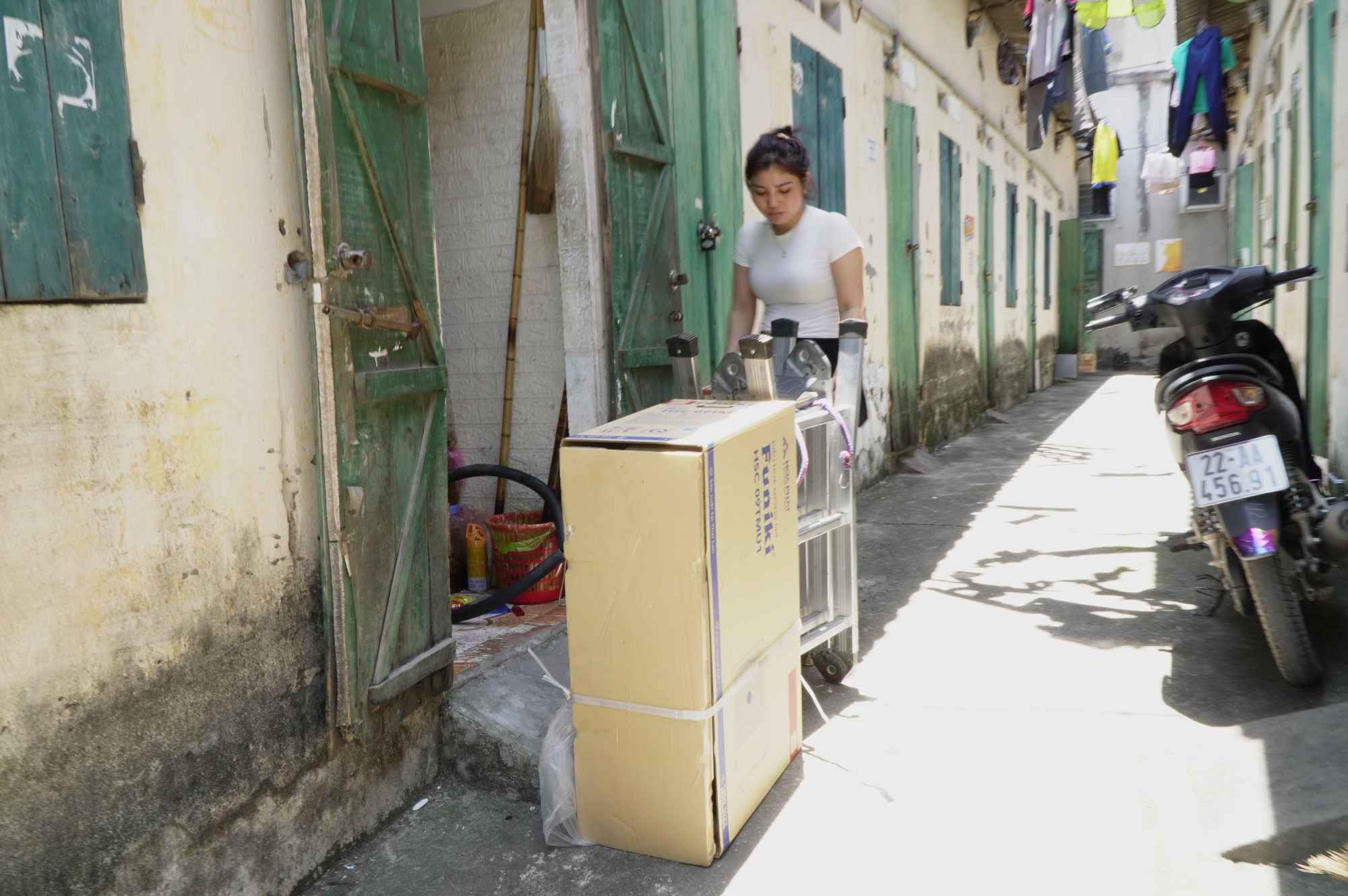
In a rented room of more than 10m2 located deep in a small alley in Vinh Thanh commune, Ms. Lo Thi Hoa (32 years old), a worker in Bac Thang Long Industrial Park, could not hide her longing for her children when mentioning life away from home.
My husband and I are from Nghe An, came to Hanoi to work as workers. Because both of us work in shifts, we don't have time to take care of young children, so we have to send our children to my paternal grandmother in the countryside to help raise them. My husband and I try to save money to go home to visit our children," Ms. Hoa confided.
Faced with the reality that workers' lives are still facing countless difficulties due to low wages, having to stay in cramped rented rooms, on the afternoon of June 23, at the first meeting of the National Wage Council, Ms. Tran Thi Thanh Ha - Member of the Standing Committee, Deputy Head of the Labor Relations Department of the Vietnam General Confederation of Labour, said that the Vietnam General Confederation of Labour proposed adjusting the regional minimum wage in 2027 by month with 2 options:
Option 1: Adjust the minimum wage to increase from 360 to 520 thousand VND, an average increase of 9.8% compared to 2026.
Option 2: Adjust the minimum wage to increase from 315 to 450 thousand VND, an average increase of 8.5% compared to 2026.
To have a basis for proposing to increase the regional minimum wage according to the above 2 options, in March and April 2026, the Vietnam General Confederation of Labor conducted a survey in 7 provinces and cities with 196 businesses, nearly 2,000 workers answered the survey, showing that in terms of housing, 32.1% of workers have to rent private boarding houses (20.8% in 2025); 0.9% in collective houses of enterprises (3% in 2025).
The average housing area per capita only reaches about 7.6 m2/person. Thus, the number of workers who have to rent private boarding houses has increased higher than in 2025, the average housing area is significantly lower than the average housing area standard of urban residents today and is increasingly shrinking, showing the reality that many workers still have to live in increasingly cramped housing conditions.
The proposal to increase the regional minimum wage opens up expectations for improving income, reducing spending pressure and improving the lives of workers.


