Moving far away to reduce cost pressure
More than 10 years working as a worker at Thang Long Industrial Park (Hanoi), Ms. Trinh Thi Chung receives a basic salary of nearly 7 million VND per month.
Ms. Chung has 3 children of school age (11th grade, 6th grade, elementary school). Previously, her family rented a room in CT1A apartment complex, Thien Loc commune, near her workplace. However, living expenses in this area are increasingly high, forcing her and her husband to move to Soc Son to reduce rent. Moving the room helps save a few million VND per month, but in return, she has to travel dozens of kilometers every day to get to the company.
Although it's harder, staying near the company, house rent, electricity and water bills, and living expenses are all too much for my family" - she said.
To control spending, Ms. Chung maintains the habit of recording each expenditure item in the day. From market money, gas money, children's tuition fees to small arising expenses such as buying school supplies, all are carefully recorded.
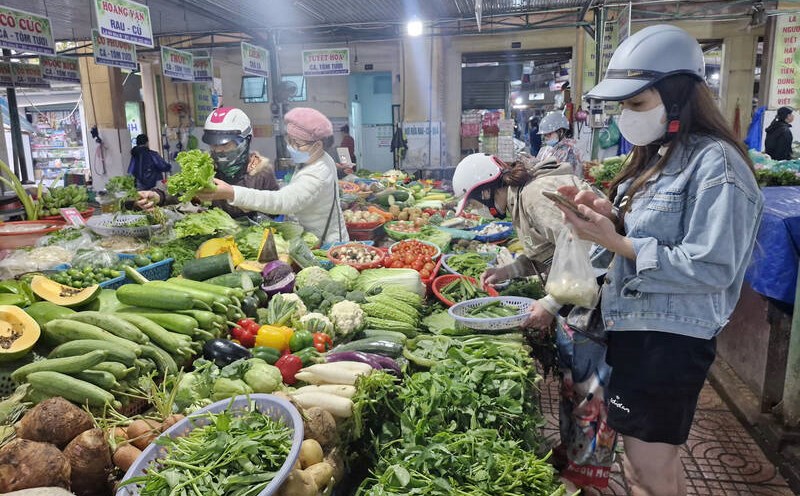
At the end of the day, I check how much I have spent. If that day it exceeds the limit, the next day I have to cut it immediately, for example, reduce meat in the meal, replace it with vegetables or eggs to balance it back" - she shared.
Not only saving money on food, her family's shopping is also carefully considered. Unnecessary items such as new clothes, electronics or decorations are all put aside. She only prioritizes expenses directly related to her children's health and education.
For families with young children, education costs are still the largest and most difficult to cut expenses. Ms. Chung said that her three children are in three different levels of education, so each month the family has to spend a significant amount on tuition fees, books, uniforms and extracurricular activities.
No matter how difficult it is, my husband and I still try to ensure that our children are fully educated. Parents may be a little disadvantaged but do not want their children to be disadvantaged," she said.
To reduce the burden, she often buys old textbooks, reuses her siblings' uniforms for her younger siblings, and guides her children to use electricity and water sparingly in daily life.
Small savings, long-term accumulation
In addition to tightening spending, Ms. Chung also applies savings by sending money online. Whenever she has a surplus of a few hundred thousand to one million VND at the end of the month, she immediately transfers it to an online savings account to avoid spending on other things.
There are months when no one is sick, no weddings or weddings arise, so I can save a little. A little but gradually becomes a sum in case of difficulty," she said.
Not only Ms. Chung's family, but many other workers in industrial parks in Hanoi are also having to adjust their financial management methods.
Mr. Nguyen Van Tuan (28 years old, from Phu Tho) - a worker at an electronics company in Thang Long Industrial Park - said that before he often did not pay attention to finance, but since living expenses increased, he was forced to change.
My family of 4 rents a room in Hau Duong village (Thien Loc commune). Since the beginning of this year, my wife and I have often asked our parents in the countryside to send food. Buying things in the countryside helps reduce costs and ensures food safety and hygiene. Every month, we also try to save at least 1-2 million VND to prepare for unemployment or unexpected events" - Mr. Tuan shared.
According to Mr. Tuan, planning spending helps him realize that many expenses were previously unnecessary, such as going out to eat and entertain too often.