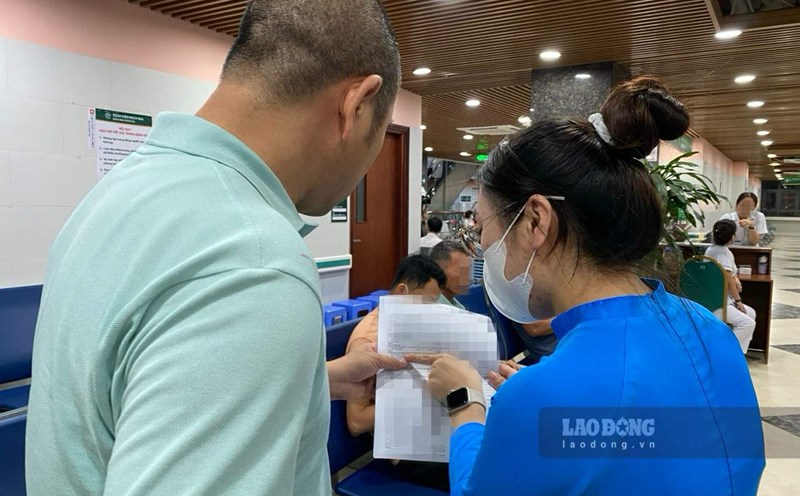
On September 18, the Delegation of National Assembly Deputies of Ho Chi Minh City organized a Conference to collect opinions on the draft Law amending and supplementing a number of articles of the Law on Social Insurance. At the conference, delegates focused on discussing expanding the scope of participation in social insurance (SI) and compulsory health insurance (HI), focusing on technology drivers, and at the same time proposing to clarify the relationship between foundation businesses and employees to ensure social security rights.
Deputy Director of Ho Chi Minh City Social Insurance Nguyen Quoc Thanh said that in the process of contributing policy opinions on social insurance, the unit proposed to add 3 groups of subjects that need to be concerned, including technology drivers, individuals doing business on e-commerce platforms and workers at construction sites.

In which, technology drivers are a group that needs to be studied and supplemented soon into the appropriate insurance participation category. According to the Deputy Director of Ho Chi Minh City Social Insurance, for 4-wheeled technology drivers, Decree 158 on conditions for transport business stipulates that transport business units must sign labor contracts, pay various types of insurance and ensure the rights of employees, including drivers and service staff on vehicles.
However, this regulation does not mention the group of 2-wheeled technology drivers. Therefore, the City Social Insurance proposes to study including this group of subjects in the regulation to soon enjoy social security benefits.
Sharing about this situation, Mr. Le Tan Luu, Chairman of the Binh Tan Technology Motorbike Taxi Union, informed that the city currently has about 400,000 technology drivers. Although the work is flexible, drivers are still directly managed by the platform business through trip assignment, fare control, discount rates and application of accounting sanctions.
From that reality, Mr. Luu proposed to bring the relationship between the foundation business and drivers into the scope of regulation of the Labor Code, soon build a mechanism to share responsibility for social insurance and health insurance contributions, and at the same time transparentize freight rates, revenue sharing rates and working conditions.
At the conference, Ms. Luong Thi Toi, Deputy Director of the Ho Chi Minh City Department of Home Affairs, agreed with the opinions to include all technology drivers, including two-wheeled, four-wheeled vehicles and similar types, in the social insurance participation category immediately in the law, and at the same time add construction workers and impose responsibilities on contractors.
Ms. Toi proposed to interlink data between the tax, business registration and social insurance sectors to promptly detect acts of late payment and evasion of social insurance. In case these groups of workers cannot be immediately included in the law, management agencies need to require businesses to make the platform public and transparent with algorithms under the supervision of functional agencies.
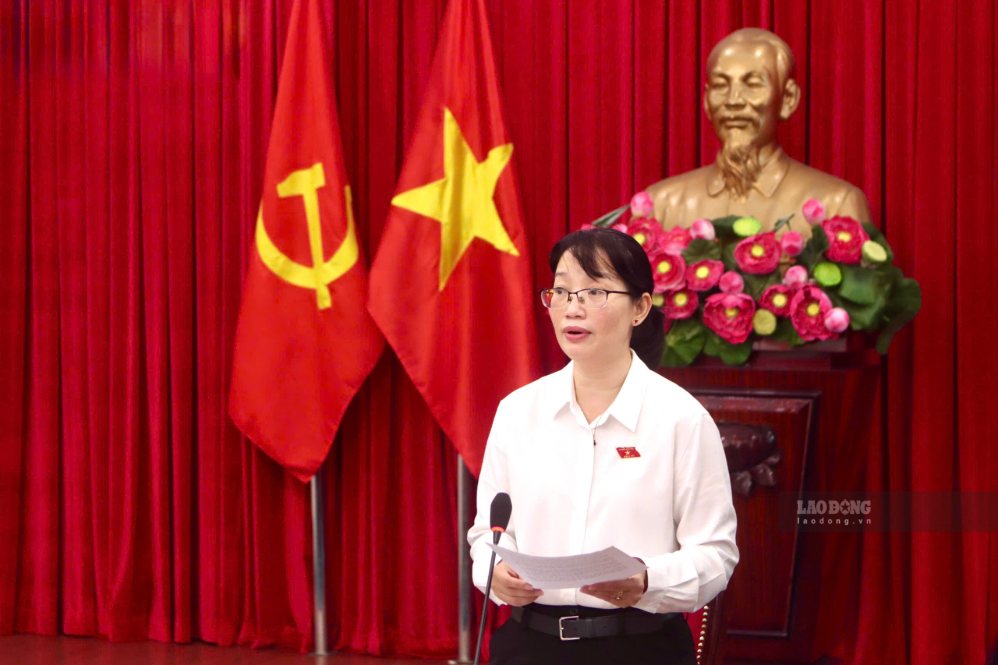
Speaking at the conclusion of the conference, Ms. Tran Thi Dieu Thuy, Deputy Head of the National Assembly Delegation of Ho Chi Minh City, proposed to continue to clarify the criteria for expanding the subjects participating in compulsory social insurance, especially the group of informal workers and digital platform workers.
She emphasized the responsibility of the legislative body to include strict regulations in the law, not to let businesses and units circumvent the law to evade responsibility for ensuring the legitimate and lawful rights of workers.
At the same time, the Deputy Head of the Ho Chi Minh City National Assembly Delegation requested a careful review of regulations on evasion and late payment, the 6-month one-time payment is still lacking, as well as a thorough assessment of the capacity and authority of the commune level when assigning tasks of inspection, sanctioning and resolving complaints and denunciations related to the field of social insurance.