Enterprises tighten spending, labor demand decreases
Ms. Bui Que Anh - owner of a Hoi An bakery and spring roll system in Hanoi said that the purchasing power at the end of 2025 at her store system will decrease by about 40% compared to previous years.
At the end of the year, my store system often increases the purchasing power of holiday orders, even buying them as gifts. This year, purchasing power has decreased significantly. I do not recruit more people to work like every year at sales points, only recruiting 1 kitchen assistant, said Ms. Que Anh.
Not only in the retail sector, services that often employ many seasonal workers such as packaging goods, delivery, and organizing year-end events are no longer vibrant. Many units have switched to process optimization, using formal labor or applying technology to reduce dependence on seasonal labor.
Mr. Do Ngoc Tung - business director in the field of e-commerce said that instead of recruiting a large number of short-term workers as before, businesses now prioritize automating some stages, only recruiting more workers when really necessary. "The cost of training and managing seasonal labor is getting higher and higher, while the effectiveness is not as good as before," said Mr. Tung.
seasonal jobs are no longer "easy to find"
Since mid-November 2025, Doan Ngoc Trang (a third-year student at a university in Hanoi) has continuously surfed seasonal job search groups with the hope of earning more income to cover living expenses and buy bus tickets to her hometown.
Every year, when I find a seasonal job during Tet, I have many options such as being a sales staff, packaging, and duty at the counter during Tet. This year, I've 'checked' information from many places but still haven't found a suitable job. Some places require additional experience or skills, while others only accept full-time workers, Trang shared.
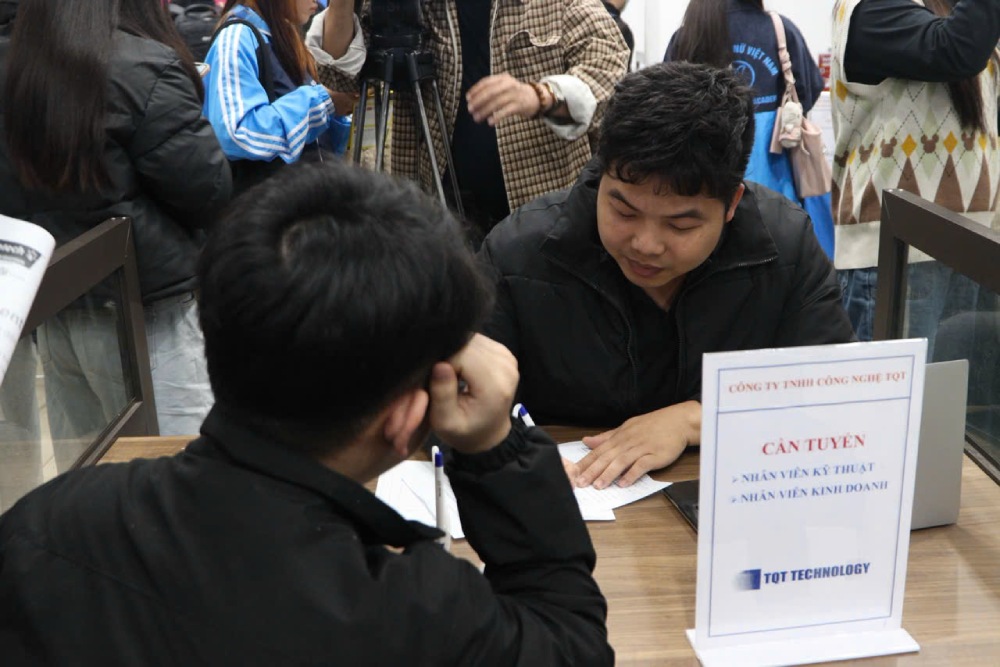
In reality, not only students but many young workers are also having difficulty finding short-term jobs at the end of the year. In contrast to the vibrant recruitment atmosphere of previous years, many locations that were considered "key" for seasonal jobs such as retail stores, fashion stalls, food and beverage services, small warehouses... this year have been operating at a low level.
Mr. Phung Xuan Bac, who has worked seasonally for 3 years at fashion stores on Chua Boc Street, said that before, every Tet holiday, the store often recruited 2-3 more sales staff per shift. However, this year, many stores only keep old staff, even cut working hours to save costs. "Some stores have closed completely, hanging signs for transfer, returning premises, so there are almost no opportunities for seasonal workers," said Mr. Bac.
The decrease in employment while the number of job seekers is still large has caused the level of competition among the year-end seasonal labor group to increase significantly. Many students have reported that even simple jobs such as sales, warehousing, and packaging also require higher requirements for skills and working time.
"Some places require knowing how to use sales software, process online orders, and communicate well with customers. If I can't meet the requirements, it will be very difficult to accept them," said Ms. Le Thi Ngoc Anh - a final year student at a university in Hanoi.
According to Ms. Ngoc Anh, for first-year, second-year students or young workers who do not have much experience, the opportunity to access seasonal jobs is even narrower.
Faced with the shortage of jobs, many young workers are forced to struggle, accepting to do jobs with lower incomes or not in accordance with initial expectations. Some students choose to work by the hour with reduced salaries compared to previous years; others accept hard work, long hours to earn more income.
Mr. Vu Quang Thanh - Deputy Director of the Hanoi Employment Service Center said that the decline in seasonal employment at the end of the year is not only a temporary phenomenon, but reflects the common difficulties of production and business activities. When businesses narrow their scale and cut costs, the most vulnerable group of workers is young workers and students working short-term.
This reality shows that young students and workers cannot continue to rely on seasonal jobs of a short-term nature. Proactively equipping professional skills, digital skills, foreign languages and practical experience right from school is a key factor to improve competitiveness.
When seasonal jobs are also becoming scarce, the short-term livelihood problem of young workers becomes even more revealing. This is also a warning for stakeholders to take the quality of human resources and the adaptability of young workers to the current fluctuations in the labor market more seriously.