
Ms. Trang is a component assembly worker in Thang Long Industrial Park (Hanoi).
In her hand was a bag of food bought quickly to prepare for dinner. Seeing her return, her 10-month-old son immediately reached his hand towards his mother - a simple joy to relieve fatigue after a day of work.
The rented room in Hau Duong village, Thien Loc commune, Hanoi, about 15 m2 wide, is the residence of 4 people including: Ms. Trang, her husband, mother-in-law and young child.
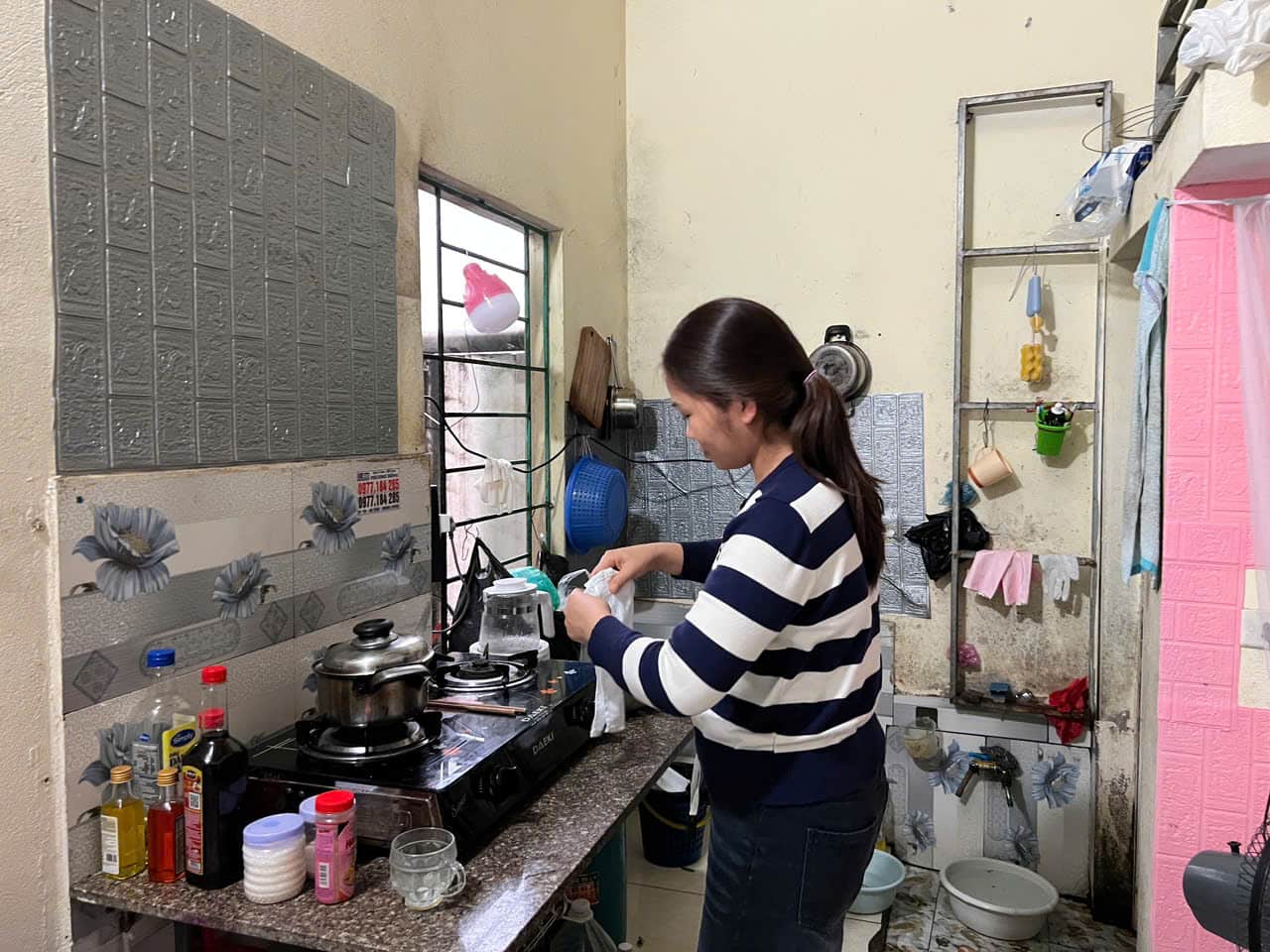
She also has another son who is being sent to the countryside for her grandfather to take care of. With a rent of 1.5 million VND per month, the small room is both a place to rest and a living space for the whole family in the expensive city.
Ms. Trang said that in the months without overtime, her salary is only about 9 million VND after deducting insurance. This is the income level of a worker with more than 10 years of seniority.
If you work overtime a lot, your income can increase by 2-3 million VND per month; if you work less, it only increases by a few hundred thousand to about 1 million VND.
Her husband is also a worker. The couple shoulder the burden of rent, living expenses, raising young children, taking care of their elderly mother in the city and sending money back to their hometown for their eldest child.
As soon as the salary comes in, all expenses are divided, almost no money left" - Ms. Trang shared. In the past two months, her family has fallen into a situation of "fighting each other month", having to borrow more to cover expenses. As long as the child is sick or unexpected expenses arise, the financial problem becomes even more deadlocked. "If the child is not sick, it will be temporarily enough to cover expenses" - she said, her voice lowered.
For workers like Ms. Trang, the concept of accumulation is almost a luxury. Every penny of salary is carefully calculated, from daily meals to electricity, water, and milk for children. In the context of increasing living costs, current salaries are difficult to keep up with urban life.
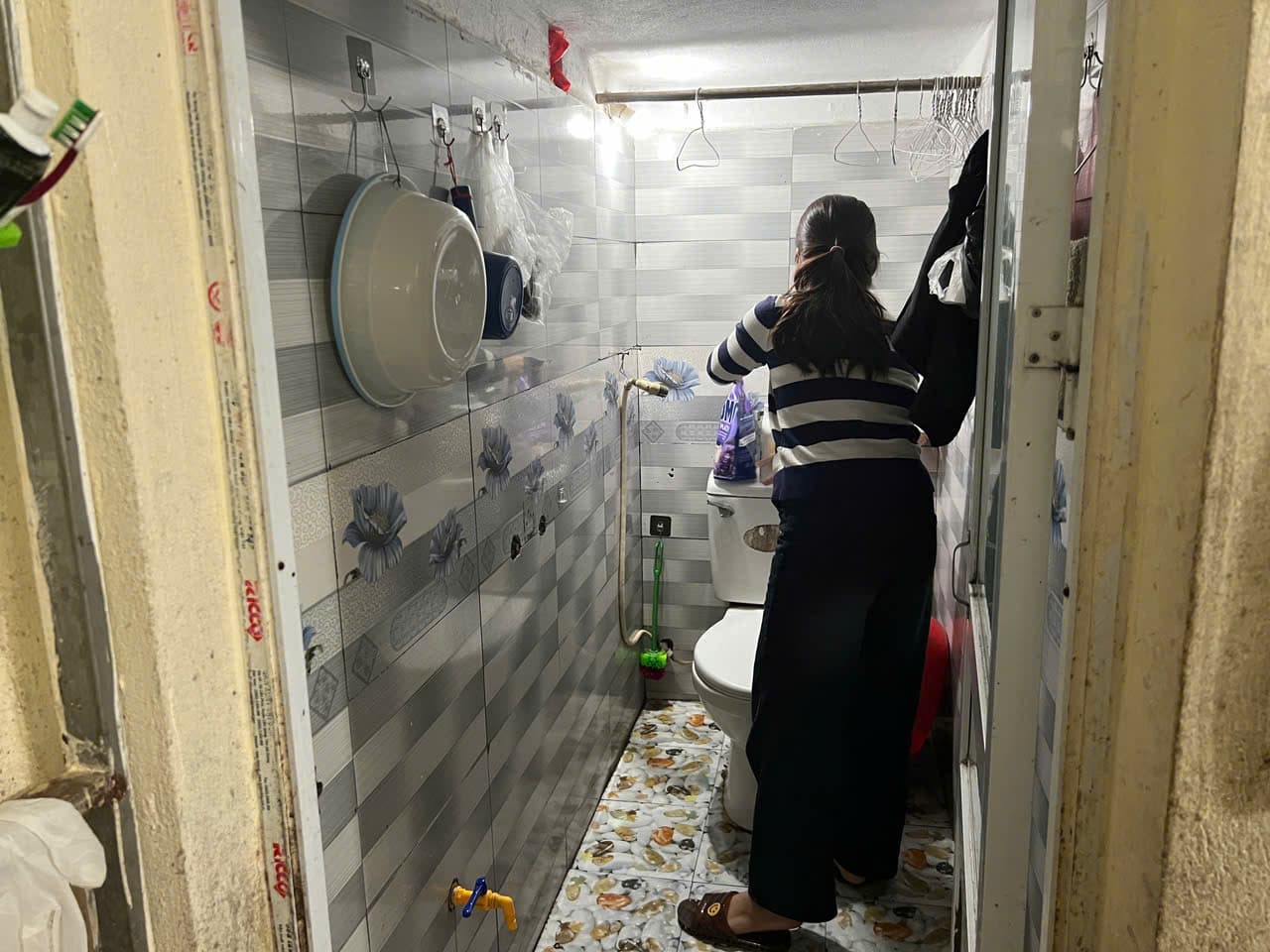
As a worker, Ms. Trang's wish is also very simple: to have a salary increase. "How much the State increases for workers, that's how precious it is," she said.
According to her, adjusting the minimum wage not only helps improve income, but also creates more motivation for workers to feel secure in sticking with the business, reducing daily worries about food and clothing.
Ms. Trang's story is not isolated. Hundreds of thousands of workers making a living in industrial parks and export processing zones across the country are also in a similar situation, with regular income deficits and spending always at a "just enough" level.
For them, an increase in salary of 1 dong is also precious, because it is not only a figure on the salary scale, but also an hope to make life less difficult.
In the plan to organize activities to participate in the National Wage Council in 2026, issued by the Vietnam General Confederation of Labor on February 9, 2026, a content that workers are particularly interested in is the development of a plan and proposal to adjust the regional minimum wage in 2026.
According to the plan, these options are expected to be completed and submitted in May and June 2026, after the Vietnam General Confederation of Labor organizes a survey and comprehensive assessment of the labor situation, wages, income, spending and living standards of employees at enterprises in the period from February to May 2026.
In the context that the Vietnam General Confederation of Labor is preparing plans to propose adjustments to the regional minimum wage in 2026, everyday stories like Ms. Trang's are the truthful voice from the grassroots level.
That is an important basis for wage policies to continue to be adjusted in the direction of ensuring a minimum living standard and improving the lives of workers.


