
Rent accounts for 1/3 of income
Mr. Nguyen Den Phu, born in 2002, from Yen Khe village, Phu Dong commune (Hanoi). In 2024, Mr. Phu graduated from university and applied for a job at a media unit in Cau Giay ward (Hanoi). 25km is the distance from Mr. Phu's house to his workplace. Mr. Phu decided to rent a house on Vo Chi Cong street (Phu Thuong ward, Hanoi) to conveniently go to work.
With a total income of about 10 million VND/month, Mr. Phu spends a fixed amount of 3.5 million VND/month just on rent. Electricity and water bills in the summer can be up to more than 1 million VND/month.
Rent accounts for 1/3 of fixed income, not to mention food and travel expenses. Almost no month I have enough money to spend and have to regularly ask for additional support from my family. After 7 months, I decided to quit my job at my apprenticeship, pack my bags and return to my hometown and find new opportunities," Mr. Phu said.
Currently, Mr. Phu is working as a marketing staff for a car care center on Hong Tien street, Bo De ward (Hanoi) with a salary of 10 million VND/month. The distance from home to work is only 7km, Mr. Phu does not spend money on rent because he lives with his parents. Not to mention, he is supported by the company with 20,000 VND/day for lunch, and the cost of food is also much lighter.
Currently, every month I give my mother 3-4 million VND each month to contribute more money for food and electricity and water bills. When I rented a house in the city, I always felt stuck because it was difficult to balance finances. In some months, after receiving the salary, I had enough to spend for the first 10 days. The feeling of being dizzy with money to ensure a minimum living standard makes me always fall into a state of fatigue; the motivation to work also decreases due to financial difficulties," Mr. Phu said.
Going to the suburbs, workers "easier to breathe
Ms. Trinh Minh Ha, born in 2000, is currently a supplier for a trading company in Hoan Kiem ward (Hanoi). Ms. Ha's job is to call raw materials, negotiate prices with suppliers and compare payment debts.
As a young worker with not much experience, not graduating from "top schools", Ms. Ha determined that going to work would have to start from a low position, basic salary to learn and have initial income to ensure life.
When she first started working (October 2025), Ms. Ha rented a house to live with a friend on Nam Du street, Vinh Hung ward (Hanoi). From home to work is only more than 2km, every morning Ms. Ha has time to prepare lunch to save on food costs. However, after only 3 months, she could not afford the rent, electricity and water costs in the inner city.
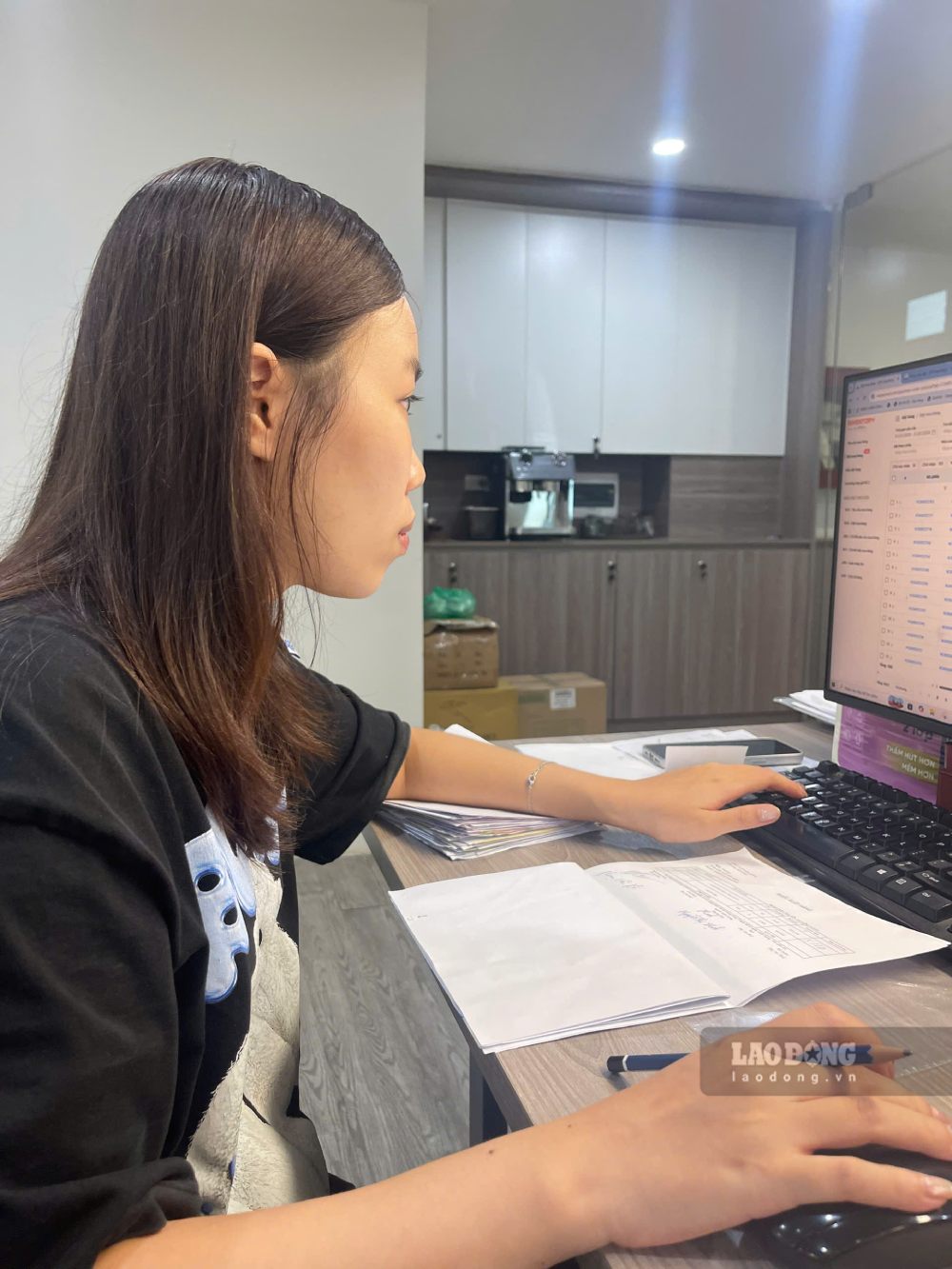
Because I just started working, my salary is only 7 million VND/month. I have to spend about 2.2 million VND/month on rent (divided with friends) and electricity and water. I work very hard to balance nearly 5 million VND left for all living expenses, from food, gasoline, phone bills, medicine when sick...", Ms. Ha said.
Also according to Ms. Ha, renting near the company, she can arrange lunch from home to take away, but calculating the cost saved is only about 10,000 VND/day.
In January 2026, Ms. Ha moved down to rent a house in Thuong Tin commune (Hanoi). She and 3 friends rented an old collective house of more than 50m2 for 3.5 million VND. Including electricity and water costs calculated according to household prices, Ms. Ha only spends about 1 million VND per month.
Going more than 5km further than the old rented place but having more than 1 million VND per month for living expenses, I feel much easier. Before, once standing at a gas station, I even calculated whether to pour 50,000 VND or 70,000 VND, down to the bottom to avoid falling into the situation of borrowing money from friends to live and wait for my monthly salary," Ms. Ha shared.
Talking to Lao Dong reporters, Ms. Nguyen Thi Lan Huong - former Director of the Institute of Labor Science and Social Affairs said that many new workers often choose to rent rooms near their workplace for convenient travel. However, after a period of time, many people realize that the cost of renting houses, eating, and living in suburban areas is cheaper, so they decide to change jobs to "ease their breathing" or change rental locations to reduce economic pressure.
This is very normal and depends on the flexibility of the labor market, working style, public transport infrastructure, and suburban amenities. However, the trend of workers going to the suburbs to rent houses to reduce financial pressure is quite common. In the world, in many countries there has been this trend, especially after the COVID-19 epidemic, pressure in the inner city has decreased significantly because many people work remotely and flexibly. Some businesses organize working 10 hours/day instead of 8 hours/day, but workers only work 4 days a week," Ms. Lan Huong said.


