
They are both laborers who create value for businesses and pillars in taking care of their families.
In a room of less than 12m2, Ms. Nguyen Thi Hang (29 years old, from Thanh Hoa) - a worker in Thang Long Industrial Park (Hanoi) - is busy preparing breakfast and clothes for her 2-year-old son and then hurriedly sends her child to a spontaneous childcare group near the industrial park.
At 6 o'clock, she arrived at the workshop. A working day of 8-10 hours begins, which is also when the double pressure cycle between the factory and the rented room tightens.
Just need my child to be sick for a day and I'm confused. Taking time off work costs diligent work, and if I don't take time off, no one will take care of my child" - Ms. Hang shared.
Her husband works as a technology motorbike taxi driver, with unstable income. Every month when it rains and storms continuously, running fewer trips, the whole family of four mouths depends on her salary of more than 7 million VND.
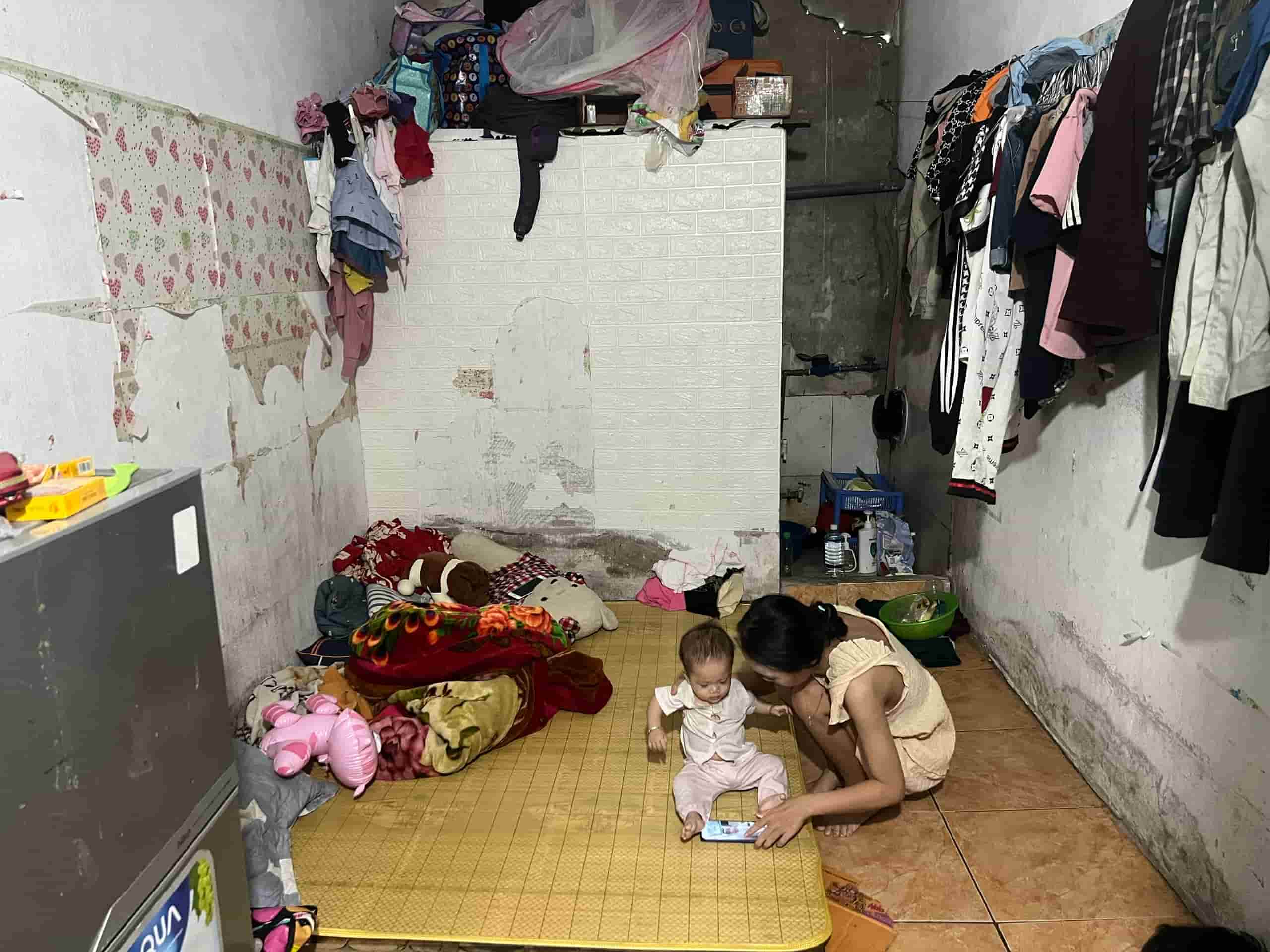
Ms. Hang's story is not unique. According to statistics from the Vietnam General Confederation of Labor, female workers account for about 60-65% in industrial parks and export processing zones; most of whom are of reproductive age and raising young children. However, housing conditions, schools, and childcare services around industrial parks are still lacking and not synchronized.
According to a report by the Statistics Department, Ministry of Finance, the average income of workers in 2025 is 8.4 million VND/month. Of which, the average income of male workers is 9.5 million VND/month, female workers is 7.2 million VND/month; the average income of workers in urban areas is 10.1 million VND/month, and in rural areas is 7.3 million VND/month.
While the cost of renting a room, electricity, water, sending children and minimum living expenses in the city has accounted for the majority of this amount. For families with young children, the cost of sending children ranges from 1.5-2.5 million VND per month, not including milk and medicine costs when children are sick" - Ms. Hang said.
And Ms. Tran Thi Lan (33 years old) - an electronics worker in Hanoi - recounted that she once had to send her child back to her hometown for her grandparents to take care of for the first two years of her life.
“I only get to visit my child once a month. Many late nights, returning to an empty rented room, I just hug my phone and watch my child through the screen” - Ms. Lan choked up.
Pressure does not only come from the economy. After 8-10 hours of standing on the production line, with tired legs, many female workers still have to continue the "second shift" in their rented rooms: cooking, washing clothes, feeding children, and coaxing children to sleep.
Children grow up in cramped spaces, lacking playgrounds, lacking fresh air. Humid season, damp rented rooms, many mosquitoes, young children are prone to respiratory and digestive diseases.
Many women cannot stand the pressure of both working at high intensity and worrying about young children, so they have to resign" - Ms. Lan shared.
Deputy Director of YouMe Law Company Limited Vu Thuy Trang said that in fact, legal policies have regulations to protect female workers such as 6-month maternity leave, and the right to raise children under 12 months old to have a 60-minute day off.
However, when returning to work, the problem of sending children and taking care of sick children is still mainly borne by the mother.
According to her, for female workers to be able to feel secure in their work and stick with it for a long time, more practical policies are needed, from housing, kindergartens to enough salary to live on.


