
Contributing opinions to the Draft Report of the Executive Committee of the Vietnam General Confederation of Labor (XIII term) at the XIV Congress of the Vietnam Trade Union, term 2026-2031, Mr. Le Van Binh - Chairman of the grassroots Trade Union (CĐCS) of Saitex International Dong Nai Co., Ltd. (Amata Industrial Park, Long Binh Ward, Dong Nai City) wished that in item III - Improving the effectiveness of representing, caring for, and protecting the legitimate and lawful rights and interests of union members and workers - the Trade Union would continue to have more and better policies to care for union members and workers, especially paying attention to building social housing for workers.
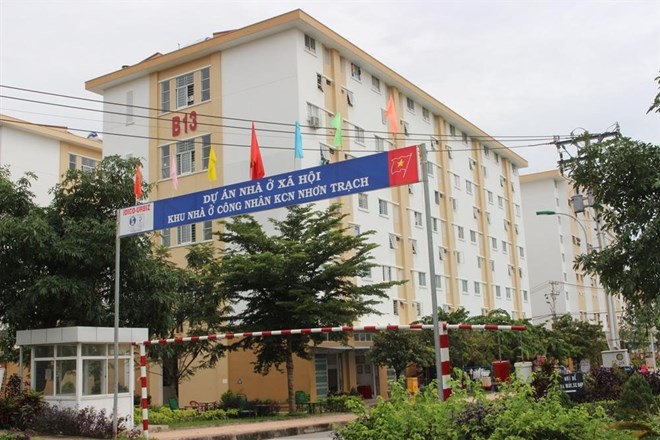
According to Mr. Le Van Binh, currently, many workers in Dong Nai city are migrant workers, and are having to rent rooms in houses lacking many conditions.
Therefore, Mr. Binh hopes that the 14th Congress of the Vietnam Trade Union, term 2026-2031, will have more policies to build social housing areas for workers to rent, because currently many social housing areas in Dong Nai city still far exceed the income capacity of workers (about 10-12 million VND/month) - an income level only enough to cover family life.
Dong Nai city currently has 58 industrial parks established and many industrial clusters, attracting thousands of domestic and foreign businesses, along with about 1.4 million workers.
According to Standing Vice Chairman of Dong Nai City People's Committee Nguyen Kim Long, Dong Nai city is a large industrial area, with a large labor force, and a very large number of workers and migrant workers. Therefore, industrial development must go hand in hand with synchronous development of social infrastructure for workers. This is not only a requirement for social security, but also a condition for sustainable development.
In the coming time, Dong Nai city will continue to promote the development of social housing, worker accommodation areas; invest in cultural, medical, educational institutions, kindergartens, community living areas and essential public services in or near industrial parks so that workers have a more stable place to live, better living conditions, and feel secure and attached for a longer time.


