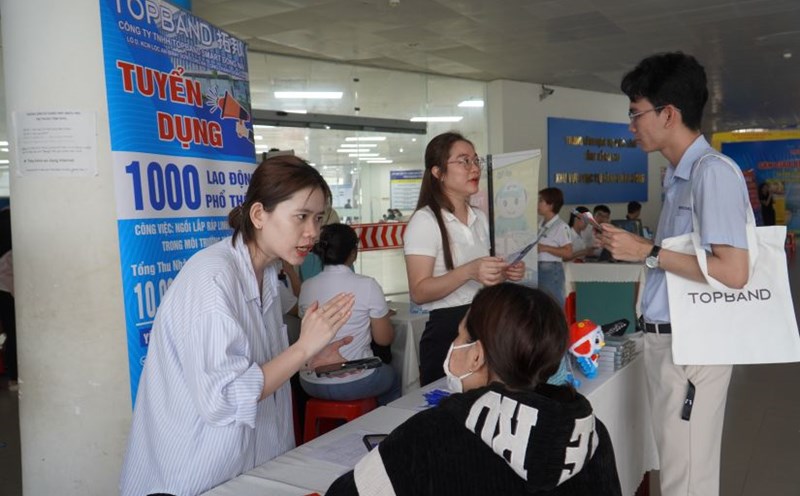
Localized shortage in specialized industries
Mr. Nguyen Duc Long - Director of Hoang Binh Company - said that the company specializes in processing food for foreign partners and domestic high-end customers, such as 5-star hotels. However, in the third quarter of 2025, he faced difficulties when he could not find personnel to deploy large orders from a 5-star hotel.
After many unsuccessful efforts, the company had to hire foreign experts with high salaries to transfer technology. Mr. Long said that the biggest difficulty is finding experienced people to implement high-end orders, especially when FDI enterprises attract most skilled workers.
Summary from the Hanoi Employment Service Center, the labor shortage situation is local, focusing on industries with specific job characteristics, high pressure or professional skills requirements.
The fields of industrial production, operation - technology, logistics, transportation - delivery, retail, food services and customer care still have a large recruitment demand. In particular, positions that directly create products, services or revenue for businesses face difficulties in finding sufficient suitable labor.
Many businesses face difficulties in production when there is a shortage of skilled workers who know how to operate modern machinery. For unskilled workers, heavy work, shift work and progress pressure make them not attached for long.
In the logistics sector, the development of e-commerce creates a demand for recruiting drivers, warehouse and delivery staff, but prolonged work pressure and working hours make it difficult for many businesses to recruit enough people, especially in peak periods.
Labor market differentiation
Faced with the shortage of human resources, many businesses have adjusted their preferential policies in a direction that is more beneficial for workers. Not only increasing basic salaries, businesses also supplement allowances, professional bonuses, productivity bonuses, meal support, gasoline, housing or travel expenses.
Ms. Phung Kieu Trang - Deputy General Director of Minh Phung International Transport Company (Yen So ward, Hanoi) - said that businesses are forced to raise their income level to retain workers.
If welfare is not improved, workers are very likely to switch to other businesses with better conditions, especially in the context that some industries are short of people," Ms. Trang said.
At Ms. Trang's business, in addition to publicly announcing bonus regimes for holidays, Tet, periodic health check-ups, and organizing activities to care for spiritual life to create peace of mind for employees, the company also builds additional specific internal welfare. For example, employees are additionally marked with diligence points if they ensure actual working days meet standards; productivity points if trucks are imported and exported on time... All these scoring points are converted into money, paid in the last month of each quarter's salary.
Labor experts noted that the shortage of human resources in some industries does not mean that workers can easily apply for jobs at all positions.Businesses still set certain requirements on discipline, working attitude, adaptability and willingness to stick with them for a long time.
Reality shows that some businesses accept increasing welfare but still do not recruit in large numbers, but only supplement personnel for truly necessary positions.This makes job opportunities open more clearly for workers who meet job requirements.
Mr. Le Quang Trung - former Deputy Director in charge of the Department of Employment - said that the shortage of human resources in some industries is contributing to making the labor market more clearly differentiated: Industries and positions lacking people force businesses to compete with welfare, while industries with surplus labor recruit more closely.