
Vietnam Cement Corporation (VICEM) promotes the application of technology in occupational safety and health (OSH), in which artificial intelligence (AI) is expected to help identify risks early, prevent accidents, and move towards green production.
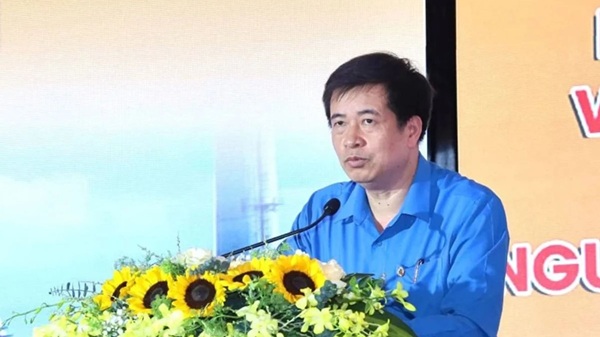
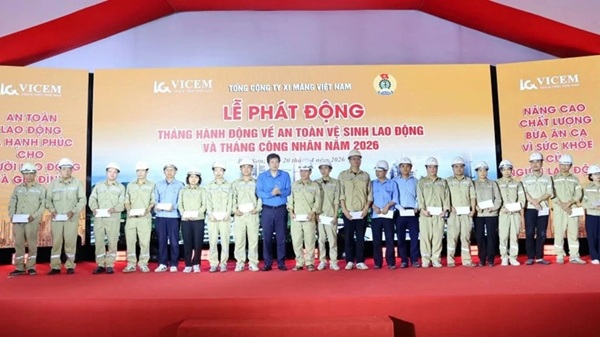
On April 20, VICEM organized the launching ceremony of Workers' Month and Action Month on Occupational Safety and Health in 2026. According to Mr. Nguyen Quoc Viet - Chairman of VICEM's Member Council, cement production is a heavy industry, with many potential safety risks, from raw material exploitation, transportation, grinding, blending to smelting and product distribution. This is a complex field of many dangerous factors such as heavy mechanics, high-voltage electricity, chemicals and thermal treatment.
Therefore, OSH work must be built on a scientific basis, strictly managed, covering the entire production process, from operation, incident handling to repair and maintenance of equipment.
In recent years, VICEM has synchronously implemented many solutions to improve the working environment, take care of workers' health, and control dangerous factors. The awareness and responsibility of management levels and workers have been gradually improved; many safe and effective production models have been replicated.
Member units strengthen technology investment, improve production lines, and apply science and technology in labor environment control. The environmental monitoring system is directly connected to local management agencies, helping to continuously monitor emission indicators.
Along with that, the exploitation of industrial waste such as ash, slag, sludge, and artificial gypsum as alternative materials helps save resources and contributes to waste treatment. Many projects utilize excess heat to generate electricity at power plants such as But Son, Tam Diep, Hoang Mai, Hai Phong bring economic efficiency and reduce emissions into the environment.
However, there are still problems when some establishments have serious labor accidents, even deaths. According to assessments, more than 80% of accidents originate from subjective causes, such as workers not fully complying with safety procedures and regulations.
This reality raises the requirement to shift from "responsive" thinking to "preventive", in which building a safety culture is the core factor. The transition from traditional management models to data-based management and technology is becoming an inevitable trend.
According to VICEM's orientation, digital platforms and AI will be applied to analyze operating data, monitor devices and the working environment in real time. The system can detect abnormalities such as vibration, temperature, pressure exceeding the threshold or unsafe behavior of workers, thereby warning early before an incident occurs.
AI also supports risk assessment for each job position, each production stage, helping businesses build appropriate prevention scenarios, optimize processes and minimize accidents.
In parallel with applying technology, VICEM continues to improve the system of safety standards and procedures. A set of safety criteria according to thematic groups is being developed, serving as a basis for periodic and unscheduled inspection and evaluation at units.
Training work is also innovated in the direction of strengthening practice, simulating real-life situations, helping workers improve their skills in responding to incidents.
At the ceremony, Mr. Pham Hoai Phuong - Chairman of the Vietnam Construction Trade Union highly appreciated VICEM's efforts to innovate OSH work, especially the orientation of applying technology. According to him, in a production industry with many potential risks such as cement, proactive prevention with technology is an inevitable trend.
Not separating safety goals, VICEM focuses on developing green production. The application of technology not only helps control labor risks but also contributes to reducing emissions, saving energy and resources.
In the context of the cement industry facing many market challenges and increasing environmental protection requirements, combining digital transformation with green development is considered a strategic direction. With the overarching goal of building a safe and friendly working environment, comprehensively protecting workers, and improving competitiveness through technological innovation and modern management.


