
At the national conference summarizing 1 year and 6 months of implementing Resolution No. 57-NQ/TW dated December 22, 2024 of the Politburo on breakthroughs in science, technology, innovation and national digital transformation held on July 1, General Secretary and President To Lam emphasized that national strategic technologies must be focused on resources to master and develop into specific products, especially artificial intelligence (AI), big data (Big Data), robots and automation, biology and biomedicine, materials and energy, semiconductor chips, network and quantum security, unmanned aerial vehicles, marine, ocean and ground technology.
According to General Secretary and President To Lam, science and technology, innovation and digital transformation are not only a development option but also a mandatory path to realize the country's strategic goals. In the context of increasingly fierce global technology competition, mastering strategic technologies is not only a growth problem but also associated with strategic autonomy and national security.
From strategic technology portfolios to the first products
After the Prime Minister issued a list of 10 strategic technology groups and strategic technology products, the implementation is entering a specification phase with research, development and practical application tasks.
Information at the regular Government Meeting in June, Minister of Science and Technology Vu Hai Quan said that the Ministry has received 28 strategic technology proposals from ministries and sectors and is urgently organizing appraisal and approval to soon put them into implementation.
Along with that, the Ministry has also proactively selected 39 strategic technology research tasks within the framework of bilateral cooperation with Russia, Australia, Italy, Japan and many other international partners.
According to Minister Vu Hai Quan, research and development tasks have been identified relatively clearly and are expected to be strongly implemented in July and August, creating an important foundation for the formation of strategic technology products of Vietnam in the coming time.
From a practical perspective, Deputy Minister of Science and Technology Bui Hoang Phuong said that some fields have reached a high level of readiness and are fully capable of creating initial products right in 2026.
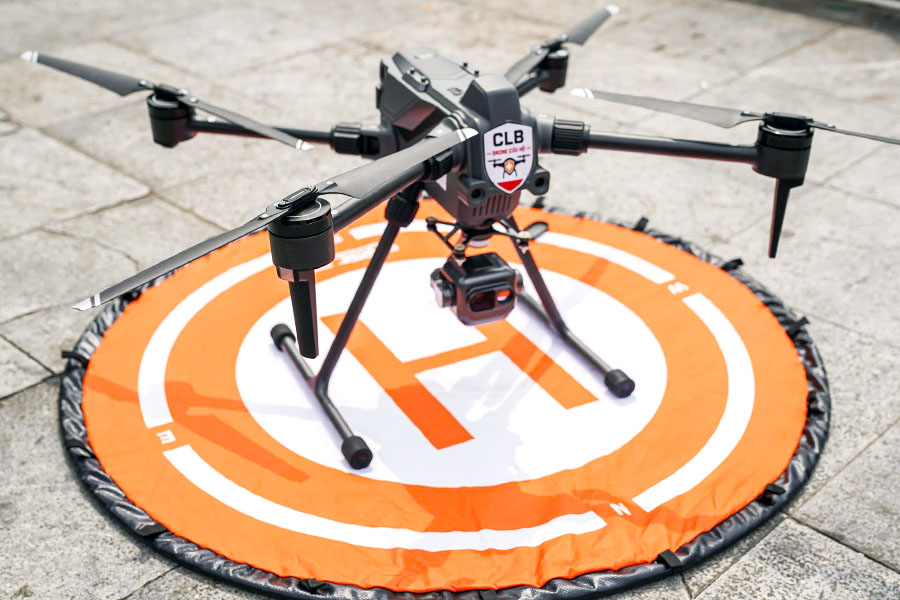
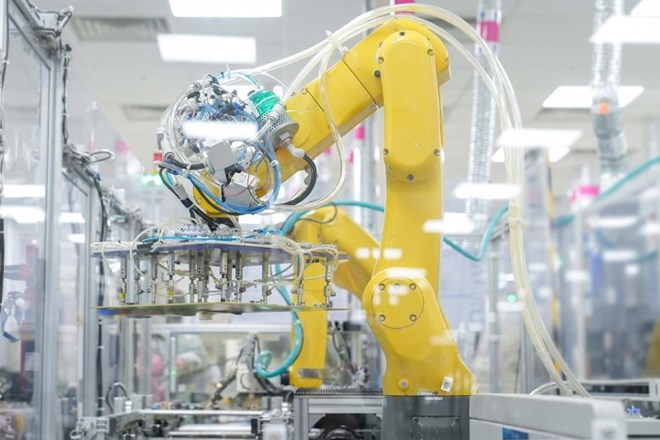
These are AI Camera products serving urban management and security, autonomous mobile robots, unmanned aerial vehicles (UAVs), smart education platforms and many vaccine products, biological products and applied biotechnology in agriculture.
These fields have all had domestic enterprises participating in research and development and initially forming an application market. The early commercialization of products is expected to contribute to solving practical problems in transportation, logistics, industrial production, agriculture, healthcare and education.
The new measure is commercialization.
A noteworthy point in the process of implementing strategic technology programs is the change in thinking about evaluating research efficiency.
If previously success was often seen through the number of topics, scientific publications or input indicators, now the focus has shifted to the ability to apply and create practical value.
According to Deputy Minister Bui Hoang Phuong, strategic technology problems must take commercialization efficiency as a measure. The tasks prioritized for implementation must be technologies that Vietnam has initial results or test samples, has businesses with sufficient capacity to participate and has specific application addresses.
This viewpoint also agrees with the request of General Secretary and President To Lam to strongly shift from building mechanisms to creating products, from completing tasks to creating value for the country.
According to the General Secretary and President, the tasks of implementing Resolution 57 are only considered completed when there are completed products, verified data and actual users with measurable efficiency.
That means that scientific research cannot stop in the laboratory but must go to the market, form new industries and create new growth momentum for the economy.
Building a platform to master core technology
In addition to product development, the Ministry of Science and Technology is also promoting the completion of the system of standards and technical regulations to ensure the unity and international integration capacity of strategic technologies.
According to Minister Vu Hai Quan, standards, measurements and quality need to be identified as an important foundation for improving national productivity, quality and competitiveness. Harmonizing domestic standards with international standards will create favorable conditions for trade, while helping Vietnamese businesses participate more deeply in the global value chain.
In parallel with that, international cooperation is also being shaped in a new direction. Instead of just focusing on attracting investment capital, the focus is shifting to receiving international knowledge, technology and experts, thereby improving research and development capacity and mastering domestic technology.
However, not all strategic technologies can produce results in a short time. Highly complex fields such as satellite technology, high-speed railways or rare earths still need a long-term research and development roadmap in the 2026-2030 period.
However, with the synchronous involvement of ministries, sectors, and localities and strong political determination, many of Vietnam's first strategic technology products are expected to appear in 2026.
That is also the spirit that General Secretary and President To Lam emphasized at the preliminary conference of Resolution 57: national strategic technologies must be focused on resources to master and develop into specific products. Because only when knowledge is transformed into technology, technology becomes a product and products create value for society, science and technology will truly become the main driving force of the new growth model and the foundation for national autonomy capacity in the digital age.


