
From laboratories to technology can shape the future
Quantum technology is developed based on the principles of quantum mechanics - a science that studies the world at the atomic and elementary particle levels. If traditional computers process information with bits that only receive values of 0 or 1, then quantum computers use qubits, which can exist in multiple states at the same time. Thanks to that, some extremely complex problems can be solved at speeds far exceeding current systems.
According to experts, the potential of quantum technology lies not only in computing but also in communication, security, sensors and new materials. These areas are predicted to create a platform for the next generation of technologies, similar to how the internet and smartphones have changed the world in recent decades.
In Vietnam, during a working session on the Quantum Technology Development Project, General Secretary and President To Lam emphasized that this is a national strategic issue, which needs to be placed in the overall implementation of Resolution 57 and linked to fields such as national security, data, semiconductors, artificial intelligence and space technology.
The General Secretary and President requested Vietnam to have the mindset of "going behind but not slowing down", choosing a direction suitable to actual conditions, focusing on building substantive capacity in areas where participation and mastery are possible, avoiding spreading investment or following trends.
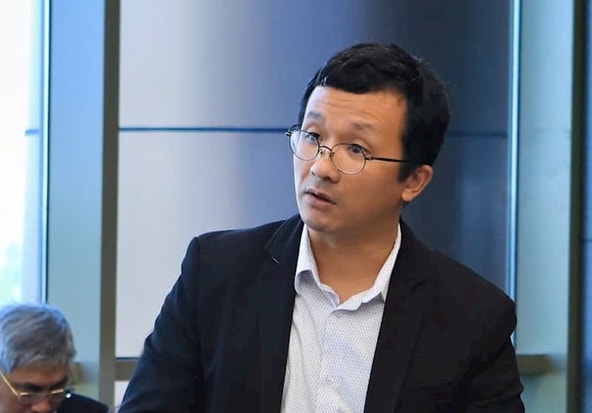
Dr. Nguyen Quoc Hung - Vice President of the Vietnam Innovation Network and Quantum Technology Experts (VNQuantum), Director of the Institute of Quantum Technology, Vietnam National University, Hanoi, said that currently, many large economies have early built long-term investment programs. The United States considers quantum technology a national priority with many large-scale research projects.
The European Union is also implementing its own strategy and promoting related investment programs. Along with that, the global supply chain of materials, components and equipment serving quantum technology is gradually forming, creating a new industrial ecosystem.
However, along with the development speed is the trend of tightening technology control. According to Mr. Hung, many countries are increasing export barriers not only to core technology but also to supporting ecosystems such as deep-cooling equipment, microwave control equipment or operating protocol standards.
This makes the quantum race not simply a scientific competition, but also associated with national security, technological sovereignty and the economic position of each country.
Vietnam has now formed initial research nuclei. Vietnam National University, Hanoi is a pioneer in establishing the Institute of Quantum Technology, focusing on quantum communication and security. At Vietnam National University, Ho Chi Minh City, the University of Science trains in quantum computing, while Hanoi University of Science and Technology develops many related research and training activities.
According to the direction being built, Vietnam will focus on 5 priority areas including: Communications and quantum security; quantum simulation and algorithms; quantum sensors; quantum optical materials and components; training high-quality human resources.
Foundation for a long-term race
According to Dr. Nguyen Quoc Hung, Vietnam has missed part of the early stages of the quantum technology race, but there are still opportunities if action is taken in time.
He believes that Vietnam needs to develop in two directions simultaneously. On the one hand, it must gradually master core technologies such as quantum chips, quantum communications using fiber optic cables and satellites; on the other hand, it is necessary to build a supporting ecosystem with specialized equipment to participate more deeply in the global value chain.
It is necessary to diversify methods to avoid dependence. Vietnam must aim for technological autonomy and deep integration with the world's quantum ecosystem" - he emphasized.
Recognizing quantum technology as a strategic technology, but also a long-term game, Mr. Hung believes that it is necessary to invest long-term, persistently for at least 10-20 years and accept risks, and cannot "burn stages".
In particular, Vietnam needs to promptly remove policy, financial, and human resource bottlenecks; take advantage of the scientific overseas Vietnamese network: Attract Vietnamese experts at international quantum centers; Combine basic research and innovation: create a sustainable ecosystem, not completely dependent on imports.
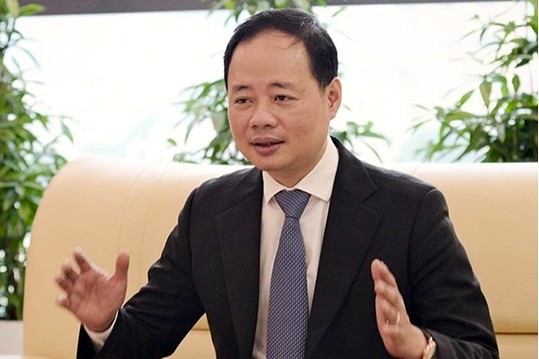
Prof. Dr. Tran Hong Thai - President of the Vietnam Academy of Science and Technology - said that quantum technology is a difficult field but not outside Vietnam's capabilities if there is a suitable strategy. According to him, if prepared from now on, Vietnam can completely participate in the global quantum value chain in a way suitable to its capabilities and strategic interests.
The quantum technology race is a long-term game, requiring persistence for many years. But as the great powers have accelerated and technology barriers are gradually closing, this is also the time for Vietnam to choose its direction, focus resources and build endogenous capacity to avoid falling behind in the next technology wave.


