
At the meeting of the Standing Committee of the Central Steering Committee for Science, Technology, Innovation and Digital Transformation on May 25, General Secretary and President To Lam emphasized that in the context of the world shifting strongly to competition by knowledge, technology, data and talent, "basic scientific research needs to be viewed not only as academic activities, but as a component of national capacity".
At the same time, General Secretary and President To Lam also said that the current limitations "not only lie in investment resources, but more importantly, have not yet formed a research ecosystem with depth, accumulation and the ability to create new knowledge in a sustainable way".
That spirit is gradually present in research projects, R&D centers and new technology products at many businesses. However, to bring technology from laboratories to the market, businesses still face many challenges in terms of mechanisms, capital, human resources and the ability to connect policies with practice.
When Vietnamese businesses aspire to master core technology
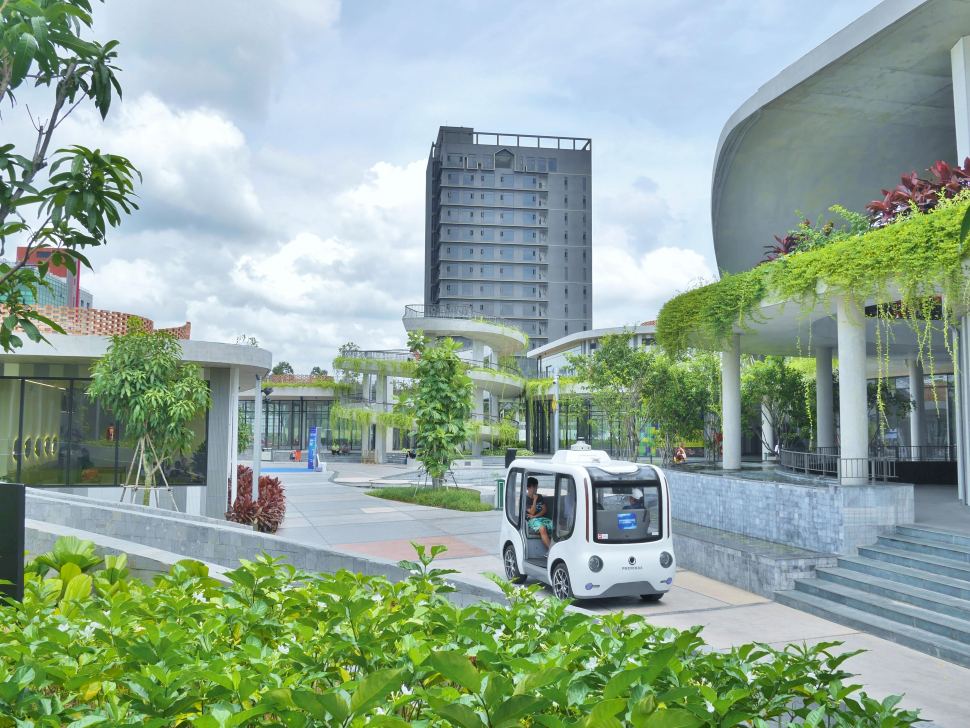
In the campus of Phenikaa University, self-driving cars, taxi robots and delivery robots are still quietly operating every day. That is the result of many years of persistent research by Vietnamese engineers to solve the high-tech problem that was previously considered a privilege of global corporations.
Phenikaa-X's goal is not to stop at commercializing a product line, but to gradually master core technologies in artificial intelligence (AI), sensors and automatic control systems.
This breakthrough shift reflects a new mindset in the technology community: shifting from the generation of "applying, importing technology" to proactively "researching, creating technology".
In that flow, SmartTech Group is also expanding investment in research and development activities in fields such as robots, unmanned aerial vehicles (UAVs), medical equipment, energy and smart transportation.
According to Mr. Nguyen Luong Phuong - Chairman of the Board of Directors of SmartTech Group, the enterprise has participated in researching a number of technology products from the COVID-19 epidemic period, including ventilators and epidemic prevention support equipment. The experiences accumulated in that process have become the foundation for the enterprise to continue investing in new technology projects.
Currently, SmartTech is pursuing a number of research directions related to robots, energy and smart transportation solutions. According to businesses, the goal is to gradually put research products into practice and seek opportunities for cooperation with research institutes, experts and technology units in the country.
The distance from the laboratory to the market and institutional "bottlenecks
However, behind the technology projects being implemented is no small pressure that businesses have to face on the path of bringing products from research laboratories to the market.
For businesses developing new technologies such as self-driving cars, one of the biggest difficulties today comes from the legal corridor. Technology changes very quickly, but the process of building standards, standards and management mechanisms often takes longer. According to Phenikaa-X, self-driving cars are a completely new field while most current regulations are still built for the driver-driven vehicle model. This forces businesses to both research technology and find ways to adapt to the existing legal framework.
Not only is it a story about mechanisms, capital for research and development is also a constant pressure for many technology businesses. Unlike ordinary production and business activities, R&D is a long-term investment process that requires large resources but cannot bring immediate efficiency in the short term. For most domestic technology businesses, maintaining resources for research, testing and product improvement is always a difficult problem, especially when access to supporting capital sources is still limited.
Strategic vision from insiders: What do businesses need from the Government?
From the perspective of a business with more than 15 years of investment in R&D activities, Mr. Nguyen Luong Phuong - Chairman of the Board of Directors of SmartTech Group, said that Resolution 57 and recent innovation policies have breathed new life, creating strong motivation for businesses to bravely embark on long-term technology projects.
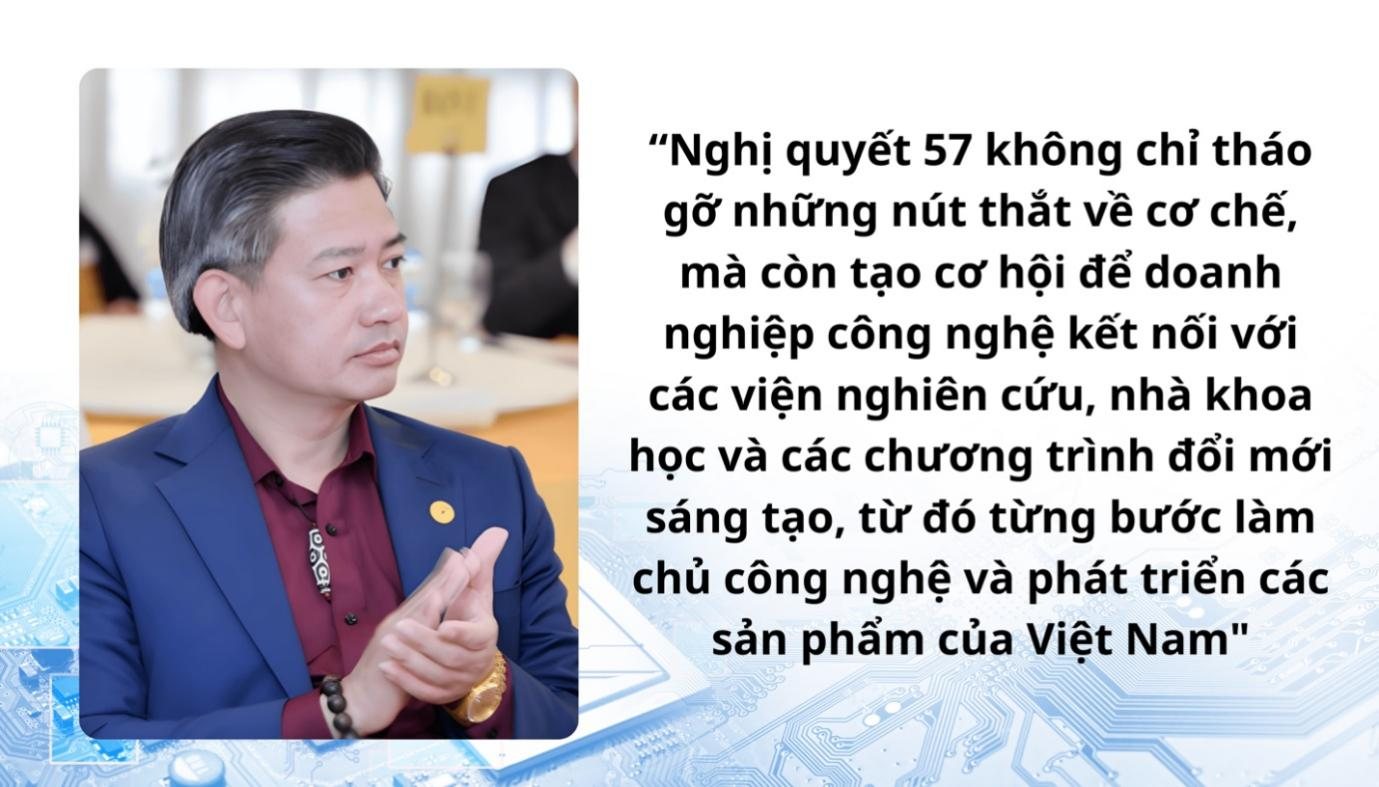
The duo Resolution 57 and Resolution 68 are strategic guidelines, opening the door to opportunities for science and technology enterprises.
In essence, Resolution 57 brings core benefits to businesses in two points: One is to remove bottlenecks of administrative and institutional procedures; Two is to create an official platform for businesses to organicly connect with research institutes, universities and national innovation programs. From there, businesses can absorb knowledge, shorten the time to master core technology and localize Make in Vietnam products" - Mr. Phuong emphasized.
However, from the reality of implementing technology projects, Mr. Nguyen Luong Phuong believes that there is still a certain gap between policies and businesses. According to him, many businesses currently do not have enough information or have difficulty accessing support programs for research and development activities.
One of the issues mentioned by Mr. Phuong is the need to soon deploy more widely controlled testing mechanisms (sandboxes) for new technology fields. According to him, practical testing models will help businesses shorten the technology verification process, improve products and bring research results to the market faster.
In addition, businesses also expect support policies for R&D activities to have clear criteria and more convenient procedures so that units with actual research capacity can access support resources effectively.
According to Mr. Phuong, equally important is to strengthen the connection between management agencies, research institutes, universities and businesses. When parties participate more deeply in the same innovation ecosystem, research results will have more opportunities to be commercialized and create more economic value.
We can't just sit and wait for policies
Recommendations from businesses are not just the private story of each unit. These are also issues being raised in the process of realizing Resolution 57, from perfecting institutions, developing human resources to building an ecosystem connecting the State, research institutes, universities and businesses.
According to Mr. Vu Hong Quan - Delegate of the 16th National Assembly, Vice Chairman of the Central Committee of the Vietnam Young Entrepreneurs Association, Resolution 57 has clearly oriented: Shift the focus from academic, basic, purely pure research to applied science, taking socio-economic efficiency as a measure.

However, Mr. Quan emphasized that this transition process requires self-reliance from businesses themselves, and cannot be "passively sitting and waiting for policies". Currently, many Vietnamese businesses are still reluctant to invest in the long term, lacking a team of engineers with sufficient capacity to evaluate, absorb and test research results transferred from universities.
To overcome those barriers, many technology businesses are actively seeking connections with research institutes, universities and innovation support organizations. According to Mr. Nguyen Luong Phuong, SmartTech is currently coordinating with research units and experts in the process of deploying R&D activities, and building experimental models for some new technology products.
Reality shows that the technology race of Vietnamese businesses has started quite a long time ago, but is entering an acceleration phase when science and technology, innovation and digital transformation are identified as new growth drivers of the country. From self-driving cars, robots, UAVs to new energy solutions, more and more Vietnamese businesses are participating more deeply in the process of researching and mastering technology.
However, for research room ideas to become competitive products in the market, more appropriate support mechanisms, strong enough resources and closer connections between the State, scientists and businesses are still needed.
Resolution 57 has opened a new direction for science and technology and innovation. However, the success of the resolution will not be measured by the number of guidelines or policies promulgated, but by the ability to form new technologies, new technology businesses and high value-added products owned by Vietnamese people.


