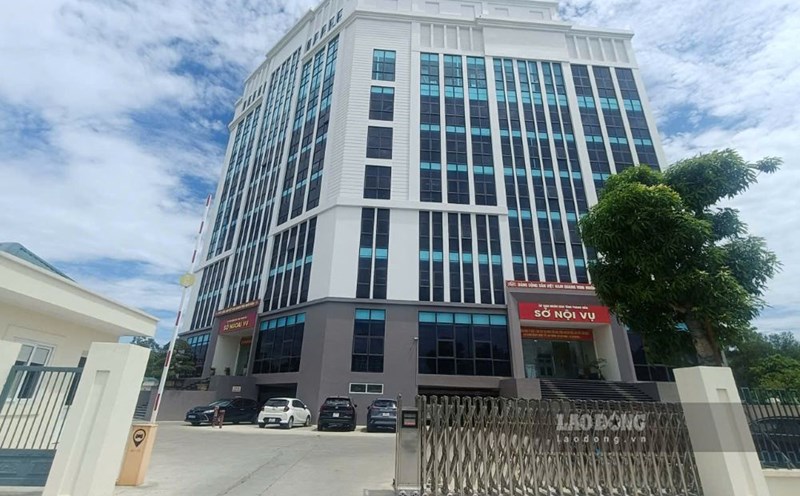
Digitizing procedures at the grassroots level
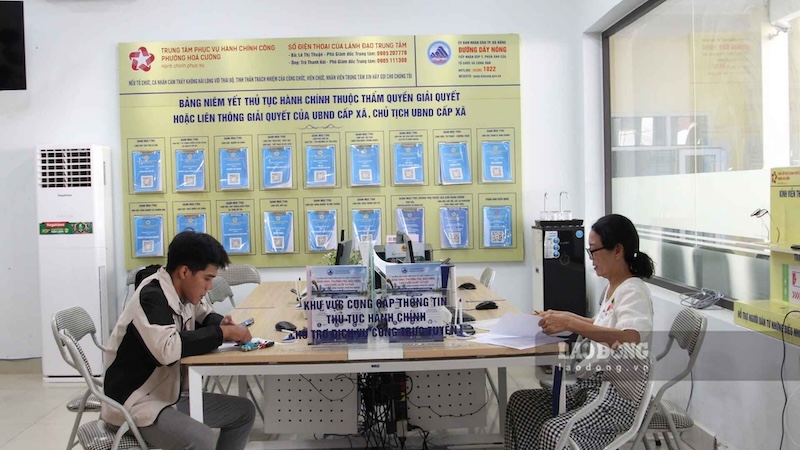
After arranging administrative units and deploying two-level local government, Hoa Cuong ward, Da Nang City manages a population of more than 119,000 people on an area of 15.72 km2. This increase requires innovation in operating methods. On June 24, the ward officially put into operation the Digital Government System, integrating a centralized data warehouse, a multi-layered GIS digital map platform and a national database interconnection. Online procedure lookup and resolution subsystems were activated, completely replacing the traditional paper circulation process.
However, the merger and operation of the two-level model creates great pressure on resources. Sharing about this barrier, Mr. Truong Thanh Dung - Chairman of Hoa Cuong Ward People's Committee said: "When implementing the two-level local government model, the problem of human resources, infrastructure and funding is a very big challenge. Therefore, we are determined to operate the digital government platform to identify bottlenecks. The ward will spend the entire third quarter of 2026 to conduct trial runs, promptly overcome loopholes and standardize procedures before official operation".
The locality resolutely prioritizes digitization to reduce direct procedures. Mr. Truong Thanh Dung emphasized: "The conversion of administrative transactions to cyberspace through the digital government system aims to minimize the situation where people have to go to the committee. The core value we aim for is to create favorable conditions and save travel time for people".
Digital architecture framework shaping a comprehensive smart city
In order to create a unified plan after merging Da Nang and Quang Nam, Da Nang City People's Committee issued Decision No. 3291/QD-UBND on the Digital Architecture Framework for the period 2025 - 2030, vision 2035. The new architecture framework closely follows the two-level government model, replacing the old platform systems. The breakthrough is the establishment of the principle of smart operation and automation based on prioritizing the application of artificial intelligence (AI First).
Da Nang identifies data as a strategic asset, must ensure the criteria of correct, sufficient, clean, living and apply the principle of one-time declaration. Accordingly, artificial intelligence becomes a core factor to help eliminate manual stages and liberate labor for officials. At the same time, people will enjoy public non-contact services, without having to submit back digitized documents stored in the city's common data warehouse.
To realize this, the city prioritizes improving commune-level technology infrastructure, piloting low-altitude satellite Internet and LoRa transmission network to ensure equal digital access for the entire mountainous region. The roadmap to 2030, the digital economy is expected to account for 35 - 40% of GRDP, 100% of administrative transactions are non-contact. By 2035, the city strives for 95% of workers to have high digital skills, and the entire city to be smartly managed by a digital brain through the AI Center.