
Innovation ecosystem "opens"
This is the opinion given at the seminar on innovation and entrepreneurship among students in Can Tho City. The event is part of the Can Tho City Science, Technology, innovation and Digital Transformation Week 2025 (CASTID 2025), taking place from December 16 to 20.
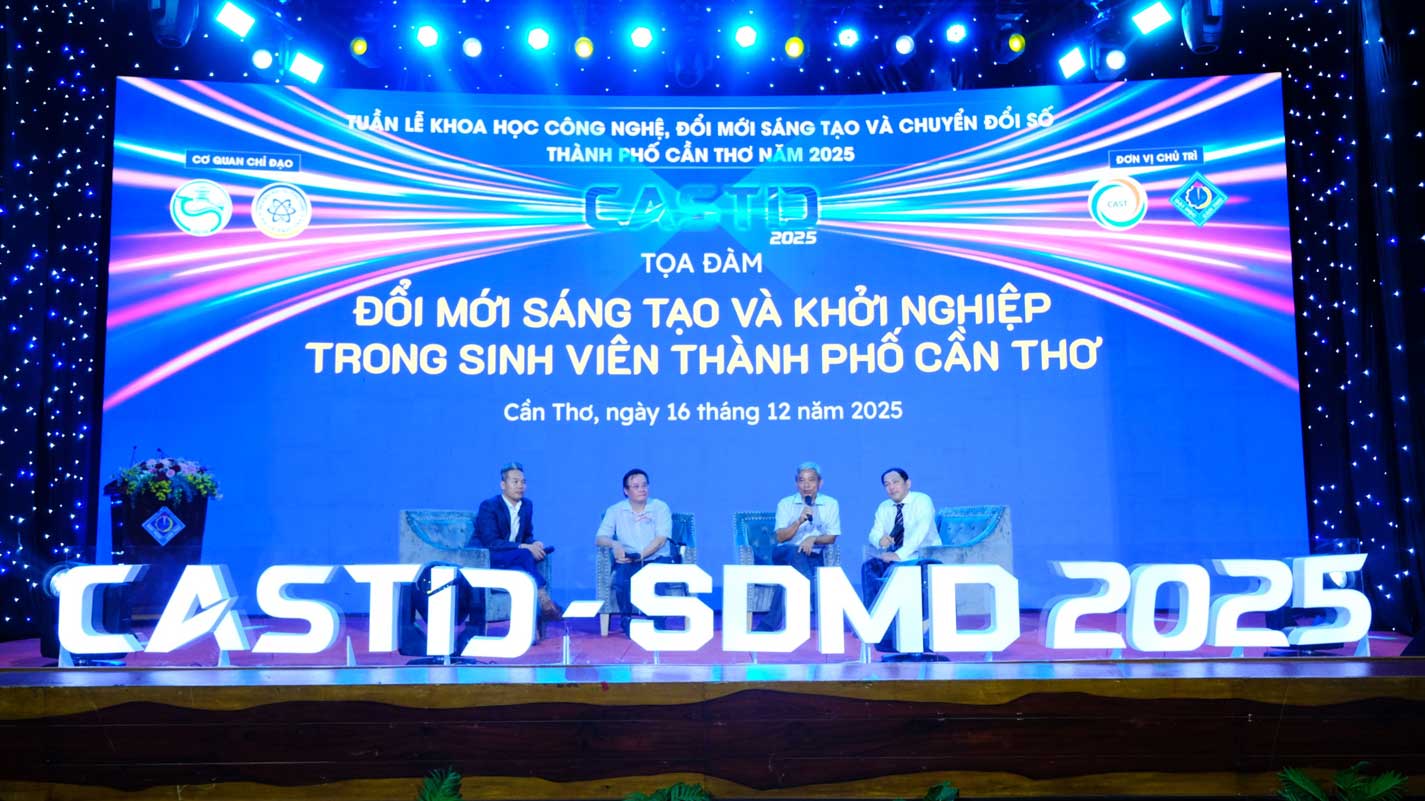
At the seminar, Mr. Tran Anh Tuan - Deputy Director of the Institute for Research and Application of Enterprise Management - said that in 2025, Vietnam will maintain its position in the top 50 global management and business index. This shows continuous efforts and progress. Notably, in 2025, our country had institutional and policy breakthroughs such as Resolution 57-NQ/TW; Decree 264/2025,...
In the Mekong Delta region alone, in the context of severe climate change, it is necessary to change the growth model. DMST start-up is a key driving force, taking advantage of the potential of agriculture and eco-tourism to increase economic added value, towards green and sustainable development.
However, the region is also facing challenges such as difficulties in accessing capital and lack of synchronous support policies; young startup ecosystem, lack of linkage and facilities; Limited skills, high-quality human resources; Risk- fearing mentality, technology has not developed strong enough.
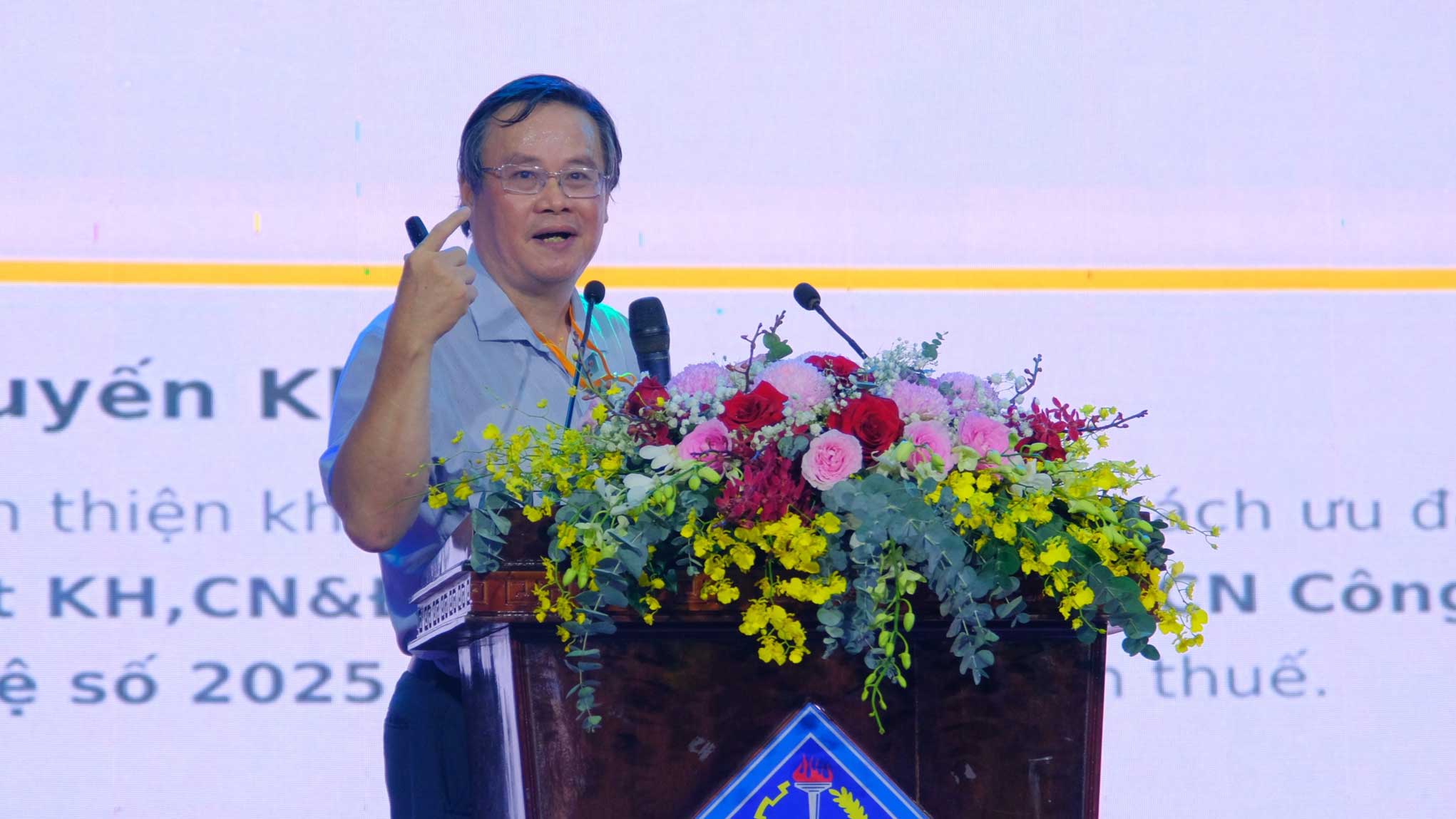
To promote e-commerce in the Mekong Delta, Mr. Tran Anh Tuan proposed developing an open e-commerce ecosystem, taking users as the center for co-generation and solving local practical problems. Next is to perfect the ecosystem, closely connecting businesses, institutes, schools, the state, investment funds and the global talent community. At the same time, solve local challenges; promote public-private cooperation models and attract resources and experts.
According to Mr. Tuan, DMST is not only a story of technology, but also a story of people, institutions and long-term cooperation. The DMST ecosystem is a strategic foundation for rapid and sustainable development. This needs to be implemented synchronously, focused on and linked to local practices. In particular, Can Tho City has all the conditions to become the driving force of the Mekong Delta.
Innovating the "three-house" relationship
Sharing at CASTID 2025, Mr. Pham Duc Long - Deputy Minister of Science and Technology - emphasized that DMST requires innovation in the relationship between State - Institute, school - enterprise.
Practice in Can Tho shows that although the system of institutes and schools is relatively concentrated in the region, the linkage with businesses is still loose. Many businesses, especially small and medium enterprises in agriculture, processing, logistics and services, do not have enough capacity to "set the problem" for research. Meanwhile, research institutions lack the motivation to deeply connect with the market.
If the approach is not changed, science will continue to take one path, businesses will take one path. The State has to "go in the middle" to connect the two roads, leading to resource dispersation and low efficiency.
Innovating the "three-house" relationship in this context is to rebuild an interactive mechanism, helping Can Tho's businesses improve their capacity to absorb technology and innovate; helping the hospital - school orient research on practical issues of the region; helping the State shift the role from distributors to orderers and creating a fruit market.
Only when this relationship is truly reorganized can Can Tho form a complete e-commerce chain, where businesses' problems are solved with scientific knowledge, supported by the State in the right place, at the right time, and replicated into a new development driving force for the city and the entire Mekong Delta region.


