
Why are there still many scam calls?
According to information announced on August 18, more than 115 million mobile subscribers operating in Vietnam have been reviewed, of which about 102 million numbers have been standardized, authenticated and integrated into paper wallet on VNeID, and about 13 million numbers have been stopped from service due to not completing the required requirements according to regulations.
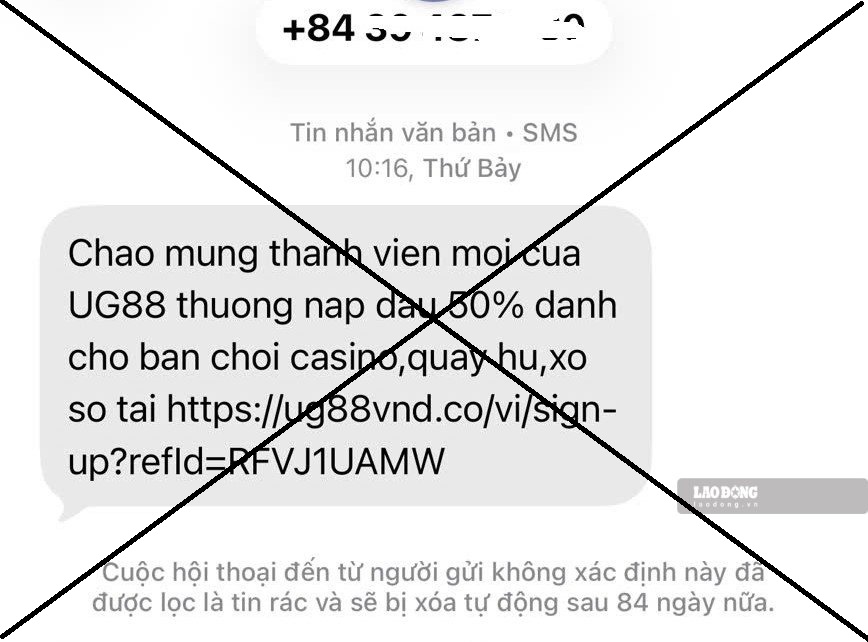
Although SIM card verification has achieved significant results, spam and fraudulent calls and messages still exist. Recently, the Traffic Police Department (CSGT) of the Ministry of Public Security issued a warning to people about the trick of forging remote fine notices via text messages to lure them to access strange links, provide personal information or transfer money.
Network security expert Ngo Minh Hieu once said that technically, a call is divided into two separate parts: the actual route of the call in the telecommunications network and the information displayed to the recipient. The number used in the network is the actual identity of the call source for the network operator to connect. The displayed number is the information sent to appear on the recipient's phone screen.
Through intermediate systems such as VoIP (Internet calling service), fraudsters can easily change the displayed data field to make fraudulent calls.
Talking to Lao Dong Newspaper, Ms. Nguyen Thi Quynh Anh - Marketing Director of VinCSS Network Security Services Joint Stock Company said: "A SIM card registered as the owner can still be used by others, taken over control or used in activities that the registered entity does not directly perform.
More importantly, a scam call does not even necessarily have to be made from the SIM card displayed on the victim's screen. Fake incoming number techniques make the recipient see a phone number or name that seems reputable, while the real source of the call is completely different.
Another issue is that the scope of fraudulent calls does not stop at traditional domestic mobile networks. Fraudulent lines can be located abroad or with many different intermediaries to reach victims.
Solution
According to Ms. Quynh Anh, verifying the origin of calls is important in reducing scam calls. Vietnam can also develop the current Voice Brandname (brand call) into a more complete system, so that recipients can see the name of the business or organization instead of a regular number sequence, and some state agencies have also applied identification names to official calls.
At a higher level, the fight against phone scams cannot be just the responsibility of the telecommunications industry. A scam usually starts with a call or text message, but the ultimate goal is cash flow. Therefore, it is necessary to create rapid coordination between network operators, banks, digital platforms and law enforcement agencies within appropriate legal and data protection frameworks.
Experts also recommend that for people, it should be assumed that the phone number displayed is not proof of identity. When receiving a call related to money, account, legal matters or personal information, stop, do not provide OTP, password, do not install applications of unknown origin or transfer money according to instructions, then proactively contact the bank, state agency or relative through an official, independent channel for verification.


