
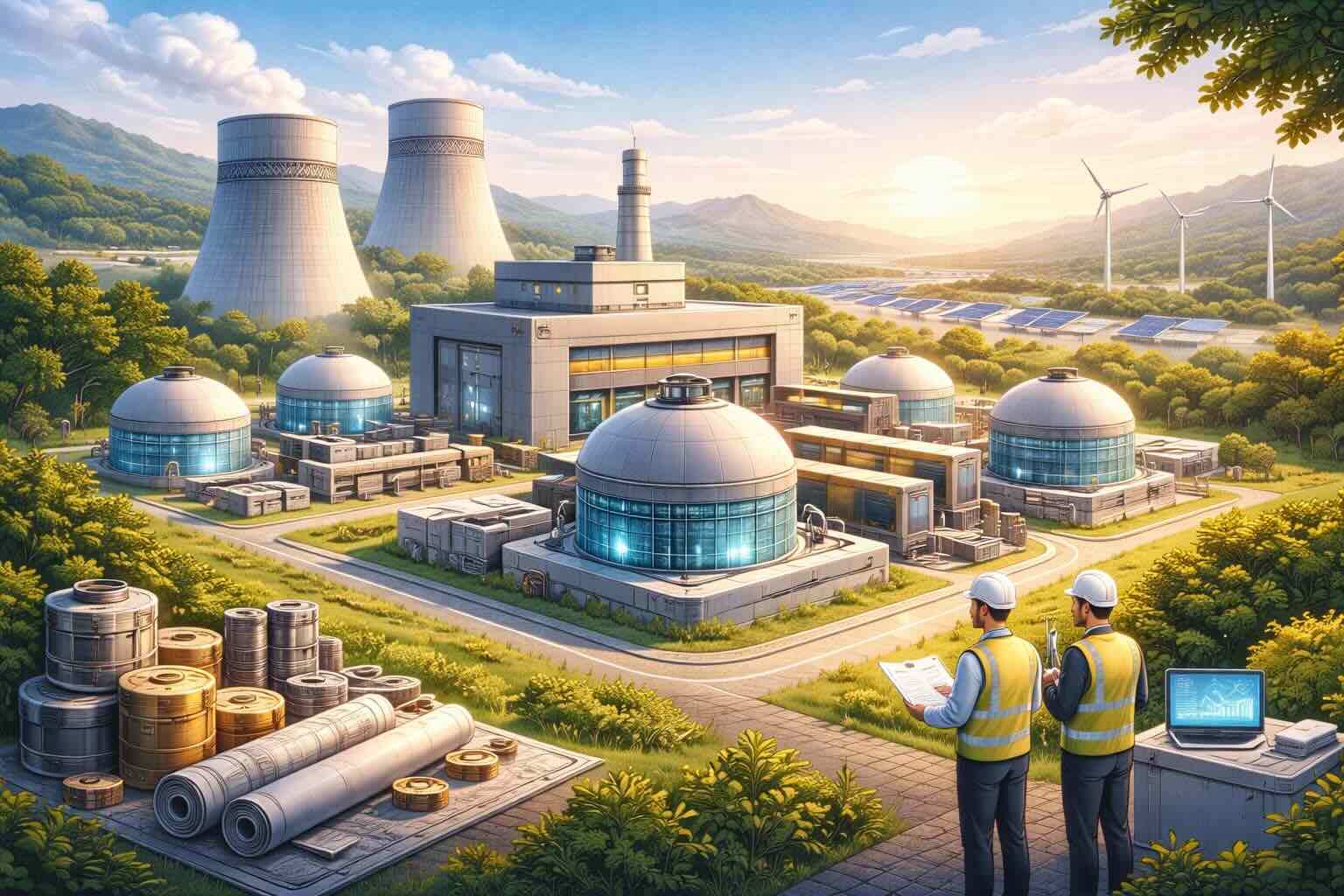
The nuclear industry is entering a period of strong recovery, with old factories being renovated and large capital flows pouring into startups. In just the last weeks of 2025, nuclear startups raised about 1.1 billion USD, a move that reflects investors' expectations for small-scale nuclear reactors.
Contrary to traditional large-scale, high-cost and often slow-progress nuclear power plants, startups are pursuing the small reactor model, also known as SMR. This approach allows construction by module, easy to expand when electricity demand increases, and also expects to reduce costs thanks to mass production.
Reality shows that major nuclear projects in the US recently exceeded tens of billions of USD and lasted for many years compared to the initial plan. This is why startups believe that shrinking reactors will help the industry overcome inherent bottlenecks. However, experts believe that the benefits from mass production do not come immediately and it may take many years, even decades, for real costs to be reduced.
Another major challenge is production capacity. According to investors, the US currently lacks both supply chains and experienced personnel in building and operating nuclear power plants, due to decades of shifting production operations abroad. The shortage not only lies in technical workers, but also in the management, finance and senior management team.
However, the positive signal is that many startups are bringing production activities closer to research centers, helping to shorten the testing and technology improvement cycle. This approach is expected to gradually restore domestic production capacity and create a foundation for the nuclear industry to develop more sustainably in the long term.


