
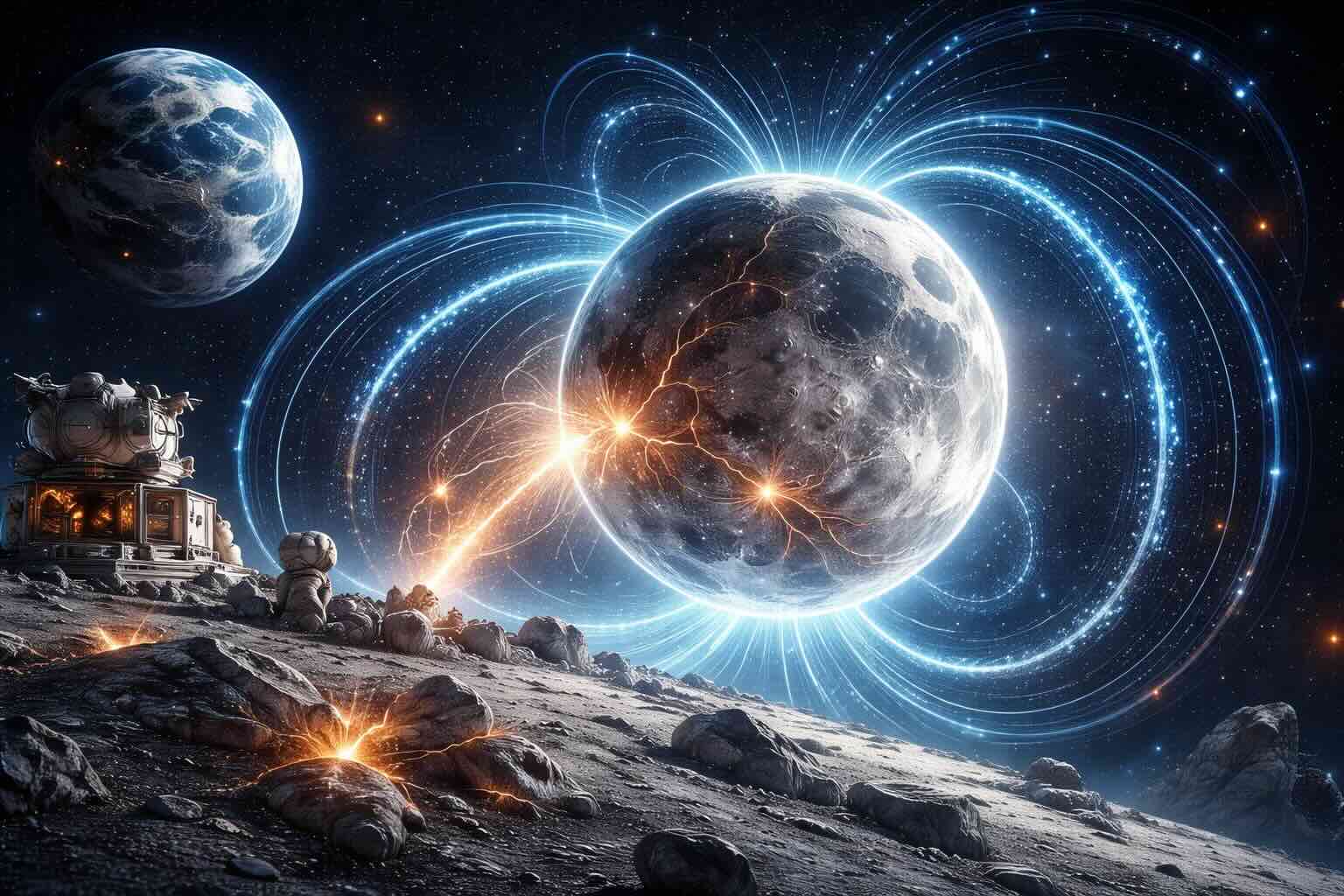
According to research published in the journal Nature Geoscience by scientists from Oxford University (UK), lunar basalt samples dating back about 3.5 billion years show very strong magnetic signatures, even at times equivalent to or exceeding the Earth's magnetic field today. This surprised scientists because the Moon is much smaller than Earth and does not have a strong operating core to create a global magnetic field.
These signs may stem from strong magnetic field eruptions but only occurred for a short time in the ancient history of the Moon.
According to planetary geologist Claire Nichols, rock samples from the Apollo program may have accidentally recorded rare events that lasted only a few thousand years. Previously, scientists thought they represented the magnetic field history that lasted hundreds of millions of years of the Moon.
The research team re-analyzed Mare basalt rock samples and found a clear link between geological composition and magnetic field intensity. Magnetic rock samples often contain high levels of titanium.
Computer models show that titanium-rich materials when melted near the boundary between the core and the lunar coating can increase heat flow from the core in a short time. This process activates dynamo activity, creating strong magnetic field waves and forming titanium-rich lava.
Another factor that could cause scientists to misunderstand the data is deviation in sampling. Apollo missions mainly landed in the basalt plains of the Mare, where the model predicted to have a lot of titanium-rich lava. Therefore, the collected rock samples may not fully reflect the magnetic field history of the entire Moon.
The research team believes that these strong magnetic field periods only last for a few thousand years, very short compared to the billions of years of the Moon's lifespan. However, this hypothesis still needs more data to be verified.
Currently, the lunar magnetic field is very weak and unevenly distributed. In the future, Artemis missions expected to bring humans back to the Moon before the end of this decade may help collect more rock samples, thereby further clarifying the magnetic history of this celestial body.


