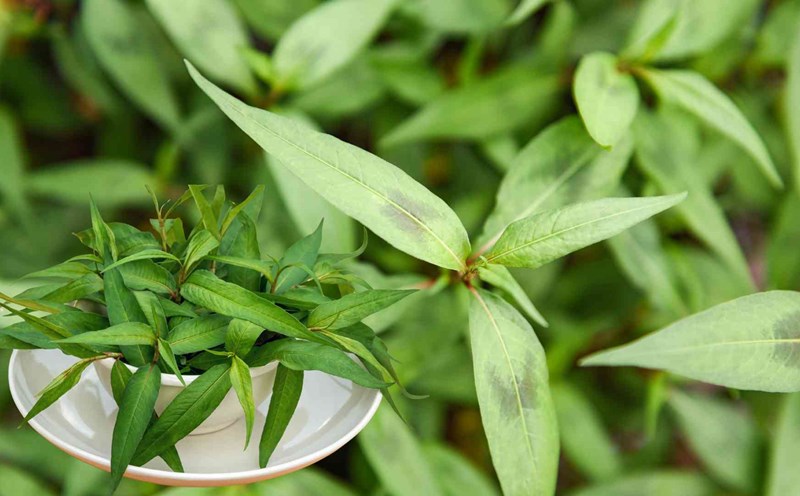
Vietnamese coriander contains flavonoids, polyphenols and natural essential oils with antioxidant activity. These compounds help the body neutralize free radicals - factors related to cell aging and many chronic metabolic diseases.
Using herbs such as Vietnamese coriander in meals can contribute to increasing the amount of beneficial plant compounds without significantly increasing energy intake into the body.
This is also why many healthy diets encourage adding natural spices instead of salt and sugary industrial sauces.
However, the first advice for people who often eat Vietnamese coriander is not to use it too much for a long time.
There is a belief that Vietnamese coriander can "cause heat", "reduce physiology" or affect male reproductive health. There is currently no strong scientific evidence confirming these effects on healthy people when eaten at a normal level.
However, experts believe that excessive consumption of any spicy herb containing hot essential oils can irritate the digestive mucosa in sensitive people.
Vietnamese coriander is often eaten raw, so the risk of bacterial, parasitic or pesticide residue contamination is a noteworthy point. Food safety experts recommend thoroughly washing under running water and soaking in clean water before use.
Pregnant women should also eat Vietnamese coriander in moderation. Although there are no strong scientific conclusions about the adverse effects of Vietnamese coriander on pregnancy when used as a common seasoning, many experts still recommend avoiding abusing strong essential oil-containing vegetables in the early stages of pregnancy.
Another piece of advice is not to combine Vietnamese coriander with a diet that includes too many spicy and hot foods, alcohol, beer, or processed foods. Because the overall diet is the factor that determines the inflammation and metabolic health of the body.
From a modern scientific perspective, Vietnamese coriander is still a spice vegetable with nutritional value and contains many beneficial plant compounds.