According to media reports, Netflix's large-budget film - "The Great Flood", produced with an estimated budget of 30 billion won (about 22 million USD), is facing a wave of fierce negative reactions not only from audiences but also spreading to the stock market.
After receiving a series of negative reviews, the stock of related company M83 - the unit in charge of visual effects (VFX) for movies - plunged to a record low, causing investors to almost face a 100% loss.
According to the Korean Stock Exchange on December 27, M83's stock closed at 8,950 won in the previous trading session - the lowest level since the company was listed. The stock price has decreased by nearly half compared to the listing price of 16,000 won, hitting investors who once expected the breakthrough of the movie "Great Pink Water".
M83 is a media - entertainment company specializing in CG and VFX for feature films and television series, officially listed on KOSDAQ in August last year. Before the film was released, many market analysts predicted that "Dai Hong Thuy" would become an important "catalyst" for the company's growth momentum. However, reality is completely opposite.
Industry observers believe that this sharp decline reflects the increasing disappointment of the Korean public with the film.
Released on Netflix on December 19, "Dai Hong Thuy" quickly became one of the most controversial works of the year in the domestic market. Korean audiences reacted very negatively with comments: "I can't watch for more than 30 minutes", "I feel like I've been deceived"...
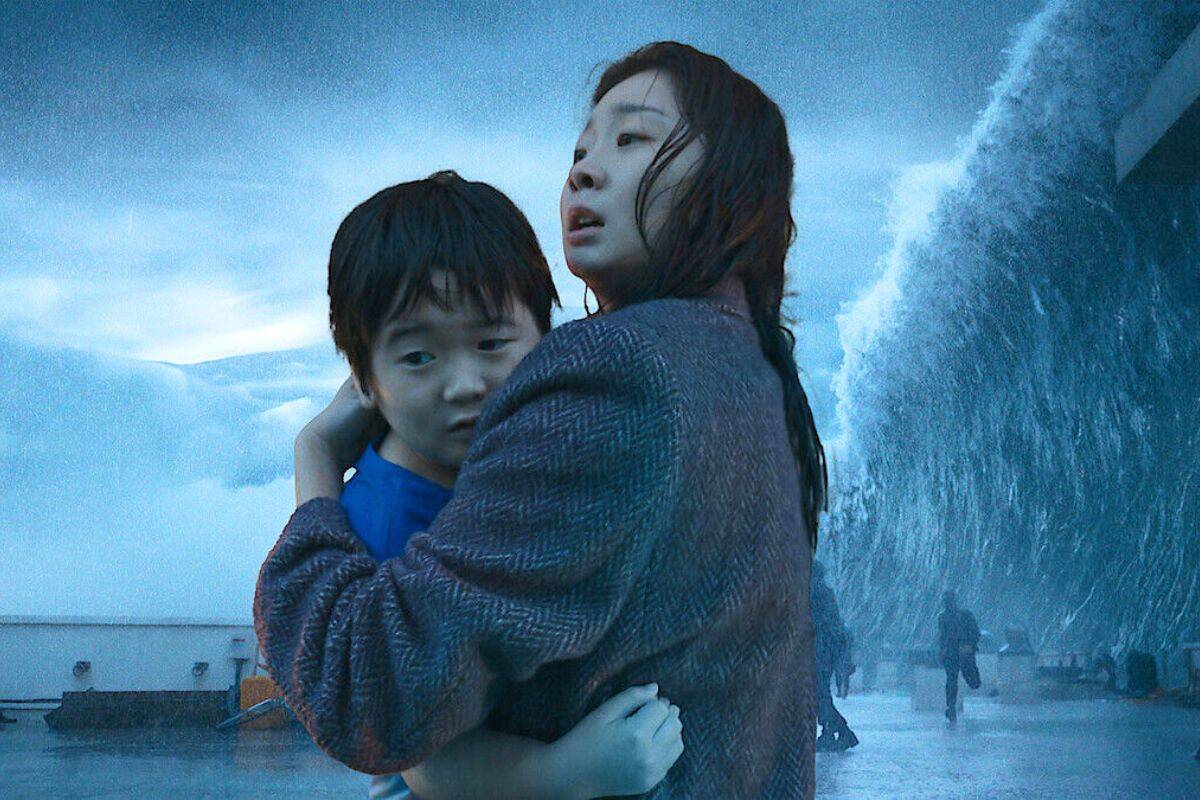
The film revolves around AI researcher Gu Anna (played by Kim Da Mi), who and her son find a way to survive in a flooded apartment complex after the global flood disaster caused by a meteorite collision.
Although advertised as a large-scale disaster - survival film, many Korean audiences believe they have been "disoriented".
Critics point out that the film's promotional materials - from posters to trailers with images of submerged buildings and desperate survival scenes - have made audiences expect a traditional Korean-style disaster work like "Haeundae", "Tunnel" or "Exit". However, as the story develops, the content strongly shifts to concepts of artificial intelligence (AI) and simulation.
This change makes many viewers confused and angry. "I thought this was a disaster movie, but it turned out to be something completely different" is a common complaint on forums. Many viewers describe the movie watching experience as "wasteful of time".

However, the negative domestic reaction is completely opposite to the international achievements of the film.
Dai Hong Thuy" has risen to number 1 on the Netflix global best-selling non-English-language movie chart since its release on December 19, and has not yet dropped.
On December 27, the film still ranked 1st in 53 countries, including Korea, Japan, Spain, Brazil, Qatar, Colombia, Argentina, Vietnam, Thailand... The film also ranked 10th in 93 countries, showing strong interest from international audiences.
Despite global success, analysts believe that Korean audiences are particularly sensitive to the inconsistency between the promotional genre and the actual content, this factor may have exaggerated the disappointment as well as the concerns of investors.