
A small mistake can have serious consequences
On the morning of April 14, the Ho Chi Minh City Department of Food Safety organized a signing ceremony to commit to ensuring food safety for establishments providing meals and food for schools in the area.
At the ceremony, Assoc. Prof. Dr. Pham Khanh Phong Lan - Director of Ho Chi Minh City Department of Food Safety - said that currently the city has 317 businesses providing meals for about 3,500 schools.
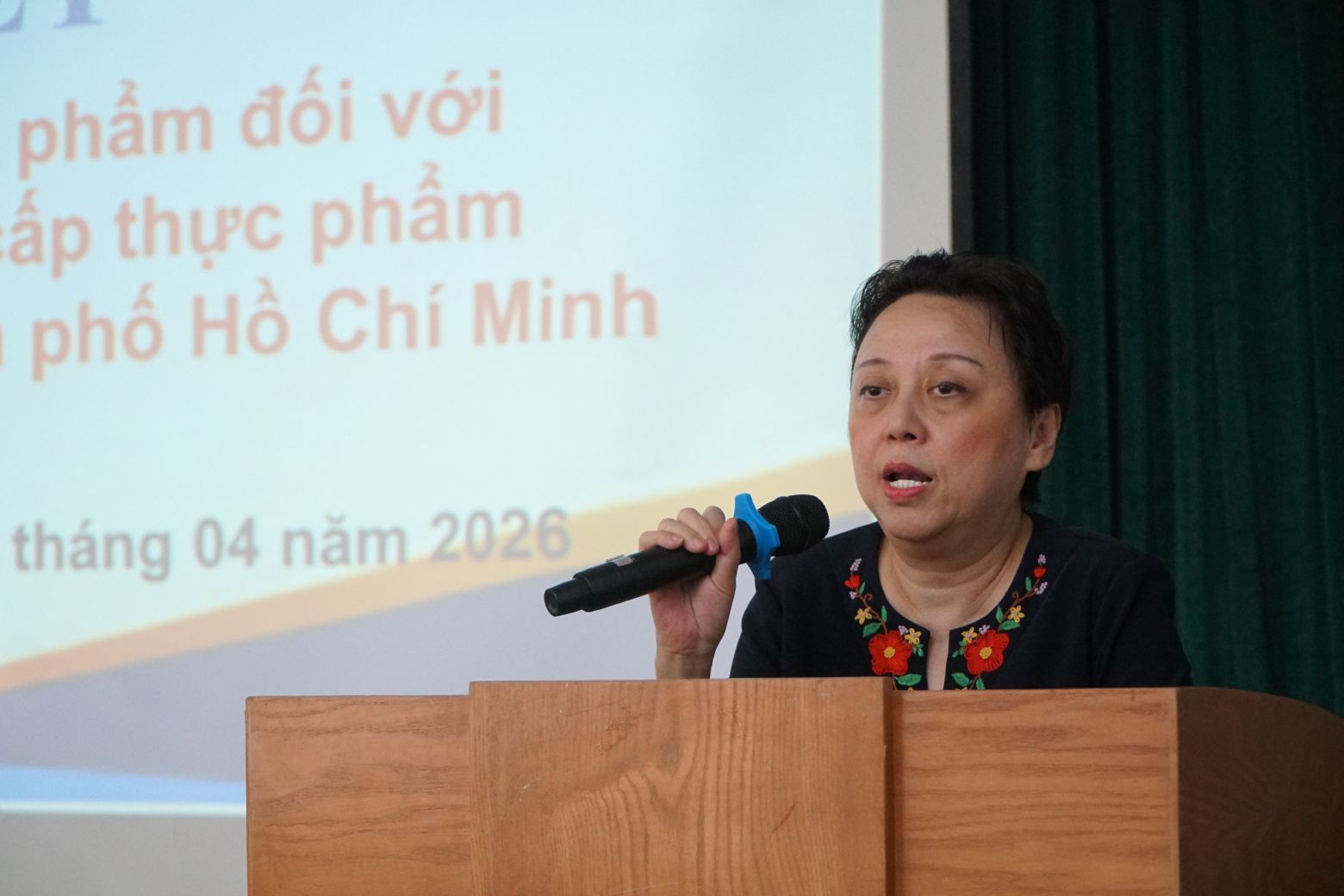
It's not until now that we have implemented food safety assurance activities in schools. Our operating principle is to build clean food, combat dirty food, including building a safe food chain, assessing risks to control quality" - Ms. Phong Lan emphasized.
For collective kitchens, management agencies pay special attention. With the Education sector, the Department of Food Safety and the Department of Education and Training of Ho Chi Minh City have signed joint plans for many years and continuously updated them. In the past year, many activities have been implemented such as training for principals, kitchen staff, meal providers, along with inspections by departments and inter-sectoral agencies to detect errors, guide remediation and handle recurring violations.
In recent years, especially last year, the food safety situation in schools has basically been controlled. In addition, parents also participate in monitoring, coordinating with schools to conduct surprise inspections of meal suppliers.
However, through inspection, functional agencies recorded that errors still exist. In hot weather conditions, the risk of incidents still exists. When an incident occurs, the handling process will be implemented immediately, first of all, to provide emergency care to students, then conduct epidemiological investigations, trace food sources and inspect the entire related supply chain.
Violation handling will be based on the results of investigation, testing and assessment of the health sector. Serious cases may be criminally handled.
According to Ms. Lan, reality shows that there are businesses that operate well for a long time, but in just a moment, an individual and the lax supervision of leaders causes incidents. Therefore, units need to strengthen self-supervision, and at the same time, coordinate with schools and society to ensure safety for school meals.
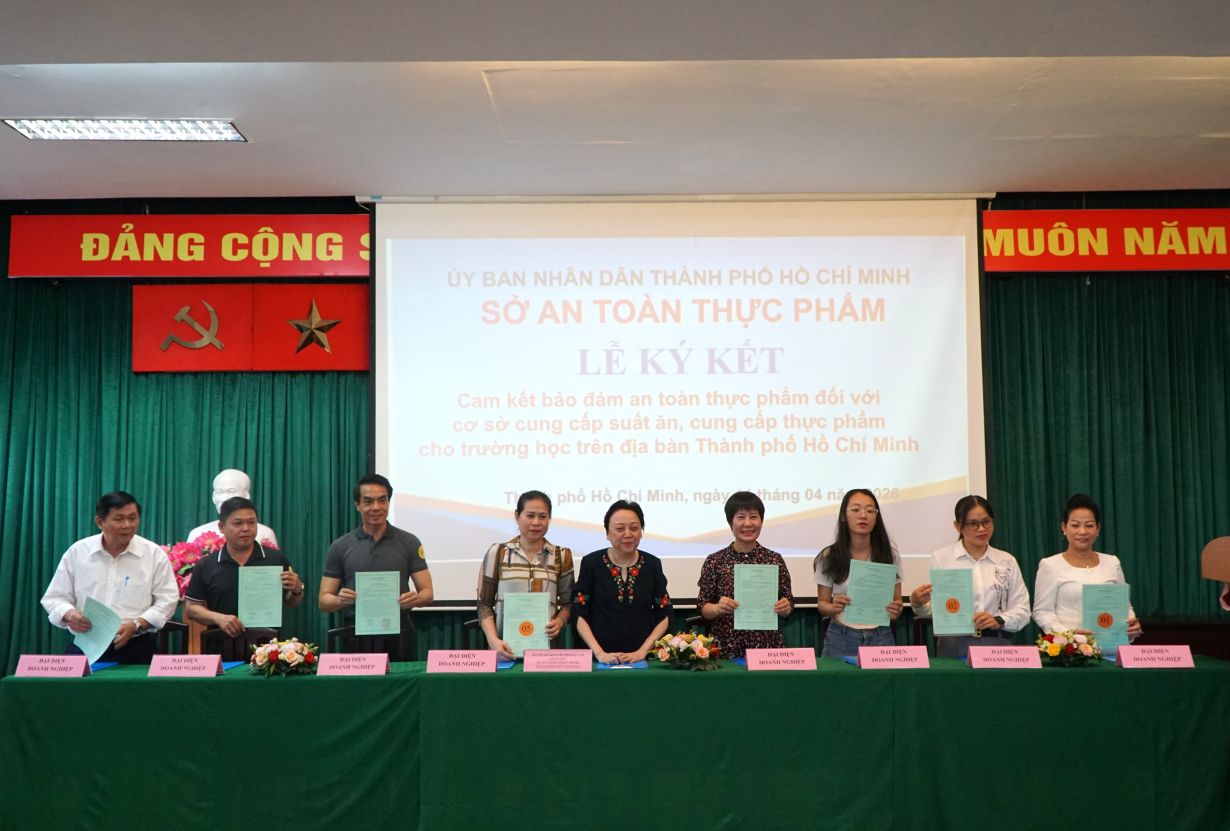
The organization of signing commitments with meal providers this time is not to generate additional administrative procedures, but to jointly commit to enhancing responsibility and doing even better.
Tightening from ingredients to kitchens
As a business providing meals for industrial parks, export processing zones and schools in Ho Chi Minh City as well as neighboring provinces, Ms. Nguyen Thi Nu - Director of Tu Anh Industrial Food Co., Ltd. - said that to maintain and develop sustainably, the company builds a production process according to a one-way principle, strictly controlling from the input material stage. For student meals, the requirements are always much higher than industrial meals for adults, because children's resistance is still weak and parents are particularly concerned about quality.
In the context of hot weather, Ms. Nu believes that meal suppliers need to increase control levels many times, from tightening processes, shortening preliminary processing and cooking times to dividing meals. At the same time, strengthen control of both ingredients and people, because just a small mistake can lead to unfortunate incidents.


