
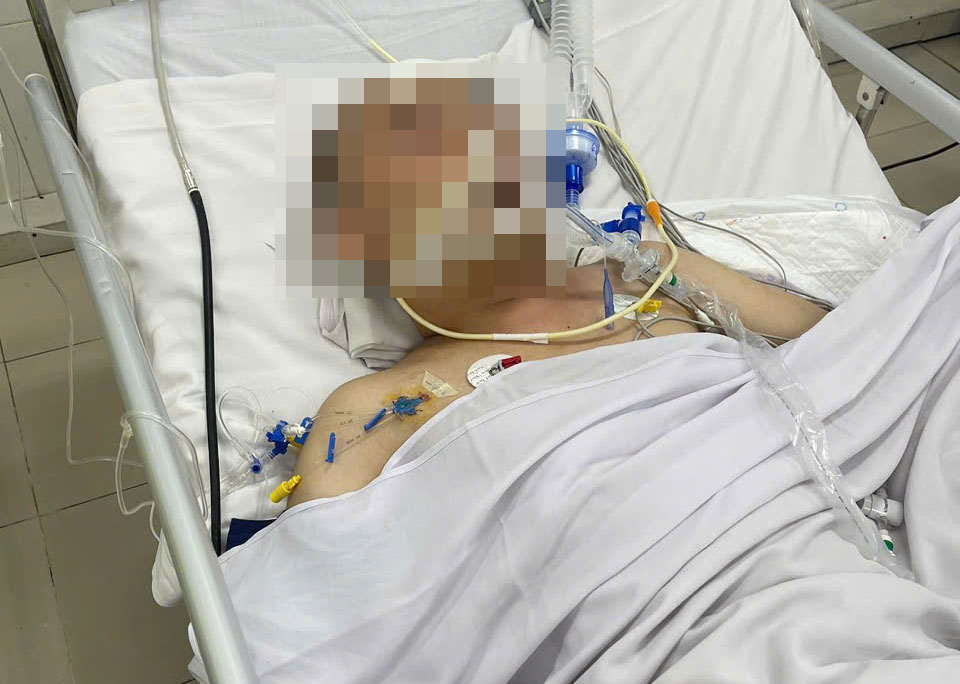
Previously, Lao Dong Newspaper reported a student who had a serious accident and had to be treated at a cost exceeding 100 million VND due to not having health insurance, causing his family to fall into debt. From these real stories, it can be seen that students who are not interested in health insurance continue to face many worrying problems.
Many schools only have 50-60% of students participating in health insurance
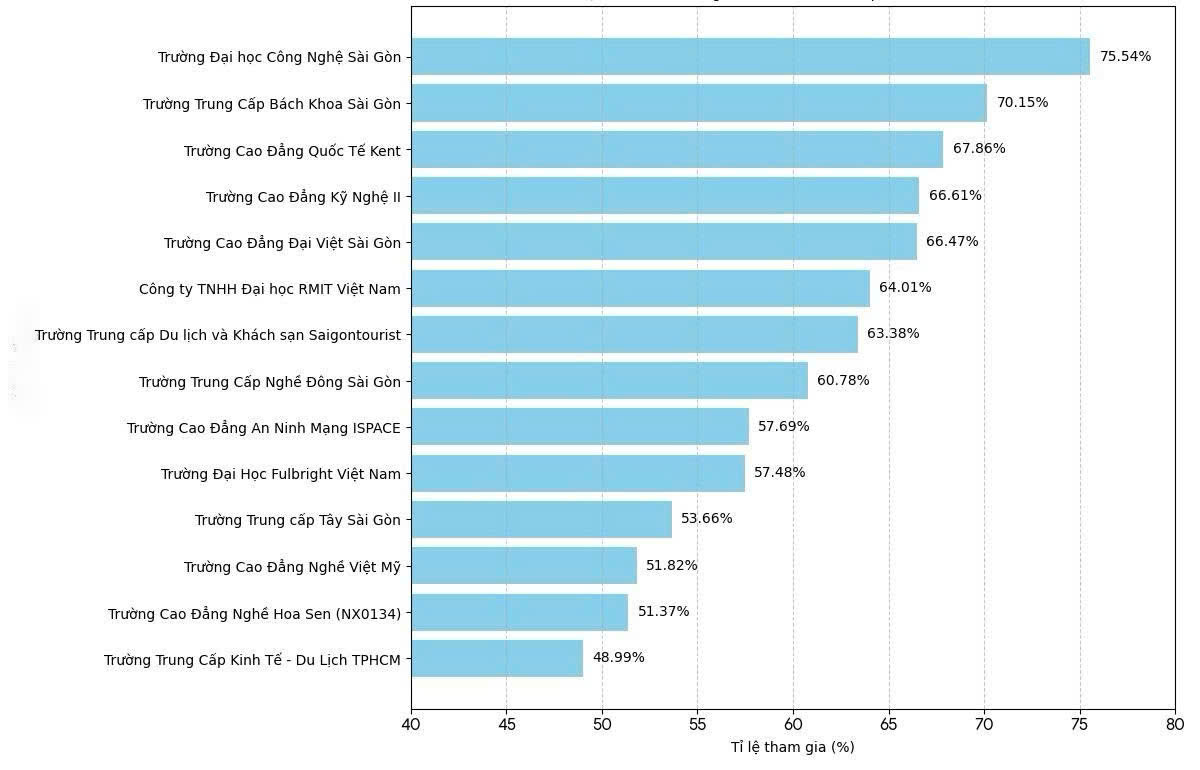
According to statistics from the Ho Chi Minh City Social Insurance (VSS), as of October 31, 2025, there are still more than 60 universities and colleges in the city that have not met the prescribed rate of students participating in health insurance, of which many schools have only reached 50-60%.
Ho Chi Minh City College of Economics and Tourism has only7/198 students participating (48.99%); Hoa Sen Vocational College has 51.37%; Viet My Vocational College has 51.82%; Tay Saigon College has 53.66%; ISPACE College of Cyber Security has 57.69%...
According to Ho Chi Minh City Social Insurance, students not participating in health insurance not only directly affects their medical examination and treatment benefits when sick or injured, but also causes difficulties in management and ensuring social security in the school environment.
Students are subjective, overlapping insurance and financial pressure
Explaining the reason for the low health insurance participation rate, the leaders of many schools said that there are many intertwined factors.
Mr. Dinh Van De - Acting Principal of Ly Tu Trong College, Ho Chi Minh City, said that a part of students are still subjective, thinking that "they are young, healthy, not necessary" so they should be slow or not participate in health insurance. In addition, many students from other provinces come to Ho Chi Minh City to study, their families are farmers, and their income is unstable, so they have difficulty paying fees.
The situation of students who have household health insurance or health insurance according to the business where they work part-time but do not notify or submit evidence to the school also causes statistics to be different. The overlap of insurance types leads to the mentality of "if you already have one, you don't need to buy more".
From another perspective, Ms. Phan Nguyen Quynh Anh - Head of the Student Support Department, Thu Dau Mot University said that there are still a number of students who do not fully understand the health insurance benefits, especially the payment level when treating serious illnesses or accidents.
The representative of Hoa Sen University also said that some students do not register for health insurance as students because their families have purchased health insurance, life insurance or private insurance packages with higher benefits.
Meanwhile, Mr. Nguyen Lai Duong Phong - Head of Student Affairs Department of the University of Finance - Marketing said that the health insurance participation rate at the school reached more than 95%. The rest is mainly due to students having health insurance cards according to households or policies but submitting evidence slowly, causing the reported data to not accurately reflect reality.

Tightening the responsibility of all parties to increase the coverage of student health insurance
Faced with the above situation, many opinions say that the implementation of student health insurance policies cannot stop at propaganda and mobilization but needs to clearly define the responsibilities of each subject.
According to regulations, educational institutions are the units that directly organize, urge and manage students' participation in health insurance; while the Social Insurance agency plays the role of guiding, managing data, ensuring rights and coordinating in handling problems. The fact that the participation rate is still low shows that the coordination between units needs to be closer and more drastic.
At some schools, management responsibility is being enhanced. Van Lang University currently has a student participation rate of more than 91% in health insurance and continues to review cases that have not participated to take appropriate measures.
Many other schools plan to link updating health insurance information with important school services such as subject registration, study results; even study and apply management measures such as deducting training points or limiting some services if students intentionally do not comply.
Mr. Tran Dung Ha - Deputy Director of Ho Chi Minh City Social Insurance - said that in recent times, he has coordinated with universities and colleges to organize the dissemination of the Law on Health Insurance to students; at the same time, promoting communication on social networking platforms and through press agencies.
However, there is still a situation where a part of students have not followed the regulations to participate in health insurance well, so Ho Chi Minh City Social Insurance has publicized the list of schools with low student participation rates to continue urging and reminding.
Mr. Ha added that there are currently no sanctions for students' participation in health insurance, the social insurance agency does not have the authority to enforce, so the effectiveness depends largely on students' self-awareness, parents' attention and the school's management role.
Regarding solutions in the coming time, Mr. Ha said that he will continue to enhance the responsibility of the unit, continue to promote propaganda in the direction of innovating approaches, suitable for students - young groups, regularly using technology and social networks.
In addition, Mr. Ha suggested that if the locality has stable budget conditions, it should consider supporting additional health insurance contributions for students, because investing in students is also an investment for the future of the country.
"The most important thing is that students must realize that participating in health insurance is to protect their own rights, not just because of regulations or for the achievements of any unit," Mr. Ha emphasized.


