
The Ministry of Education and Training (MOET) has just issued Circular No. 03/2026/TT-BGDDT stipulating the code of conduct for teachers in educational institutions under the national education system.
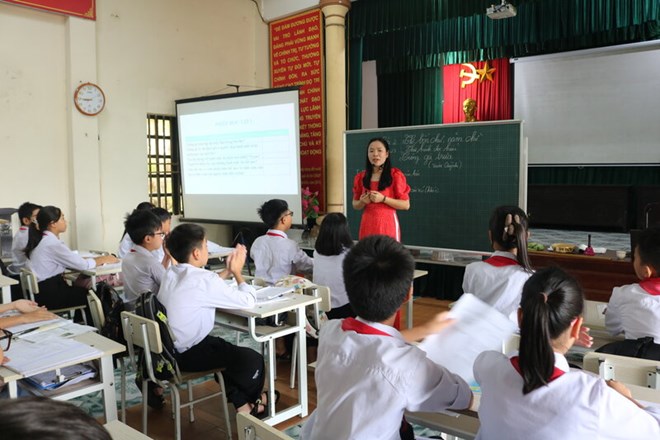
This Circular takes effect from January 30, 2026, replacing the provisions of Decision No. 16/2008/QD-BGDDT dated April 16, 2008 of the Minister of Education and Training on promulgating Regulations on teacher ethics and Article 6 of Circular No. 06/2019/TT-BGDDT dated April 12, 2019 of the Minister of Education and Training stipulating the Code of Conduct in preschool education institutions, general education institutions, and continuing education institutions.
No discrimination between learners in any form
In addition to general rules of conduct, the Circular requires teachers to have a model attitude, spirit of tolerance, responsibility, and love; respond, comment, praise or criticize appropriately to the subject and circumstances; encourage and motivate the striving and development of learners.
Respect and properly assess the actual capacity of learners; protect the legitimate and lawful rights and interests of learners; create motivation to promote learners' qualities and abilities; listen to and promptly advise and support learners in the field of learning and society to ensure suitability with age psychology.
Teachers are also responsible for creating a safe, positive and equal educational environment; encouraging learners to participate in research, labor production, community service activities, and sustainable development.
Notably, the Circular stipulates that teachers do not discriminate against learners in any form; do not insult, cause harm, suppress, prejudice, abuse, or infringe upon learners in any form and promptly report to leaders and competent authorities when detecting learners being abused; do not force learners to participate in voluntary activities; do not disclose learners' information against regulations; do not commit fraud or intentionally falsify results in enrollment and student assessment activities.
Respect, listen, help colleagues
In dealing with colleagues, the Circular requires teachers to be honest, sincere, united, have a spirit of cooperation, share responsibility, and help each other; self-criticism and criticism ensure objectivity, seriousness, frankness, and constructiveness for the progress of colleagues. Respect and listen to colleagues' opinions, coordinate, exchange experiences, and learn in professional activities. Do not offend, divide, or cause internal disunity; do not avoid or shirk responsibility; do not disclose information of colleagues contrary to regulations.
For management officials of educational institutions, the Circular stipulates that teachers are responsible for complying with the assignment, direction, and administration of management officials of educational institutions within the scope of their assigned functions and tasks; listening to and receptively receiving evaluation opinions and comments from management officials of educational institutions in professional activities; actively advising and clearly expressing their opinions to management officials of educational institutions according to their assigned functions and tasks; not offending or causing internal disunity; not being indifferent, avoiding or concealing violations of management officials of educational institutions.
Teachers are responsible for actively spreading human values
In dealing with parents or guardians of learners, the Circular stipulates that teachers proactively and promptly provide and exchange truthful information about learners, curricula, teaching and education plans when authorized by management levels. Encourage and create conditions for parents or guardians of learners to participate in educational activities for the progress of learners.
The Circular also stipulates that teachers must not offend, impose, seek personal gain, or force parents or guardians of learners to participate in activities contrary to State regulations and voluntary activities.
Regarding community behavior, the circular requires teachers to promote the spirit of voluntariness, self-awareness and active participation in social activities; environmental protection; effectively implement and coordinate the implementation of charity and humanitarian movements and activities, taking care of the poor, vulnerable and disadvantaged groups in society according to the provisions of law; participate in and spread the movement to build a learning society, develop reading culture, encourage learning, and encourage talent.
Actively spreading human values, good deeds, beautiful images, and cultural behaviors in society and schools to the community; proactively participating in communication and propaganda about education, combating fake news related to the field of education and teachers on official social network channels;...


