According to the request of the Ho Chi Minh City Department of Education and Training, educational institutions must organize propaganda and thoroughly grasp legal regulations on food safety, school health and guidance on school meal nutrition; clearly assign responsibilities to responsible departments and individuals. Heads of units are fully responsible if violations occur.
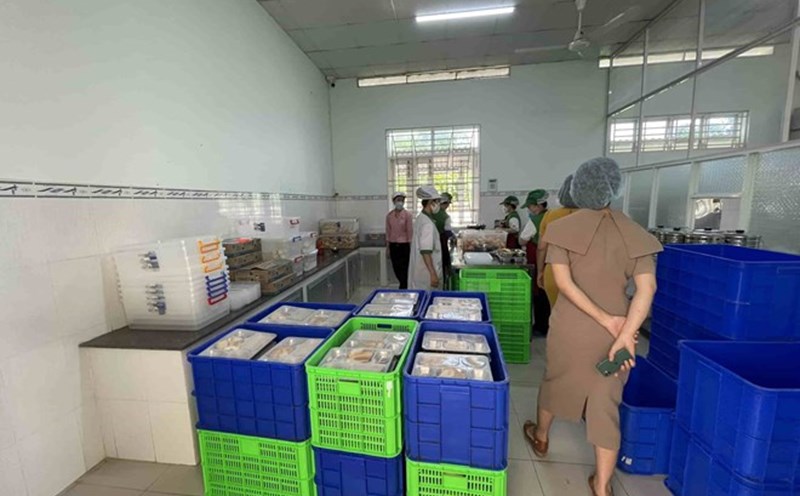
Collective kitchens, canteens, and dining halls in schools must fully meet food safety conditions; operate according to the "one-way" principle, distinguishing clean areas - dirty areas, controlling insects and harmful animals, and daily hygiene, with a monitoring logbook.
The Department of Education and Training requires schools to only sign contracts with units providing meals and food that meet food safety conditions; the selection must be public, transparent and have a record of assessment of facility conditions, means of transportation, and delivery procedures.
100% of food, raw materials, and spices put into the kitchen must have clear origins, ensuring traceability for each shipment; absolutely do not accept floating food, of unknown origin, expired, spoiled, crushed.
Educational institutions must fully store relevant documents such as contracts, legal documents, invoices, documents, inspection books, sample books, hygiene diary and inspection records of functional agencies.
The document emphasizes a separate requirement for the use of grease and packaging materials, and tools that come into direct contact with food.
Cooking oil used in processing must have a clear origin, and be expired; do not use fried oil repeatedly, do not mix old oil with new oil, and immediately remove any abnormal oil.
Schools are not allowed to use styrofoam boxes to store hot food, drinks or greasy food; do not heat food in styrofoam boxes by microwave.
Along with school meals, educational institutions must ensure the supply of drinking water and domestic water that meet standards; periodically check and test water quality. Toilets must be sufficient in quantity, clean, ventilated, and cleaned many times a day according to the regulations of each school level and have a monitoring book.
The Ho Chi Minh City Department of Education and Training requests educational institutions to proactively conduct periodic and unscheduled self-inspections and coordinate with parents' representative boards and health agencies in food safety supervision.
When food poisoning occurs or there is a risk of food insecurity, schools must immediately activate response plans, organize first aid, transfer students to medical facilities; at the same time, maintain the scene, seal food samples, and temporarily suspend the use of food batches or related suppliers.
Units must urgently report to the Department of Education and Training and the People's Committees of wards and communes within 60 minutes from the time of discovering the incident and fully coordinate with functional agencies in the process of handling.