
Stay in the shack to avoid crossing the river
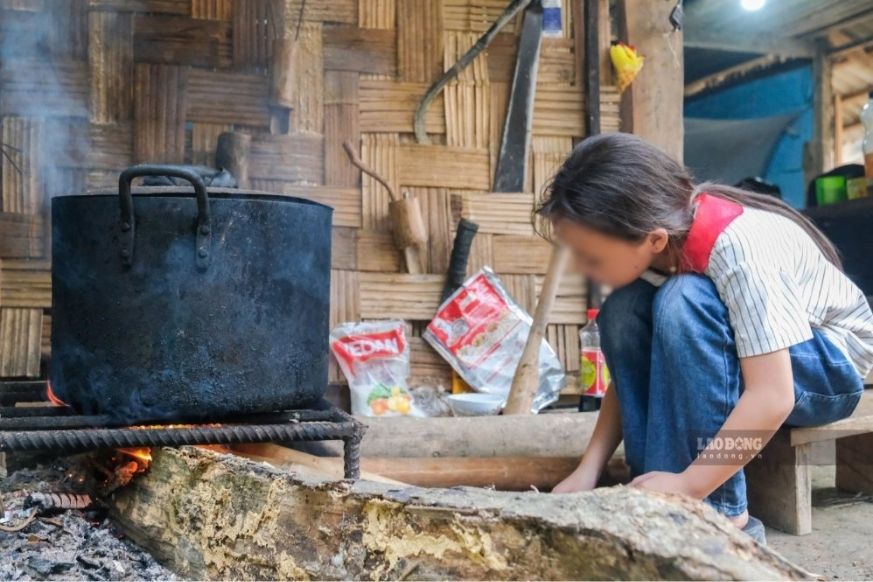
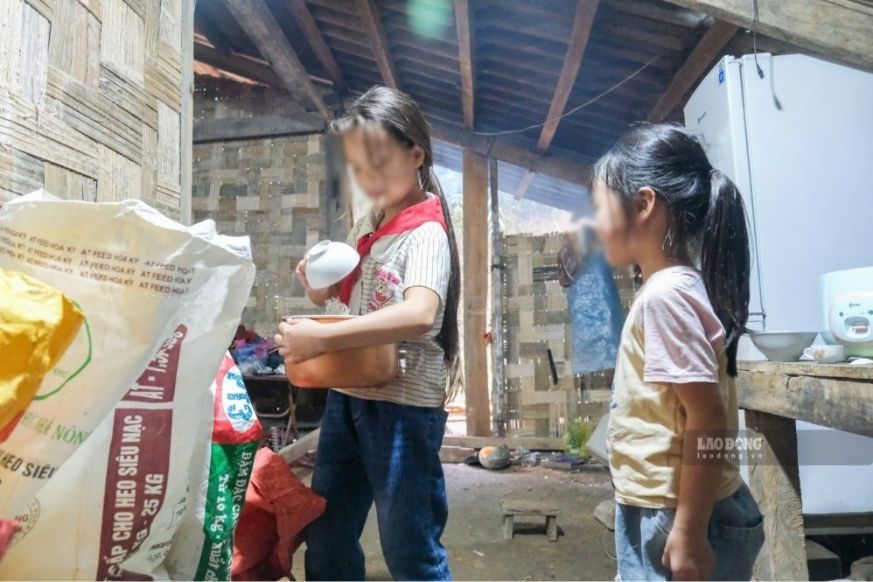
Last school year, every afternoon after school, the two sisters Duong Thi Bao Ngoc, a 3rd grade student, and Duong Thi Thu Thuy, a 1st grade student, returned to the temporary shack in Khuoi Man area, Khuoi Luong village, Quy Hoa commune.
The shack was given to people to stay in, just enough to place a bed, a set of tables and chairs and a small kitchen divided by bamboo walls. The two children washed rice themselves, started the stove, boiled water to bathe and took care of each other.
At the age of still needing parents' protection, the children have to live far from their families to conveniently study at Quy Hoa Ethnic Minority Boarding Primary and Secondary School. In return, the two sisters do not have to cross the Bac Giang River every day by rafts or self-made rafts.
Mr. Dang Tang Thu, Head of Khuoi Luong village, said that the old Khuoi Man village area has almost no other paths except for the road across the river. When floodwaters rose, rafts were swept away, people were isolated, and students had to take long days off from school.
This river section has experienced many tragic drowning incidents. People only hope for a solid bridge or underpass to travel, work and take children to school safely," Mr. Thu said.
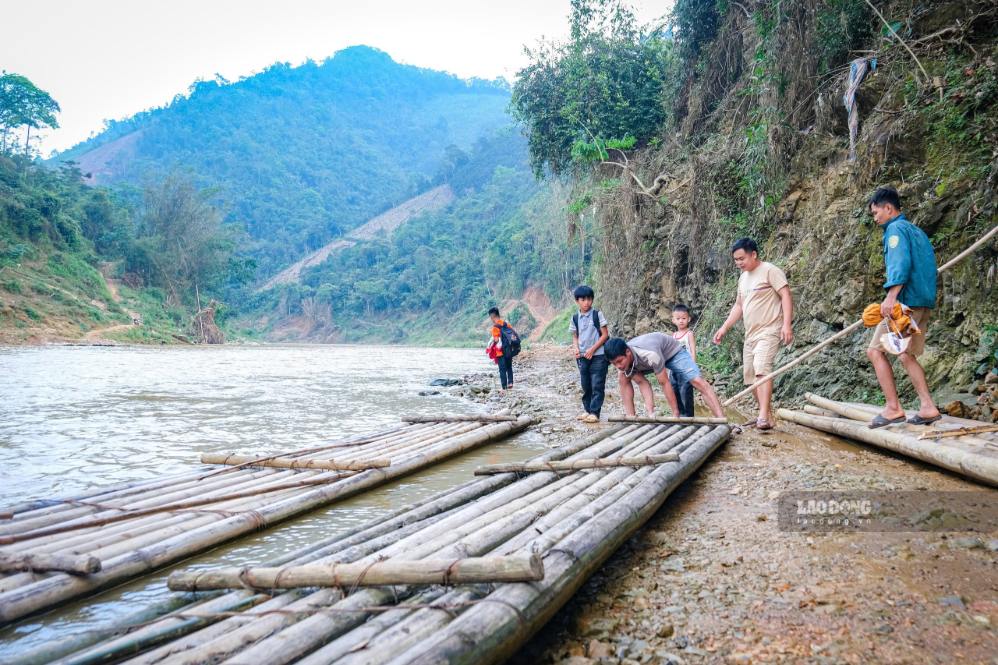
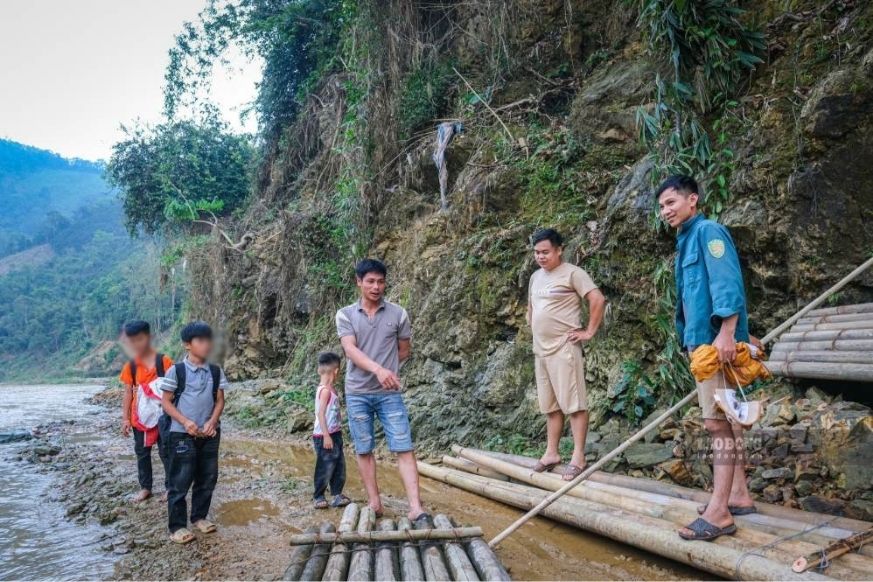
According to Mr. Be Van Ly, Chairman of Quy Hoa Commune People's Committee, at Song Phu residential point in Khuoi Man area and Na Chon hamlet, where there are 22 households, people and students still have to cross the river by rafts and bamboo rafts. In 5 years up to the time the locality statistics, this area has experienced 4 fatal accidents.
The commune has surveyed a plan to build an underground spillway across the Bac Giang River with an estimated cost of about 5 billion VND. This plan is more economical than a river overpass about 90m long, estimated to cost 40 billion VND, and also more convenient than suspension bridges in transporting agricultural products.
However, the commune's resources are still limited. In 2026, the locality is allocated 2.6 billion VND of investment capital and must prioritize rural roads, irrigation works, and essential schools.
About 20 minutes by car from Khuoi Man, Na Keo area has 116 households with 548 people, mostly ethnic minorities. People call this "3-no" village: no phone signal, no clean water, no Internet.
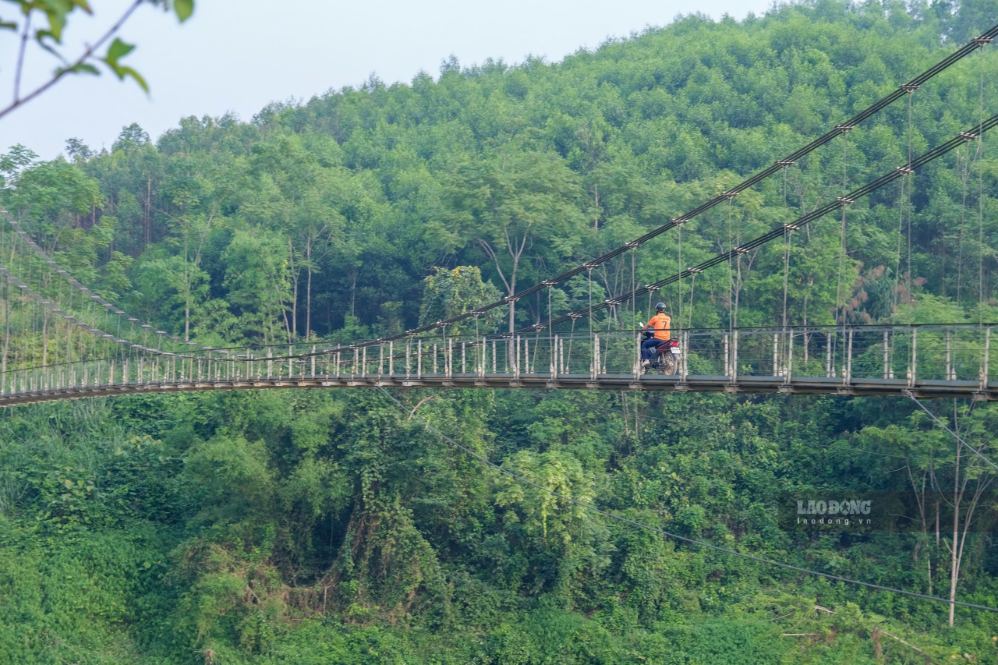
From April to November every year, bamboo and wooden bridges built by people are often swept away by water. At that time, Na Keo has another "no" - no roads to travel.
Bamboo rafts swaying to bring children to class
A similar worry exists next to Ban Me stream, a branch of the Bac Giang River flowing through Thien Hoa commune. Every time it rains heavily, the water rises, cutting off the only road leading to schools.
During storm No. 10 last year, floods swept away bamboo rafts, many kindergarten students had to stay at school, and more than 10 teachers could not return home.
Teacher Nong Thi Cham, a teacher at Thien Hoa Kindergarten, once had to park her motorbike on the bank, wrap her backpack and documents in nylon bags, and then ask people to row a raft across the fast-flowing water to reach Na Quang school.
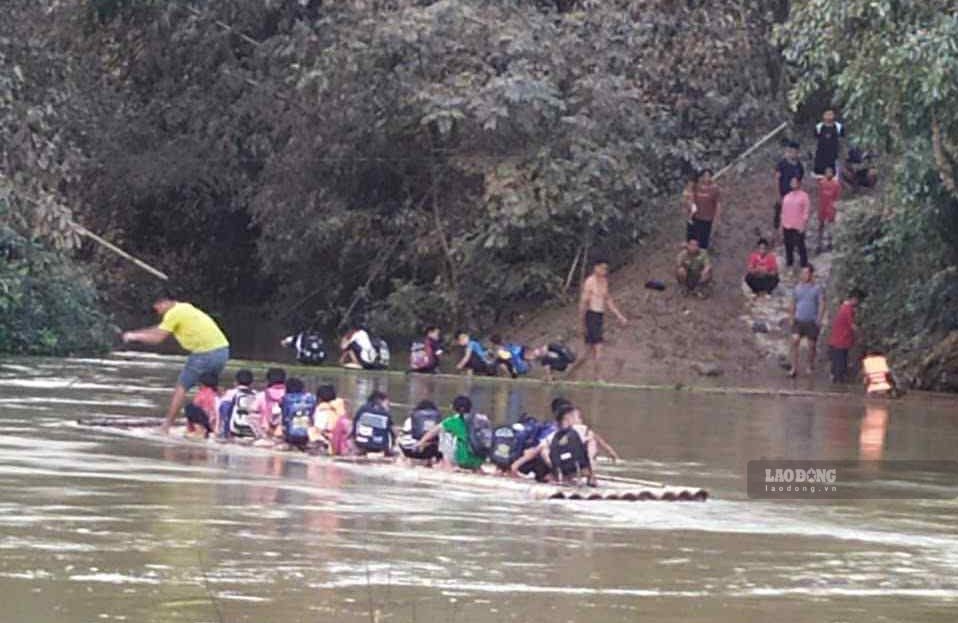
There are evenings when teachers and students have to light oil lamps to sleep in class, hearing the sound of water roaring outside the window and everyone is anxious," Ms. Cham recounted.
The female teacher also said that the former Yen Lo commune area had 4 school points, of which 2 points had to go through Ban Me stream. Every time floods come, 4 villages across the stream are almost isolated. At times, 16 teachers had to eat and sleep at school for many days.
According to Mr. Hoang Dinh Hien, Chairman of Thien Hoa Commune People's Committee, the locality has mobilized support for more than a few dozen life jackets and requested parents and students to wear them every time they cross the river. However, this is only a temporary solution.
The new school year is about to begin, but the journey to find literacy for students in Khuoi Man, Na Keo and the Ban Me stream area is still associated with bamboo rafts, temporary bridges and the worry of being isolated during floods.
A solid bridge not only connects the two banks but also helps children get to school and return home safely, instead of having to live in temporary shacks or stay at school amidst the sound of floodwaters.


