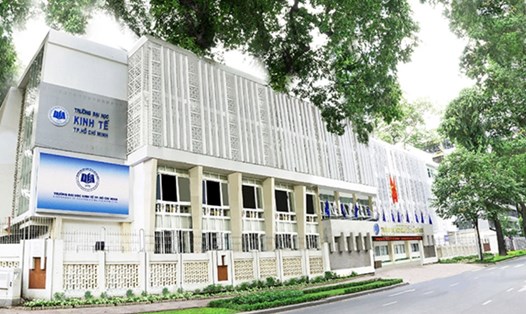
The event is also the second congress between the Scientific Committee on Organization of Work and Social Factors (ICOH-WOPS) and the Asia-Pacific Academy of Workplace Psychology - Social Factors (APA-PFAW).
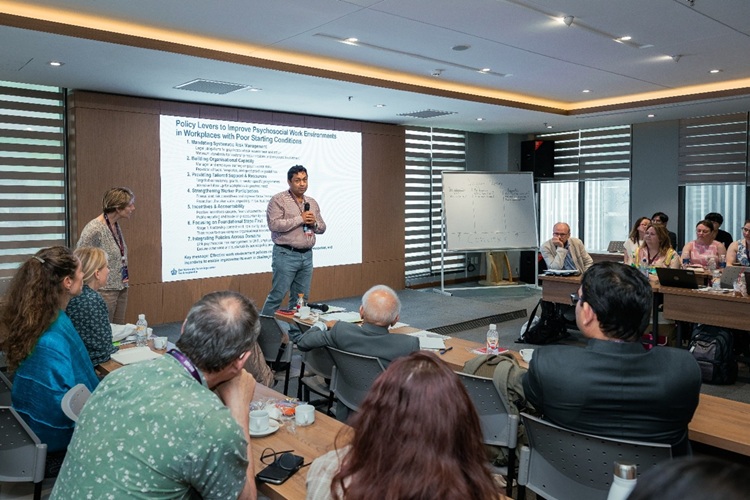
The event marks one of the times Vietnam has hosted a global forum on future of work and mental health at work. The scale of the workshop reflects the shift of international knowledge flows towards Asia - Pacific, where fluctuations in the labor market, digital speed and competitive pressure have made mental well-being urgent.
APA-PFAW Akinori Nakata acknowledged the conference in Ho Chi Minh City as a new step in the development of the network established in 2012. According to him, the event hosted by UEH.ISB Talent School is a manifestation of the increasingly deep trend of scientific cooperation between the region and the world, especially in the context of organizations having to adapt to unprecedented changes in the working environment.
Meanwhile, ICOH-WOPS President Michael Ertel also emphasized the role of this year's conference in connecting general research programs, from the Tokyo Declaration 2023 to interdisciplinary projects on occupational mental health. All to promote global standards on a safe and humane working environment.
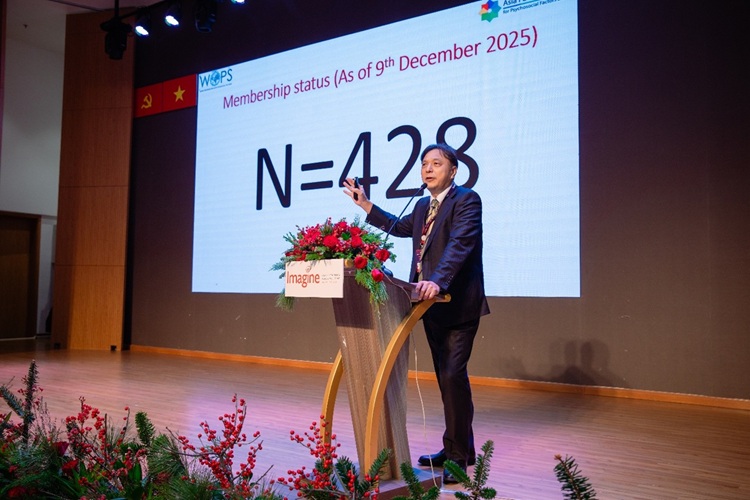
With a strategic vision, Associate Professor, Dr. Bui Quang Hung - Deputy Director in charge of Ho Chi Minh City University of Economics (UEH) - pointed out that the world of work is shifting under the impact of technology, automation, digital transformation, climate change and the long-term consequences of the pandemic, increasing psychological pressure on the workforce, especially the younger generation.
Is economic growth still meaningful if traded for human health and dignity?, he asked. From that, UEH chose to reposition the university's mission in the 21st century with the "University of Happiness" strategy.
According to him, "Happy University" is not a slogan but a development model based on three scientific foundations including happy economics, positive psychology and organizational science. UEH aims for an ecosystem of humanistic education, where each individual is supported, inspired and empowered for comprehensive development.
The school establishes a safe and equal psychological environment, integrates emotional and social capacity into the curriculum, promotes research on occupational welfare, applies AI to early identification of psychological risks and develops a happiness measurement system as a new quality standard in higher education.