
Recently, speaking at a working session with the education sector on the preparation for the new school year 2026-2027 and the results of implementing Resolution 71-NQ/TW of the Politburo on breakthroughs in education and training development, General Secretary and President To Lam emphasized a very important orientation: Education and training innovation must strongly shift from the thinking of "education management" to "education development management".
Switching from doing the right process to creating results
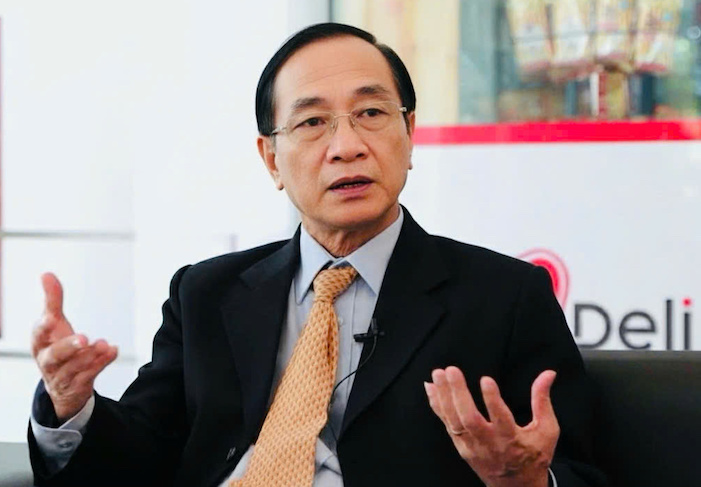
Talking to Lao Dong Newspaper, Dr. Hoang Ngoc Vinh - Former Director of the Department of Vocational Education, Ministry of Education and Training, said that the biggest difference between education management and education development management lies in the approach. If management often focuses on input and implementation processes, development management focuses on output results and quality.
He believes that this message is primarily for educational management agencies at the central and local levels. If management is still heavily focused on administrative orders, checking records and evaluating according to procedures, it is very difficult to require schools to govern according to results.
Therefore, the Ministry of Education and Training needs to strongly shift to the role of institutional building, building quality standards, developing data and accountability mechanisms; while localities need to reduce control of daily activities, increase delegation of power, support and supervise the development results of schools.
For general schools, the school year plan cannot just be a job assignment and emulation schedule, but must be associated with the goal of improving learning quality, reducing the gap between student groups, supporting teachers and using resources more effectively.
From assigning teachers, organizing teaching, testing and evaluation to coordinating with parents, it is necessary to rely more on data and actual results instead of just relying on reports. Principals must pay more attention to the progress of students, the teaching quality of teachers, school culture and the effectiveness of resource use.
In short, this message will force high schools to make students learn better, teachers develop better, and schools become better every year" - he said.
Administrative management habits are major barriers
Dr. Hoang Ngoc Vinh acknowledged that when switching to a development management model, the biggest barrier is the habit of administrative management that has existed for a long time. In addition, many schools still do not have real autonomy.
To manage effectively, schools must be able to decide on things that directly affect quality, especially recruitment, teacher use, teaching organization and resource allocation" - he said.
According to Dr. Hoang Ngoc Vinh, if teachers are recruited from other places and the school only receives and uses them, the principal can hardly take full responsibility for the quality of the staff. When the decision-making power and responsibility for the results are separated, it cannot be called proper management.
In addition, the management capacity of the staff from central, local to school levels is still uneven. He believes that effective governance can only be formed when power, capacity and responsibility go together.
Another limitation is that the education database system is incomplete, not interconnected and not reliable enough to serve decision-making as well as monitoring according to results.
Without good data, it is difficult to assign rights correctly, difficult to check correctly and difficult to assess the actual quality" - Dr. Hoang Ngoc Vinh said.
Principals must know how to lead change
According to Dr. Hoang Ngoc Vinh, to meet the new requirements, the team of school administrators needs to be trained in more practical skills.
First of all, principals need to be able to look further into daily administrative work, understand the strengths and weaknesses of the school, the opportunities and challenges being posed, as well as the support needs of teachers and students.
Along with that, the school management team needs to have the ability to use data in management, leading change - particularly important requirements in the context of educational program innovation, digital transformation, artificial intelligence and many new pressures directly affecting schools.
Principals must know how to persuade, organize, manage, create consensus and get teachers to change together" - he said.
In addition, schools need to strengthen their capacity to coordinate with parents, local authorities and social forces to mobilize more resources to support education while still ensuring the main responsibility for training quality.
Today's principal is not only the person who keeps the school operating orderly, but must also be the person who knows how to make the school better every year" - Dr. Hoang Ngoc Vinh affirmed.


