
Border commune students receive lunch support of 450,000 VND and 8kg of rice per month
The Government has just issued Decree No. 339/2025/ND-CP stipulating policies to support lunch meals for primary and secondary school students in land border communes. Accordingly, each student is supported with 450,000 VND for meals and 8kg of rice per month, calculated according to actual study time but not exceeding 9 months/school year; 1st grade students who are ethnic minorities learning Vietnamese before entering 1st grade are supported for an additional month.
In addition to direct support for students, educational institutions are allocated funds to organize centralized lunches, with a norm of 2,360,000 VND/month for each group of 45 students (or less than 45 students are still subject to 1 norm), the support period is no more than 9 months/school year. The cost calculation is carried out flexibly, combined with support policies according to Decree No. 66/2025/ND-CP to ensure the highest benefits for the school.
In addition, schools are also allowed to invest in facilities and equipment to serve lunch and support electricity and water bills according to regulations; in cases where there is no stable electricity and water, funds are allowed to be used to buy and rent necessary equipment. The policy applies to the entire school site, depending on local conditions, and officially takes effect from December 25, 2025. See more...
Proposal for heavy, hazardous, and dangerous allowances for teachers
The Ministry of Education and Training is seeking opinions on the draft Decree guiding the Law on Vocational Education, which proposes a heavy, hazardous, and dangerous allowance regime for teachers teaching in public vocational education institutions. The beneficiaries of allowances are practical teachers or teachers who both teach theory and practice in practice rooms, workshops, or in enterprises, belonging to industries and professions with dangerous elements.
The draft identifies 4 groups of factors as the basis for enjoying allowances, including: exposure to hazardous substances or easily infectable environments; working in high pressure conditions, lack of oxygen, too hot or too cold; environments with noise and vibrations exceeding safety standards; and environments with radiation, radiation or electromagnetic field exceeding the permissible level. With just one or more factors, teachers are eligible to consider enjoying allowances, with 4 levels corresponding to a coefficient of 0.1 to 0.4 according to the number of hazardous factors.
Allowances are calculated based on the number of practical teaching hours, paid for the same monthly salary period and not used to calculate social insurance contributions and benefits. The head of the vocational education institution is responsible for determining the specific benefit level for each teacher; at the same time, institutions can stipulate higher allowances, but not lower than the minimum level of the Decree. If approved, this policy will contribute to ensuring the rights of vocational teachers in a risky working environment. See more...
To have a good set of textbooks, a full-scale editorial board is needed
Students in Hue vomit after lunch: Meals include mackerel and zucchini soup
On December 26, Nguyen Trai Elementary School (Phu Xuan Ward, Hue City) recorded many students showing signs of vomiting after lunch break. The school reported the incident to the Ward People's Committee and the health agency to coordinate handling.
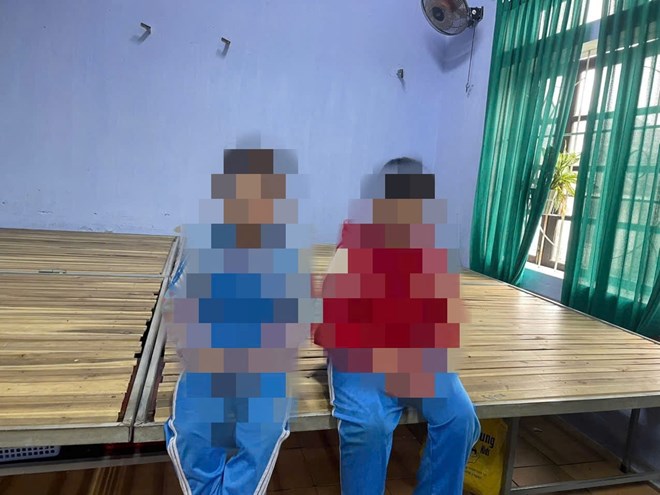
According to reports, at noon on the same day, the school organized semi-boarding for 541 students with a menu including white rice, braised mackerel, stir-fried water spinach and winter melon soup with shrimp. During lunchtime, 8 2nd grade students (classes 2/2 and 2/3) developed vomiting symptoms and were promptly monitored and cared for by teachers and medical staff. See more...


