
The Hanoi Department of Education and Training issued Official Dispatch No. 4808 to the People's Committees of wards and communes; educational institutions directly under the Department on strengthening the management of semi-boarding work at educational institutions in the 2026-2027 school year.
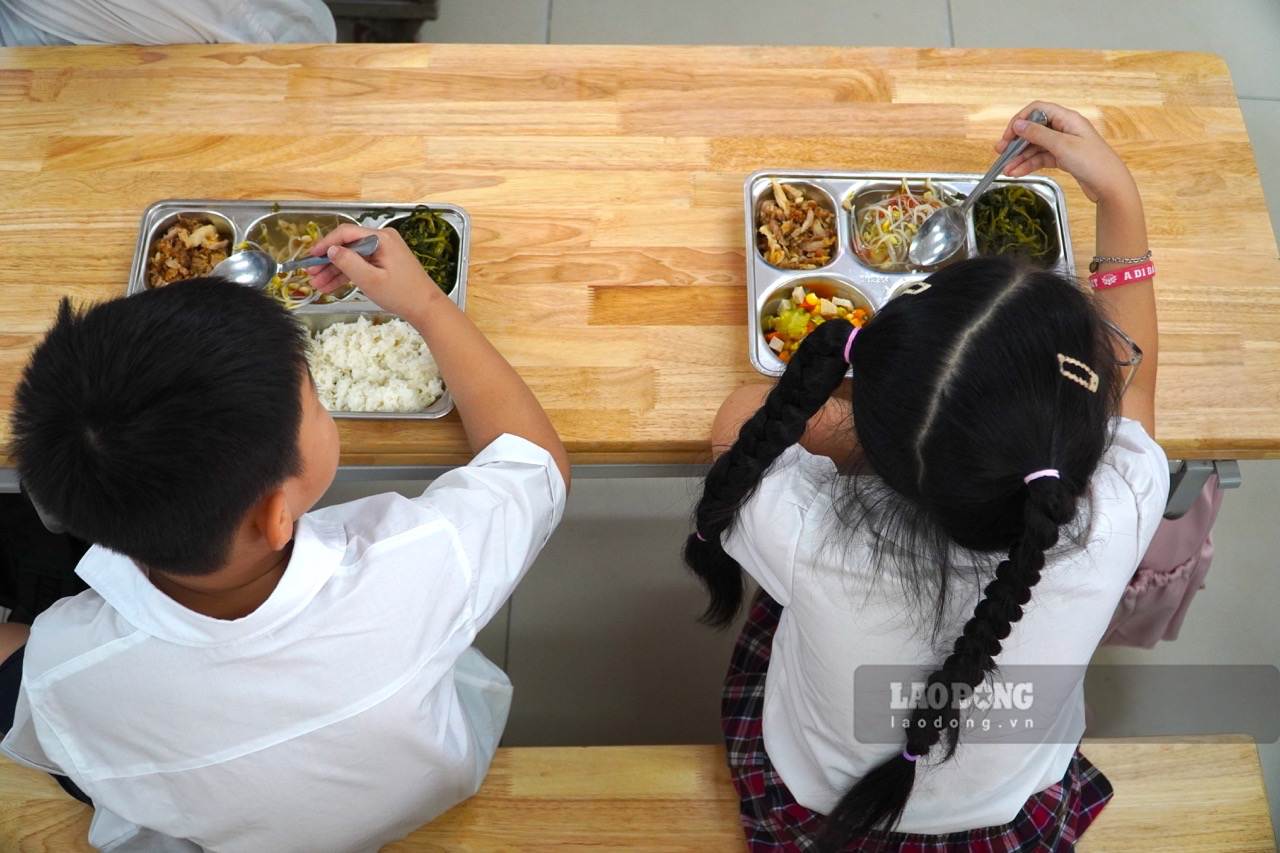
The official dispatch was issued in the context of many parents being upset because the 40,000 VND semi-boarding meal at a primary school in Hanoi City was "small" with only bean sprouts, minced meat and a piece of grilled skewered meat.
The Hanoi Department of Education and Training requests the People's Committees of wards and communes to direct educational institutions in the area and requests educational institutions directly under the department to focus on implementing the following contents:
Reviewing the entire plan for organizing semi-boarding meals: Reviewing the conditions of facilities, human resources, kitchens, places to organize meals; processing, transportation, and delivery procedures; the number of students eating semi-boarding and the time frame for organizing meals and stays suitable for each level of education.
For establishments using units providing meals and food from outside, it is necessary to review the actual supply capacity, the number of schools, intersections, transportation distance, human resources, vehicles and the ability to supply on time; and at the same time request the supplying unit to have a contingency plan when incidents occur regarding processing facilities, equipment, electricity, transportation vehicles or human resources.
The organization of semi-boarding must be suitable to actual conditions, based on the voluntariness of students and parents; not organized when not fully ensuring the necessary conditions on facilities, human resources, food safety, food origin, student management and incident handling plans.
Strengthen the quality control of daily meals: Heads of educational institutions are responsible for organizing, managing, inspecting, and supervising semi-boarding meals at units; arrange people responsible for direct inspection at the time of handover.
Fully implement the inspection of origin, quantity, quantitative, sensory quality, transportation conditions, preservation, and expiration date; compare food and actual meals with the menu and agreed contents; implement three-step inspection, store food samples and food safety regulations.
Do not receive or use food and raw materials of unknown origin, with abnormal signs or not ensuring transportation and storage conditions; do not ignore food safety requirements because of meal schedule requirements.
The menu must ensure sufficient quantity, balanced nutrition, suitable for the age group and school level; increase diversity, suitability according to seasons and actual conditions of educational institutions.
Units exploiting and using the City's Food Safety Management and Food Traceability System (HanoiCheck) in the management of semi-boarding meals, publicizing information and tracing food origin according to the City's guidance.
Fully, accurately, and promptly update information under the unit's responsibility, focusing on: Dossiers and information of the supplier; origin of food, raw materials and supply process; menus, quantities of raw and cooked food; information on food delivery and receipt, meals; inspection and supervision results and contents that must be disclosed according to regulations.
Research and use the Menu Bank on HanoiCheck to suit the age, nutritional status and actual organizational conditions of the school; in case of adjustment or replacement of dishes, it must ensure equivalent nutritional value and be publicly disclosed according to regulations.
Strengthen the responsibility of the supplying unit and handle cases that do not ensure commitments: Continuing education institutions evaluate the implementation of the supplying unit based on contracts, committed documents and actual supply results, especially in terms of quality, quantity, menu, delivery time, food safety and service conditions.
For existing problems that can be overcome, request the supplying unit to overcome them immediately, not to let them be repeated. In case of failure to fulfill commitments, contract violations, or failure to ensure stable and safe supply capacity, educational institutions and competent authorities shall, based on the contract, nature, severity, and current regulations, consider temporary suspension, replacement, or termination of the contract according to their authority and procedures; and proactively propose replacement plans to avoid affecting the rights of students.
Strengthen publicity and parental supervision participation: Publicize menus, meal costs, quantities, providers and information related to semi-boarding meal organization; create conditions for parents' representatives to participate in supervision in accordance with regulations and actual conditions of the school.
Establish a channel to receive and respond promptly to parents' opinions; when problems arise, proactively provide objective information, coordinate to handle them right at the grassroots level, and limit insufficient information causing anxiety in parents.
Strengthen inspection, handling and information reporting regime: People's Committees of wards and communes direct educational institutions under their management to strictly implement the above contents; strengthen inspection and supervision, especially for units that have reflections or suppliers serving many educational institutions; promptly handle according to their authority.
Educational institutions directly under the Department should immediately review the implementation at the unit; proactively overcome existing problems; and be responsible to the Director of the Department for the organization of semi-boarding meals within their management scope.
When an incident occurs or food or meals are found to show signs of not being safe, it is necessary to stop using food and meals that are at risk; preserve samples, dossiers, and related information; immediately report to competent authorities and coordinate traceability and handling according to regulations.


