
The constantly changing world makes students' baggage not only in what they learn, but also in their thinking ability, problem-solving, creativity, cooperation, self-understanding and adapting to unknown things. Besides the knowledge base, the formation of competencies to help students actively learn, make decisions and adapt to new circumstances is increasingly being concerned.
Knowledge needs to be transformed into competence
Knowing a formula or concept is not enough, more importantly, students apply that knowledge in new situations. In Science, students are placed in the process of observing, asking questions, experimenting and analyzing results. For subjects related to life, students approach real-life situations to consider, choose and take responsibility. In Art, the creative process helps students observe, empathize and form their own way of expression. Learning thereby is not limited to knowing, but towards understanding, applying and creating value.
Potentials needed for the future
The first foundation is thinking and problem-solving ability: knowing how to analyze information, ask questions, consider multiple perspectives and find solutions to problems without available answers.
Next is the ability to communicate and cooperate with people who are different in thinking, culture and expertise.
Emotional and self-awareness abilities are also important: understanding strengths, limitations and personal emotions helps students make appropriate choices and respond better to changes.
Finally, creativity, adaptability and a lifelong learning spirit help children constantly learn as technology, careers and society change.
How to learn to create competence
These abilities are difficult to form if students only receive one-way knowledge. Learning needs to create situations for them to practice and explore themselves: learning Science through experiments, learning Lifestyle through discussing practical issues, learning Art through creative experiences. Each subject has its own approach, helping students develop many different ways of thinking.
Expand your experience with international programs
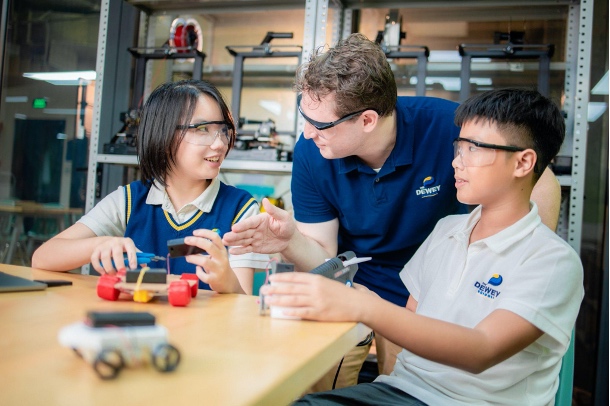
Many schools are currently integrating international programs for students to access different learning methods and education standards, including the The Dewey Schools inter-level school system. The difference of The Dewey Schools is the comprehensive international standard education program integrated with the partner school Mount Vernon School (USA), including 7 innovative subjects to help students be ready in terms of personality, knowledge, spirit and physique for university, work and life. In which, the MDE invention subject (Maker, Design, Engineering) helps students turn ideas into design and solutions; Natural Science NGSS standard focuses on practice and evidence-based thinking.
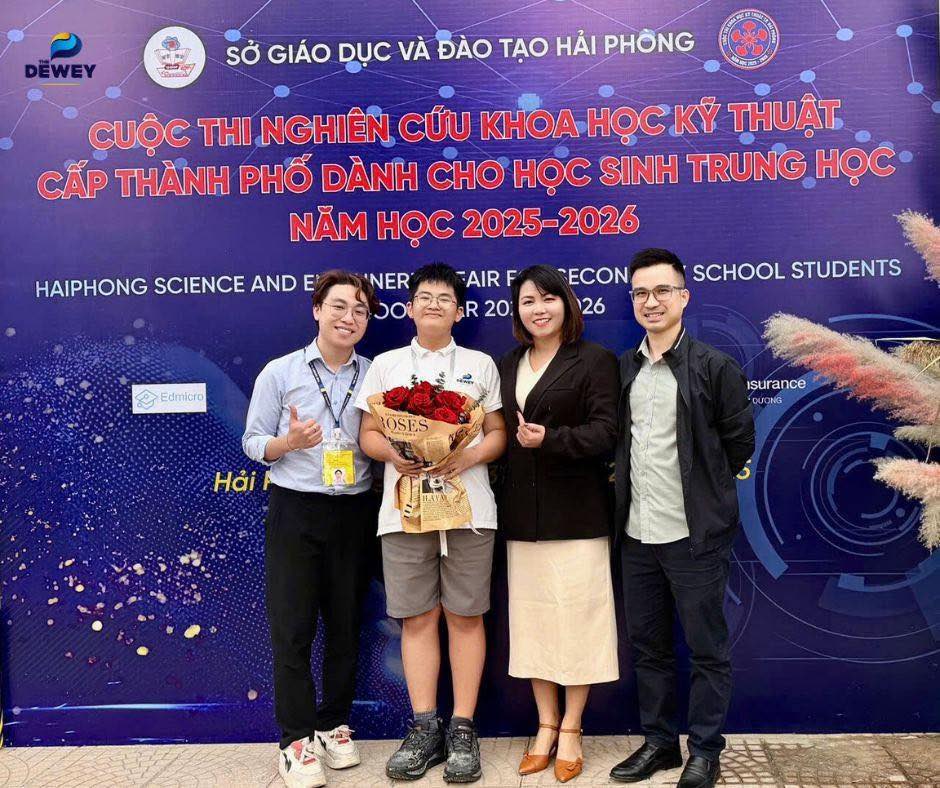
An example is Pham Vu Hoang Quan, an 8th grade student at The Dewey Hai Phong, who won the Third Prize in the City-level Science and Engineering Competition in the 2025-2026 school year with a project researching the ability to absorb heavy metal ions in water using bio-coal from lemongrass essential oil distillation residue - a process that helps Quan cultivate the ability to pose problems, research and find application solutions.
Comprehensive education is not learning more
Comprehensive development does not mean adding more subjects to the schedule, but more importantly, how factors are connected in the learning process.
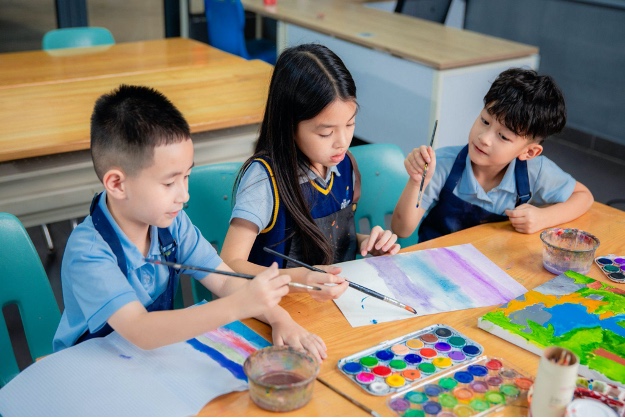
At The Dewey Schools, this is reflected in the three pillars OF TRUTH - GOODNESS - BEAUTY: the subjects of Mind-Building Science, the subjects of Lifestyle towards Autonomy and Adaptation, and the subjects of Arts that nurture emotions and creativity.
Preparing for an unknown future
No one can accurately predict the job or environment that students will enter in the future. What schools can do is help students form the ability to adapt to unknown things - know how to ask questions, cooperate, experiment, understand themselves and continue to learn. Today's education, therefore, not only aims at what students know, but also needs to care about how they think, act and become what kind of people they will become.
The Dewey Schools is a pioneering bilingual school system, implementing an international integrated program with Mount Vernon School (USA), focusing on experiential education and career orientation from an early age. The school is an official member of the Council of International Schools (CIS) and is recognized by the International Baccalaureate Organization IB as IB International School (IB World School), teaching the IB MYP & IB DP programs.
· Learn more: https://thedeweyschools. edu. vn/
· Fanpage:
//www. facebook. com/TheDeweySchools
· Hotline: 1900 3293


