
The 8th National Startup Day for students is chaired by the Ministry of Education and Training (MOET), the Central Committee of the Ho Chi Minh Communist Youth Union, in coordination with the Ministry of Science and Technology, the Vietnam Chamber of Commerce and Industry, organized at the Banking Academy for 3 days, from July 17-19. The event attracted about 10,000 turns of students, delegates and guests to attend.
Supporting students to start businesses is a national strategic task
Speaking to direct the program, Deputy Prime Minister Le Tien Chau affirmed that this is an important event, showing the deep concern of the Party and State for the young generation; contributing to arousing the spirit of innovative startups, the will to rise up, the aspiration to contribute, and the responsibility of students towards the country.
The Deputy Prime Minister affirmed that supporting students to start businesses is not only the task of the education sector but also a national strategic task, contributing to the development of high-quality human resources, building an innovation ecosystem and preparing young entrepreneurs and creative human resources for the new development stage of the country.
Over the past 8 years, the implementation of the Project "Supporting students to start businesses" has achieved many positive results. The project has helped "incubate" about 300 startups, starting sources; many projects have established businesses, successfully raised capital and gradually approached the market, in which many typical projects associated with green technology, biotechnology, new materials, digital healthcare... have appeared.
However, besides the achieved results, the Deputy Prime Minister acknowledged some limitations such as: In some places, startup activities are still movement-based, lacking depth; Products are not closely linked to market demand; Mechanisms and support policies are still limited and lack synchronization. The connection between schools and businesses, investors, and experts in many cases is not highly effective,...
Taking the quantity of products and projects entering the market as a measure

In the coming time, to effectively implement the Program to support students to start businesses, the Deputy Prime Minister suggested that the Ministry of Education and Training should focus on strongly innovating thinking and ways of doing things; it is necessary to take the actual results, the number of products and projects going into the market, the number of businesses formed and the ability to commercialize as the main measure.
In addition, building and perfecting the startup ecosystem in schools, creating conditions for ideas to be tested, perfected and developed to the end, not stopping at competitions and festivals; perfecting the mechanism on intellectual property, technology transfer and mobilizing social resources, ensuring that potential projects can quickly access the market.
The Deputy Prime Minister also set a requirement that the Ministry of Science and Technology (S&T) must play the role of "bridge" to bring knowledge in schools to the market, turning students' ideas into real products and businesses.
At the same time, closely coordinate with the Ministry of Education and Training to make student entrepreneurship activities a component of the national innovation ecosystem...
Along with that, ministries, branches, and localities must synchronously implement solutions to support students to start businesses, associated with human resource development tasks, innovation and development requirements of each industry and each locality;
General education institutions, higher education institutions and vocational education institutions are more proactive in organizing and implementing activities to support students to start businesses; associated with training, experience, career orientation; forming creative thinking, proactive spirit, foundational skills and appropriate career orientation,...
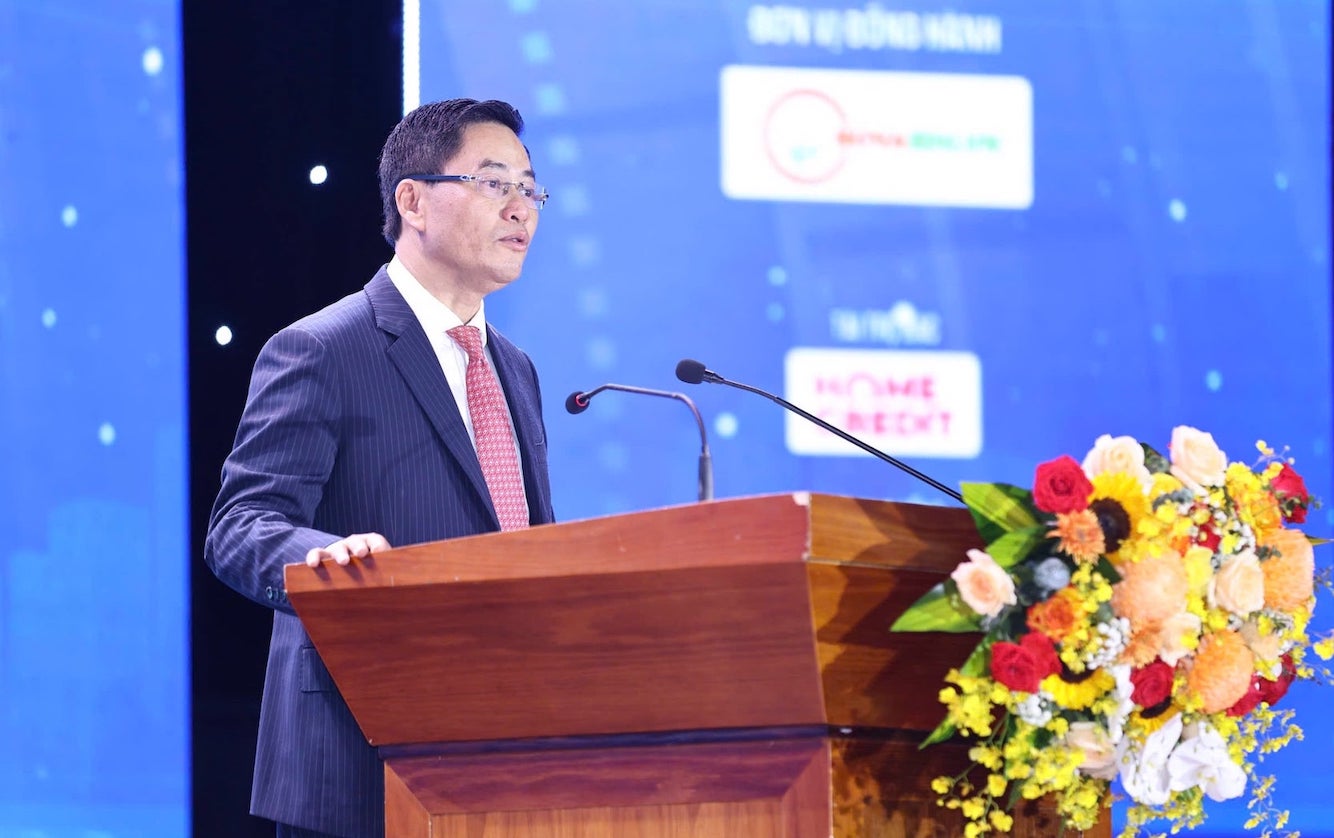
On the part of higher education institutions, Assoc. Prof. Dr. Bui Huu Toan - Director of the Banking Academy proposed a number of solutions to comprehensively upgrade the school start-up ecosystem such as: It is necessary to establish the "Student Seed Program" (NSSF) under the co-investment capital mechanism to overcome the financial gap in the early stages of start-up projects; Removing barriers and overlapping regulations in intellectual property valuation and accelerating the implementation of a controlled testing mechanism (sandbox) for spin-off business models at universities;
Deploying the "FabLab Inter-University" platform according to the public-private partnership (PPP) model to overcome fragmentation and waste in the exploitation of laboratory infrastructure; Accelerating the construction and synchronization of digital data infrastructure to serve startup valuation and creditworthiness...


