
Reducing focal points, overcoming the situation of local teacher surplus and shortage
Regarding the arrangement and organization of educational institutions, the Ministry of Education and Training said that, according to reports from provinces and cities, most localities maintain preschools, primary schools, secondary schools, and high schools in 2025 and build a roadmap for arrangement after the end of the 2025-2026 school year.
In which, preschool education, 6/23 provinces maintain the status quo; 15/23 provinces gradually reduce from 1.76% to below 10%, 1 province has completed the merger, reducing 45.83% of educational institutions.
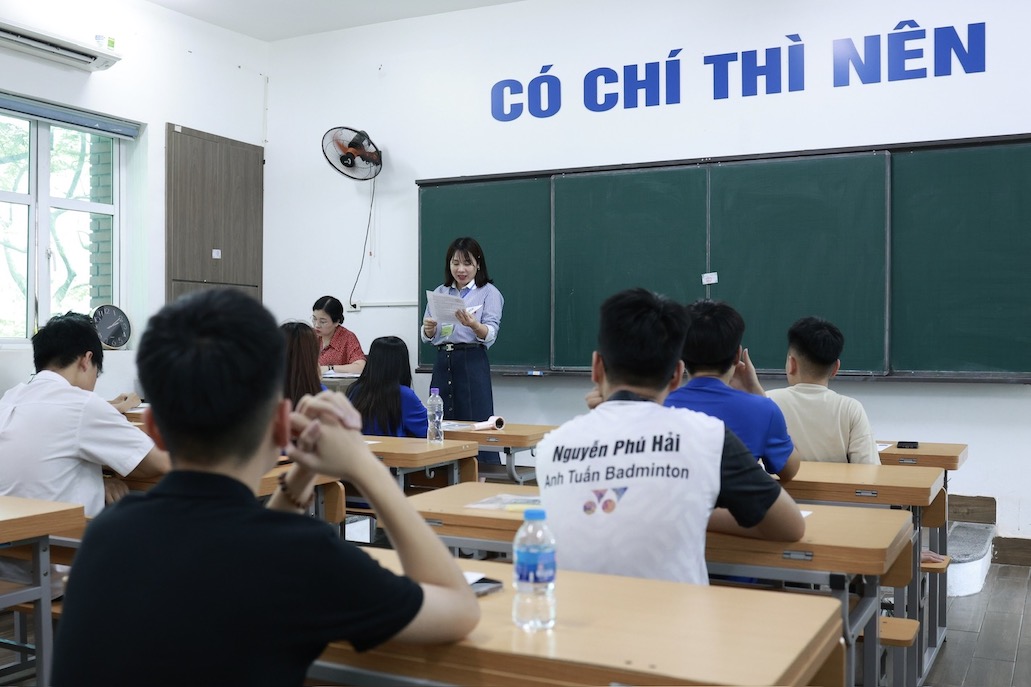
In general education, 7/23 provinces remain unchanged, 15/23 provinces decreased by less than 10%, 1 province decreased by 42.57%. Continuing education has strong integration, many localities decreased by over 30%.
The Ministry of Education and Training assessed that the initial arrangement has contributed to streamlining focal points, reducing management staff, rearranging the team of teachers and staff, and overcoming the situation of local shortage and surplus.
However, some localities are still merging in a mechanical direction, on a large scale in a short time, posing a risk of overloading facilities, affecting the model of ethnic minority boarding and semi-boarding schools and the right to access education for students in difficult areas.
Some other difficulties were clearly stated by the Ministry of Education and Training such as: High school merger rates, far exceeding professional recommendations, causing imbalance in scale; some units have not had time to adjust personnel structure, and the organizational apparatus is not stable.
The merger is likely to affect the model of ethnic minority boarding and semi-boarding schools and beneficiaries of ethnic minority policies; the large-scale merger process, implemented in a short time, may cause disruption to the staff, students and parents; partly affect the psychology, teaching quality and stability of educational institutions,...
From the actual implementation, some localities have clearly pointed out difficulties and obstacles encountered in the process of reviewing and rearranging public educational institutions.
For example, in Dak Lak and Vinh Long, the biggest difficulty currently is the resources for investing in facilities and travel conditions for students. Therefore, these two localities jointly proposed that the Ministry of Education and Training and the Central Government pay attention to supporting funding and providing flexible guidance so that the arrangement of the school network is suitable to the conditions of each region, without disrupting educational activities.
Or in Tuyen Quang province, the organization, enrollment and operation of boarding and semi-boarding schools in border areas is a difficult issue and the locality proposed that the Ministry have specific guidance as a basis for the locality to unify implementation.
Not arranging machines, mechanics
In the process of directing localities to implement, the consistent viewpoint of the Ministry of Education and Training is not to organize arrangements mechanically. The goal of arrangement is to organize teaching and management better and more conveniently, thereby improving the quality of education. If the arrangement makes the scale too small, ineffective or reduces quality, then resolutely do not implement it.
The Ministry of Education and Training especially noted that the arrangement must not affect the ongoing teaching and learning activities; do not let students have to take long breaks from school, and do not interrupt the curriculum and annual plan.
Do not set forced targets, do not chase after achievements, do not mechanically impose numbers such as each commune having only one school left or reduce according to rigid ratios. Some localities need to reduce, but some localities must maintain or increase, especially in urban areas, industrial parks, places with large populations and overloaded schools.
Do not take financial autonomy criteria as a basis for arranging educational institutions. Education must be based on professional and quality principles. Do not use "non-educational" criteria to decide on education issues, in accordance with the spirit of the Central Resolutions.
For educational institutions in the same commune, especially schools and school sites close to each other, with too small or super-small scales, it is necessary to rearrange. In cases where safety, facilities, and quality of education are not guaranteed, it is necessary to resolutely stop operations or dissolve, especially children's groups and private kindergartens that do not meet the conditions.
The Ministry also requests not to merge preschools with primary schools because of reducing focal points; not to merge preschools into general schools; not to merge primary, secondary, and high schools into one, except for stablely formed private inter-level models.
For continuing education and vocational education, do not convert simultaneously and mechanically to vocational secondary school models. The conversion must wait for guidance from the Ministry, with a roadmap, program, staff and guaranteed conditions. For colleges, it is possible to consider merging single-discipline schools into multi-disciplinary schools, but avoiding too large scale, exceeding management capacity.
It's a bit of a bit of a bit of a bit of a bit of a bit.
It's a bit of a bit of a bit of a bit of a bit of a bit.


