
Turn research ideas into application products
In current scientific research activities, many students have proactively approached topics in the direction of application, associated with practical needs.
The trend of vegetarianism, eating fresh, clean, less processed, still natural (eat clean) foods and consuming plant protein is increasing sharply in Vietnam. However, consumers who want to ferment food at home are facing many worries such as fear of microbial contamination, lack of standardization tools, and inability to control the quality of fermentation batches...
From this reality, Nguyen Thi Tuong Van - a final year student at Phenikaa University and 4 classmates came up with the idea of researching and developing a purebred yeast set, which is standardized in dosage, safe, easy to use, and friendly to Vietnamese people.
The project is named Starter Kit, including 6 purebred yeast tubes (1.5ml/tube) packaged sterilely, with QR code instructions for use.
The main target customers of the product are consumers who care about health, especially vegetarians/vegetarians, eat clean groups, modern housewives and small-scale clean food businesses wishing to self-produce safe and quality fermented food...
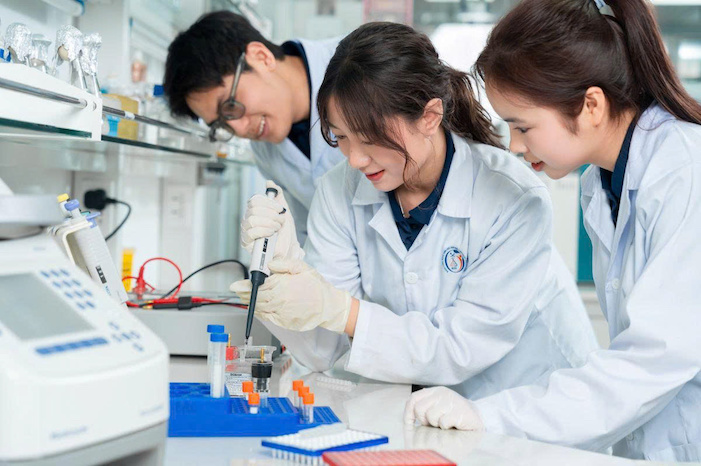
To produce this product, Tuong Van's group spent time researching and practicing many experiments at the Gene Research Center - Phenikaa University, with the support of 2 lecturers.
The microbial strains in the product help to resolve soybeans and chicken beans more effectively and supplement some beneficial bacteria strains for the body.
The difference is that we have quantified the fermentation formula, pre-packaged with QR instructions, helping newcomers can also do it easily" - Tuong Van said.
According to Dr. Nguyen Thi Hong Minh - Director of the Gene Research Center - the noteworthy point is that students have applied professional knowledge and skills such as teamwork, project management and startup thinking to improve products.
Starter Kit is an example of transforming research ideas into products with applicability. This is a long process, but if there are suitable conditions, such products can completely appear on the market" - Dr. Nguyen Thi Hong Minh shared.
Science towards solving social problems
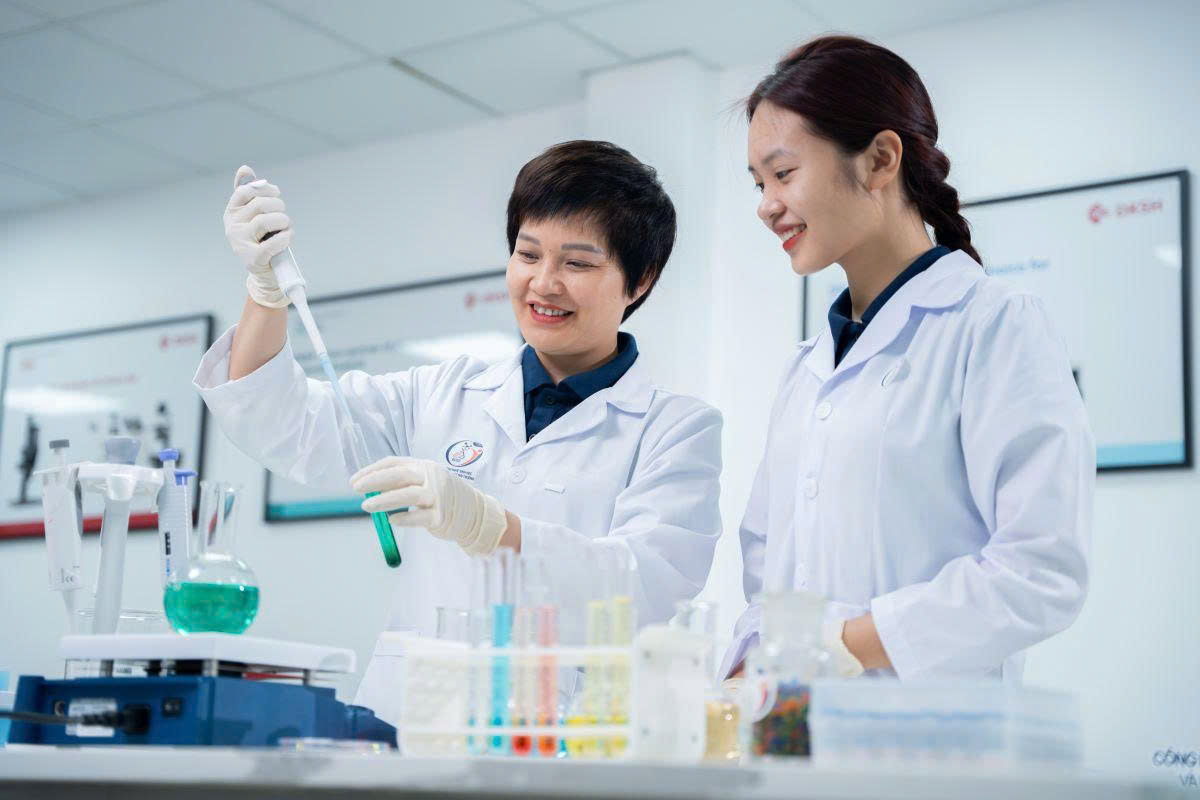
At the Environmental Chemistry and Ecological Toxicology Laboratory - Phenikaa University, the research group led by Assoc. Prof. Dr. Ngo Thi Thuy Huong - Faculty of Biotechnology, Chemistry and Environmental Engineering - is implementing many research directions on microplastics, antibiotic resistance and environmental pollution.
According to Assoc. Prof. Dr. Ngo Thi Thuy Huong, microplastics are not only waste that exists in the environment but also carry many pollutants such as heavy metals, pesticides and antibiotic residues. When these substances stick to the surface of microplastics, they create conditions for bacteria to develop and form antibiotic resistance.
The risk is not only in the microplastic itself, but in what it carries and how it enters the food chain" - Assoc. Prof. Dr. Ngo Thi Thuy Huong commented.
In another direction, the problem of dioxin treatment is also being approached in a more realistic way. Instead of completely relying on expensive technologies, research is aimed at solutions that can be implemented in local conditions.
After 40 months of testing, the research results of Assoc. Prof. Dr. Ngo Thi Thuy Huong's group showed that vetiver grass has the ability to help reduce dioxin concentration in the soil by about 40%, while contributing to limiting erosion and the risk of toxic substances spreading to the environment.
In parallel with research activities, the training orientation in the field of science and technology of universities is also changing according to the trend of being more associated with practice.
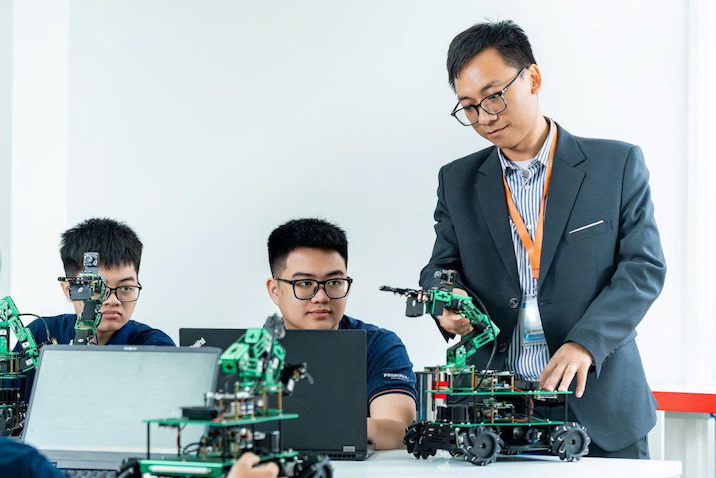
At the Robotics and Artificial Intelligence Practice Room - Phenikaa University, students can directly program and operate autonomous robots (AMRs), arm robots and automatic storage systems, while accessing technologies such as artificial intelligence, image processing, LiDAR, radar or 3D cameras.
This space is built like a miniature smart factory model, where robot systems, transportation and warehousing are connected in a complete process.
Being able to directly program, operate and observe the system helps learners not only grasp knowledge but also gradually form operational thinking and solve practical problems in the modern technology environment.


