
Innovation is impossible if teachers are still overloaded with non-professional tasks
The conference summarizing the 2025-2026 school year and deploying tasks for the 2026-2027 school year of Hanoi City took place on the morning of August 21.
Deputy Minister of Education and Training Pham Quang Hung said that entering the 2026-2027 school year, Directive No. 31/CT-TTg dated August 5, 2026 of the Prime Minister requires to continue to strongly innovate thinking and management methods, shifting from "education management" to "education development management".
From there, the Deputy Minister of Education and Training set out 5 key task groups for Hanoi's education and training sector, including: Continuing to innovate education governance, strengthen discipline, ensure substance; Completing the school network after arrangement, developing staff and ensuring teaching conditions; Improving comprehensive education quality, developing new students' abilities; Promoting digital transformation, artificial intelligence, while reducing administrative pressure on teachers; Strengthening quality management, promoting non-public educational resources and ensuring school security and safety.
According to the Deputy Minister, Hanoi needs to continue to promote its strengths in education quality, pay more attention to comprehensive education; strengthen STEM/STEAM, digital competence, foreign languages, physical education, arts, career orientation, life skills, ethics and social responsibility.
Continue to gradually make English the second language in schools according to a suitable roadmap, continue to innovate testing and assessment, reduce exam pressure, cut unnecessary exams and competitions; ensure seriousness, objectivity, fairness and transparency,...
The Deputy Minister also noted that digital transformation must aim to reduce workload, reduce procedures, increase management efficiency and increase time for expertise. Artificial intelligence needs to be appropriately exploited in management, teaching and learning, associated with developing digital capacity, ensuring data security, ethics and human responsibility.
I propose that Hanoi strongly implement the spirit of "reducing to increase", reducing dossiers, reports, meetings, contests and formal movements to increase time for teaching, professional activities and student support. It is impossible to require teachers to innovate if teachers' time is still occupied by non-professional tasks" - the Deputy Minister emphasized.
He also noted that whether studying in a public or non-public institution, students must be guaranteed quality, safety and legitimate rights. It is necessary to publicize and transparently disclose collections; strictly manage educational links, extra classes, and tutoring; promptly handle violations and protect the rights of learners.
Education quality in the Capital continues to be maintained
According to a report by the Department of Education and Training, the quality of education in the Capital continues to be maintained and improved, affirming its position as the leading locality in the country in terms of scale, quality of mass education and specialized education.
Hanoi City is the locality ranked No. 1 nationwide in terms of high school graduation rate - the highest result ever; ranked second nationwide in terms of average score of the 2026 high school graduation exam; ranked first nationwide in the number of 10s in many exam subjects, with 6 candidates becoming valedictorians nationwide in various university admission combinations.
Leading education continues to affirm its leading position in the country with 207 national excellent student awards; 7 medals at international Olympics in 2026 (4 Gold Medals, 2 Silver Medals and 1 Bronze Medal).
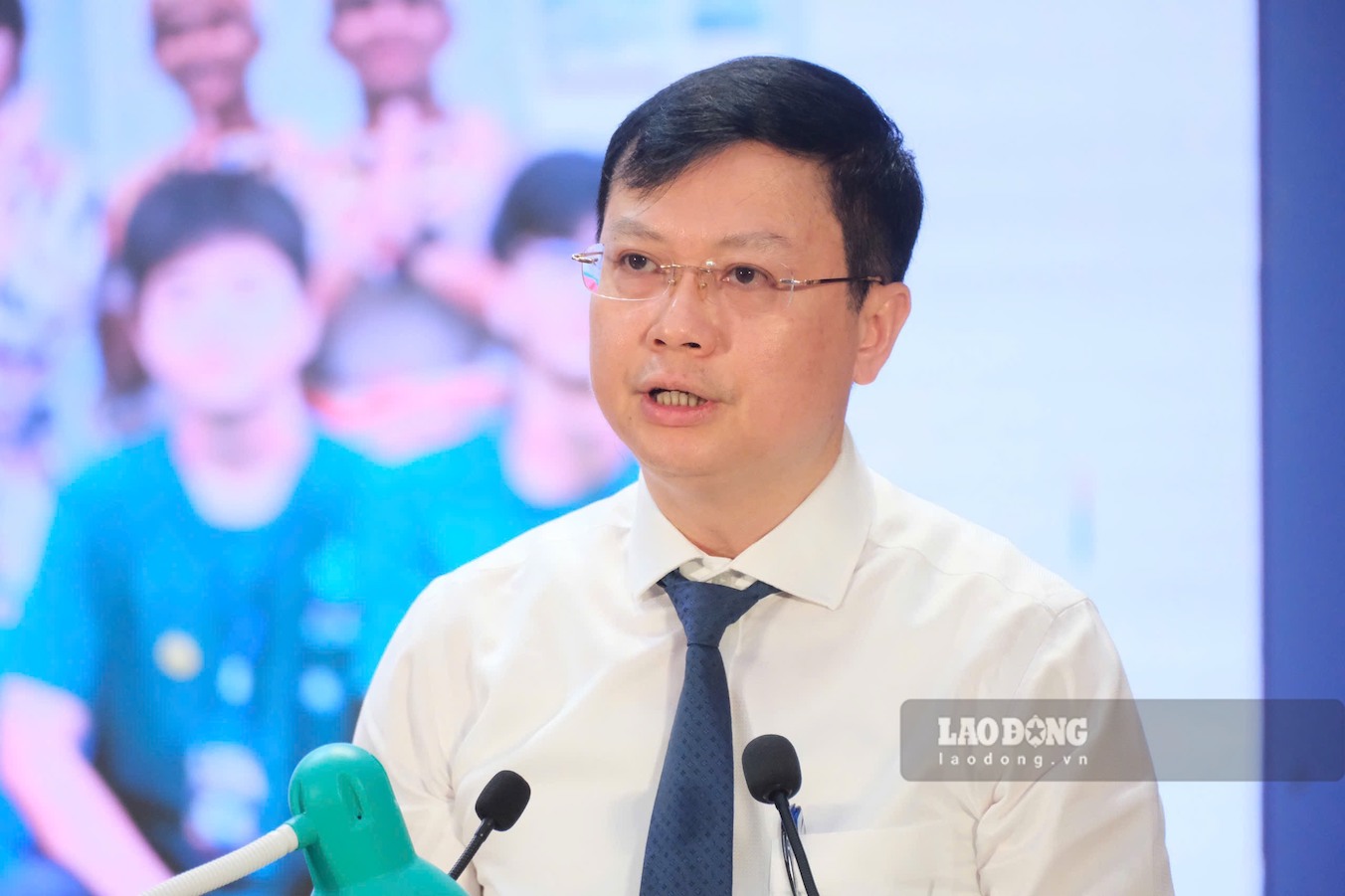
Regarding the direction and tasks for the 2026-2027 school year, Mr. Nguyen Van Hien - Director of Hanoi Department of Education and Training - said that comprehensive education is identified as one of the key pillars of this year, to ensure harmonious development in ethics, intelligence, physical fitness, aesthetics, life skills, mental health and civic responsibility.
The implementation is integrated into the school's education program and plan, without generating new subjects or education programs, without overloading students; ensuring practicality, safety, and fairness in accessing and promoting coordination between schools, families, local authorities and society.
Regarding the policy of arranging schools, the Hanoi Department of Education and Training will comprehensively review facilities, equipment, teaching and learning conditions at educational institutions, ensuring sufficient facilities, sufficient schools, sufficient classes, with the principle "Where there are students, there are teachers".


