
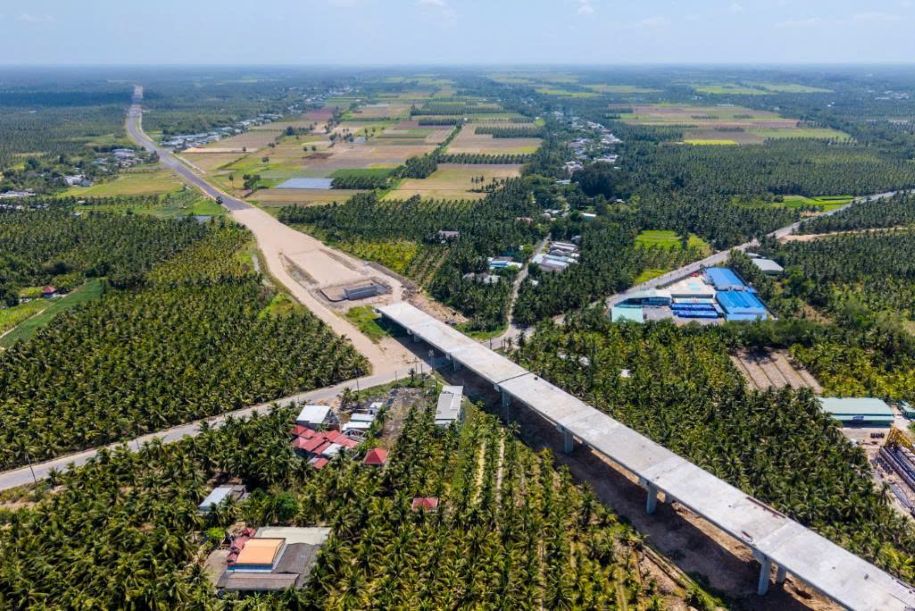
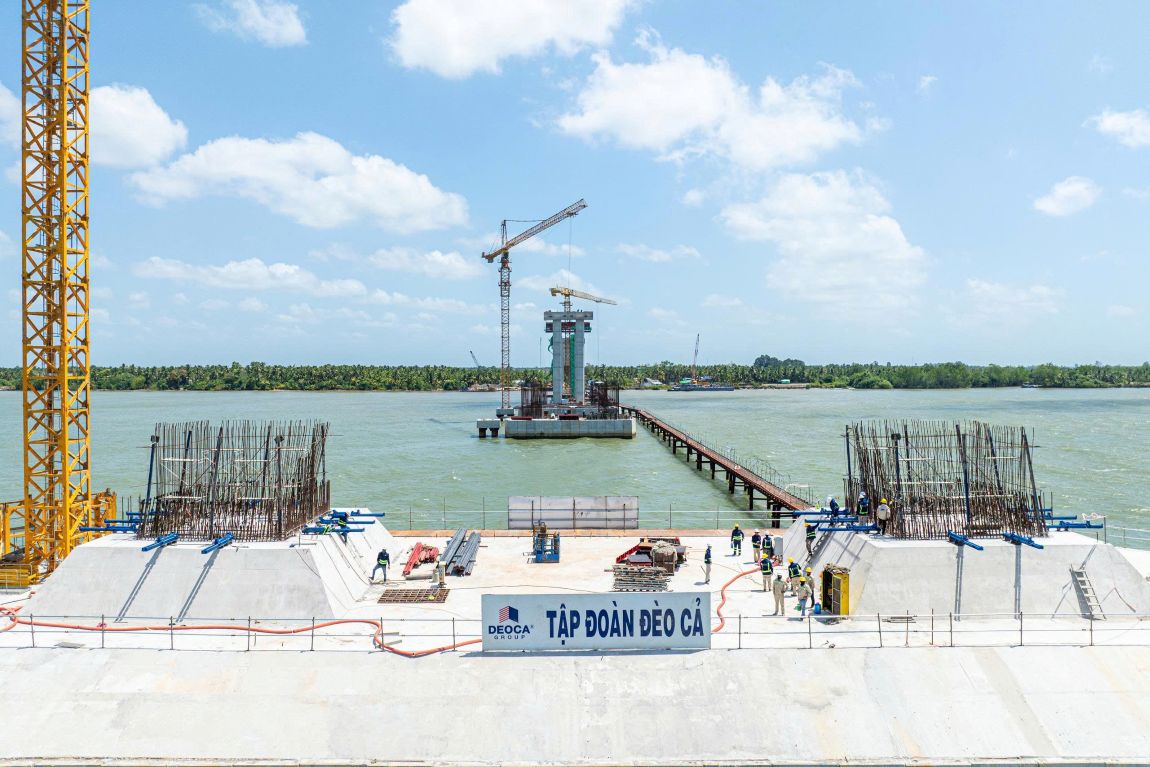
These days, under the harsh sun of the Mekong Delta, the construction atmosphere at the Dai Ngai 1 bridge construction site under the Dai Ngai Bridge Project on National Highway 60 connecting Vinh Long province and Can Tho city (formerly Tra Vinh and Soc Trang provinces) is still taking place urgently and bustlingly.
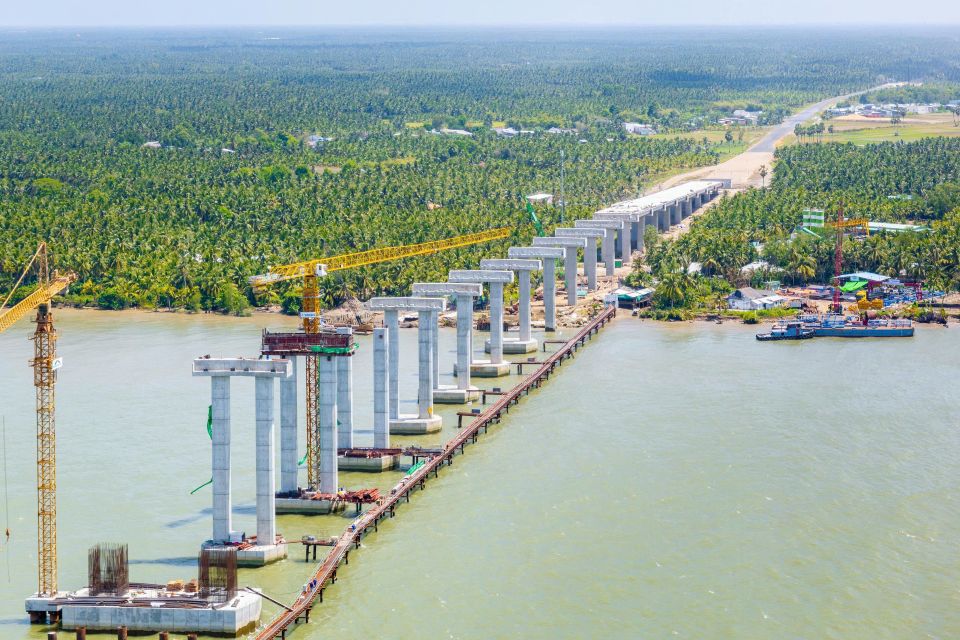
At the 15-XL package construction site, the contractor consortium led by Deo Ca Group is simultaneously deploying 30 construction fronts on the entire 3 km long route (bridge section 2.561 m, access road 469 m). The package has a total value of 3, 867 billion VND, started with the goal of completion after 1,250 days, expected in June 2028.
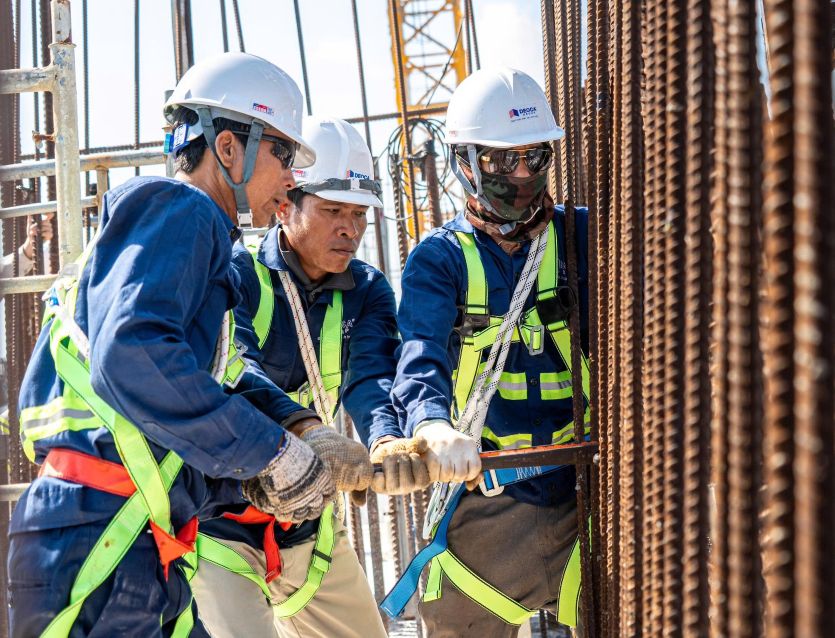
According to records, the contractor is mobilizing nearly 300 personnel and 82 machines and equipment, organizing into 30 construction teams, maintaining continuous working pace.
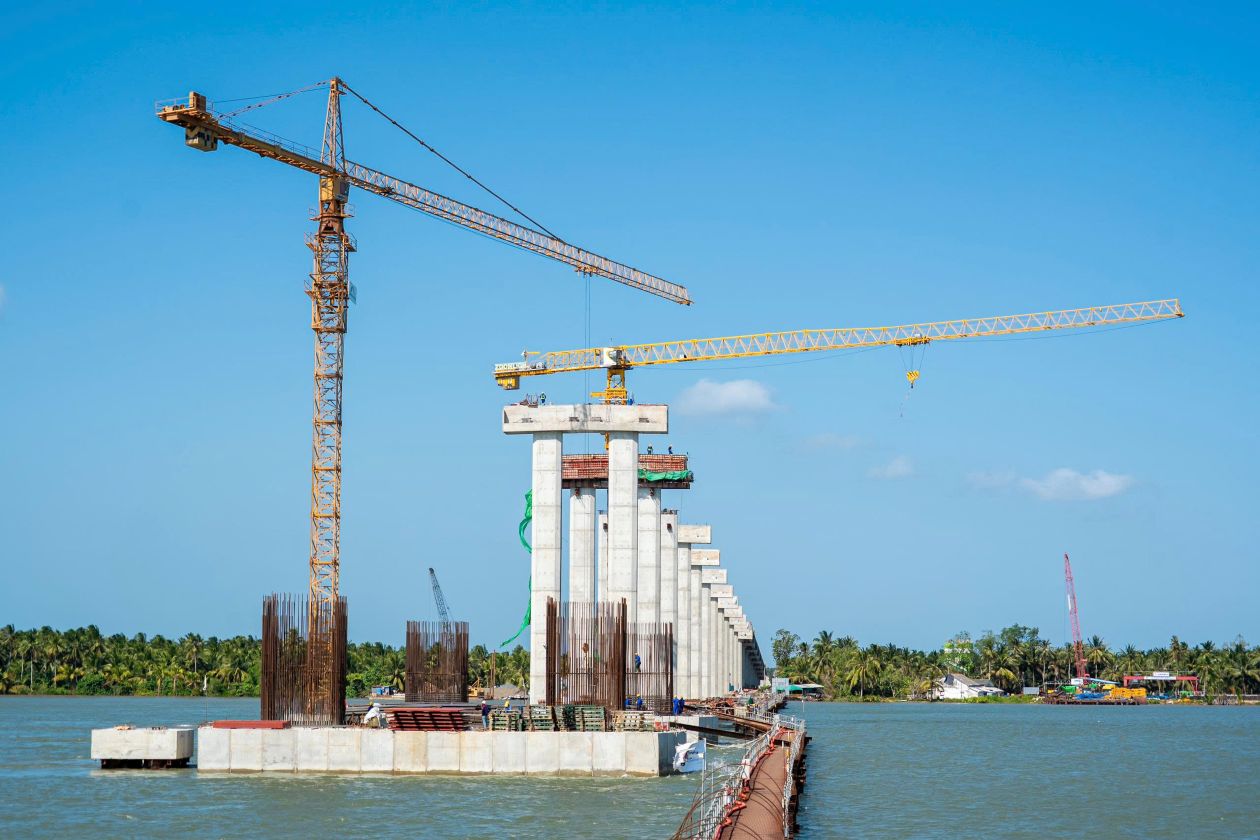
Dai Ngai 1 bridge is designed according to a cable-stayed structure, with two A-shaped pillars 110 m high; the main span is 450 m long - the second largest in Vietnam, only after Can Tho bridge. To date, all drilled piles in the main bridge area have been completed; units are focusing on constructing the pillar body (especially at positions P21 to P26) and the upper structures.
The work of completing the girder, launching and installing the approach bridge girder, loading, and treating the approach roadbed is being accelerated. At both ends of the bridge, the foundation treatment items such as seepage culverts, cement soil piles, and PHC piles have been completed, and are currently entering the loading stage, waiting for subsidence to ensure technical conditions before implementing the next steps.
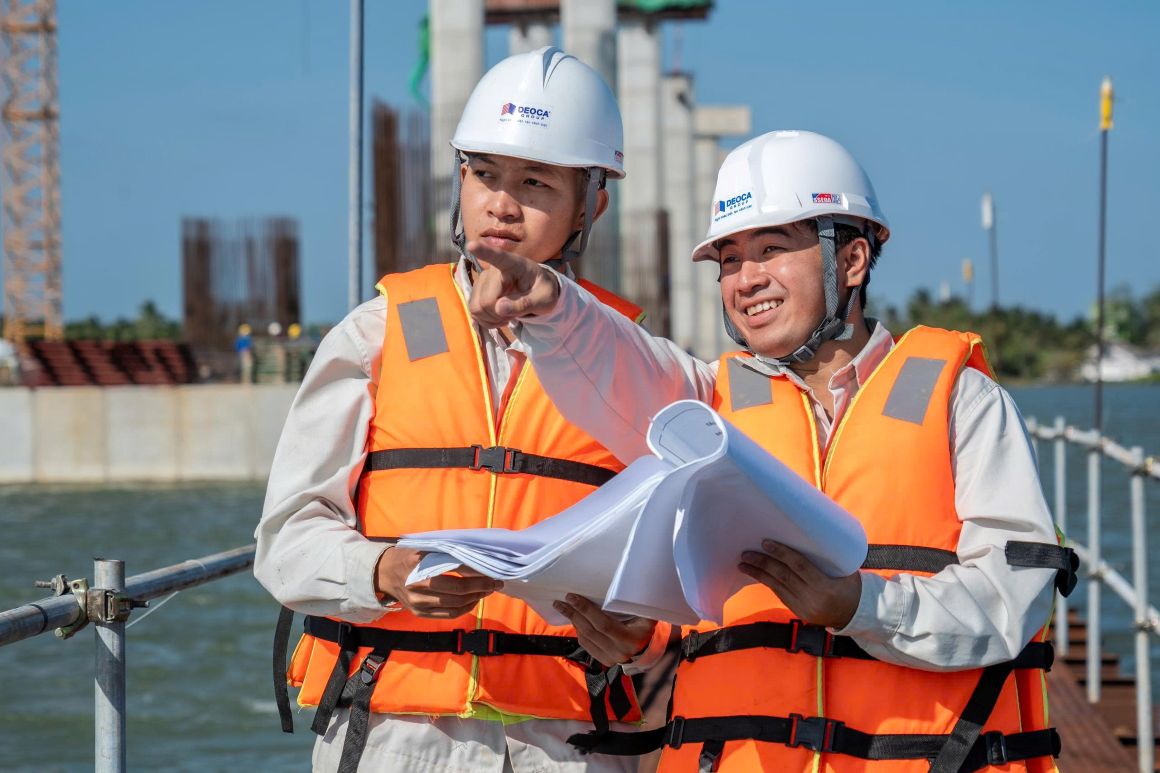
Representatives of the contractor said that many main items are closely following the set progress. In which, drilled piles (admission bridges and main bridges) have been completed 100%; Super T beams reached 93.54%; pillar bases reached 91.67%; pillar body reached 84.56% and pillar beams reached 65.48%.
According to the construction unit, the project is currently not only under pressure for progress but also facing difficulties due to market fluctuations. Rising fuel prices have led to escalating transportation costs, causing prices of materials such as iron and steel, sand, stone, and plaster to increase simultaneously. In addition, the shortage of concrete stone and the incoming supply of crushed stone are directly affecting and disrupting some construction items.
Mr. Dinh Le Thong - Director of the Dai Ngai Bridge Project Management Board (Project Management Board 85, Ministry of Construction), said that Dai Ngai 1 bridge belongs to construction package No. 15-XL. After nearly 15 months of construction, the project output reached nearly 59%, exceeding the set schedule.
According to the investor's assessment, the project is being implemented to ensure quality, labor safety and environmental sanitation. "We continue to direct contractors to increase equipment and manpower, accelerate progress to basically complete the approach bridge section and complete the body of the two main tower pillars, ensuring the set plan," Mr. Thong said.
However, according to Project Management Board 85, the source of stone supplied to the project is very limited, especially bulkstone for the construction of the embankment and stone for cement concrete, leading to many delays in the concrete pouring plan.
Faced with this situation, the investor has proposed that the Ministry of Construction send a document to the People's Committee of Ho Chi Minh City and Dong Nai and An Giang provinces requesting support, prioritizing the allocation of about 15,000 m3 of gravel in March and about 24,000 m3 of gravel to serve cement concrete in 2026 so that the project can be constructed on schedule.


