
Implementing Plan 428, under the close and drastic direction of the leaders of the Ministry of Public Security, Ministry of Construction, Hanoi People's Committee and the coordination of state management agencies and partners, after more than 8 months of implementation, Hanoi Metro has attracted over 5.7 million passengers using the new ticket gate system on 2 urban railway lines.
Currently, 100% of ticket control gates have been upgraded; the rate of using identification, electronic authentication and biometric identification applications reaches 85%. Revenue on both routes increased by 48% and passenger volume increased by 15% compared to the same period.
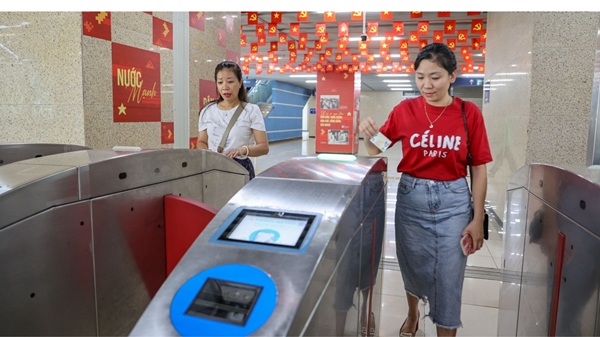
According to Mr. Le Bang An - General Director of Hanoi Metro, the effective application of electronic identification and biometrics in public transport not only affirms the pioneering role of Hanoi City in developing smart urban transport, contributing to the implementation of the objectives of Project 06 and Resolution 57 of the Politburo, but also improves the management and operation capacity of Hanoi Metro.
At the same time, this system brings a convenient experience for passengers when they can use a chip-based citizen identification card, Visa credit card or QR code ticket with non-cash payment methods.
Accordingly, passengers experience more modern and convenient services thanks to a variety of payment methods such as chip-based CCCD cards, NFC, QR, Hanoi Metro application, Tap & Go... helping to reduce waiting time and easily track transaction history. The application of biometric authentication also ensures data security, limits the risk of card loss, fraud or information leakage.
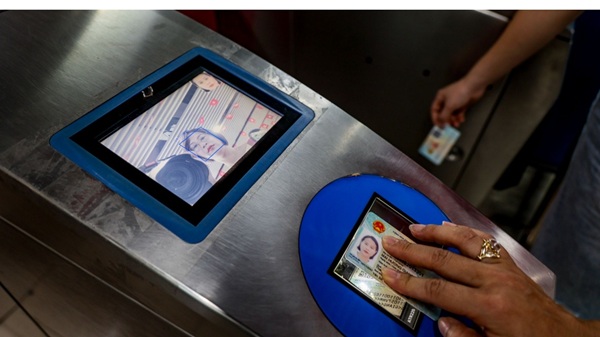
In particular, passengers can use VNeID to register for the service without creating a separate account. In the future, people can book interconnected routes on a single platform at optimal cost. Policy beneficiaries are also applied with automatic, fast, transparent fare exemptions and reductions, ensuring fairness in accessing services.
Also according to Mr. Le Bang An, in the next phase, Hanoi Metro will continue to expand infrastructure, standardize techniques for new lines, towards unifying a common AFC system for all urban railway lines in Hanoi City; upgrade and complete software and integrate payments; deploy continuous traffic solutions in the city.
Representatives of Hanoi Metro said that the unit is coordinating with transport units to implement a continuous traffic solution, synchronously connecting the electronic ticket system, creating maximum convenience for passengers. Specifically, coordinating with Vietnam Railways Corporation and Visa to connect the ticket system; developing a plan to apply electronic identification, biometrics and cashless payments at Hanoi Station, towards piloting a model of intercommunication between urban railways and national railways (expected in the second quarter of 2026).
In addition, Hanoi Metro is also working with relevant parties to connect the BRT route; cooperating with units such as Grab, GSM, Be Group... to develop a connection model with taxis, technology motorbike taxis and public bicycles. At the same time, it is ready to connect with the interconnected electronic ticket system managed by the Traffic Management and Operation Center (Tramoc) when completed, ensuring synchronous and seamless interconnection throughout the urban traffic network.
The successful commissioning of the new automatic ticket checking system not only marks an important turning point when the two urban railway lines of the Capital are synchronized on the same technology platform, but also contributes to improving passenger experience, optimizing management and operation efficiency and strongly promoting the digital transformation process in the urban transport sector.
This is an important foundation to move towards deploying an interconnected electronic ticket system throughout the public passenger transport network, gradually realizing the goal of building Hanoi Capital into a modern and sustainable city," said Mr. Le Bang An.


